Cactoblastis Memorial Hall, Historic memorial hall in Boonarga, Australia
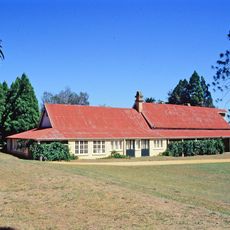
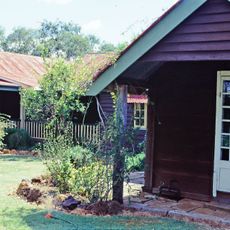
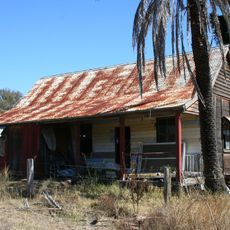
Cactoblastis Memorial Hall is a single-storey timber building set on low timber stumps about 35 metres from the Warrego Highway at Boonarga. Its weatherboard walls carry a gable roof that flattens into skillion roofs over two side aisles. The central dance room has an unlined roof, a timber floor and a stage at the southwestern end; a gable-roofed porch with a weatherboard balustrade shelters the main doors.
The hall was completed in 1936 to commemorate the arrival of cactus moths from South America that controlled spreading prickly pear plants. The insect became crucial to saving Queensland pasturelands from being overrun by the invasive plant.
The community of Boonarga sees the cactus moth as a symbol of rural survival and ingenuity that defined their region's past. The hall serves as a gathering place where this shared history continues to connect local residents through memory and pride.
The hall stands about 35 metres back from the southwestern side of the Warrego Highway, 12 kilometres southeast of Chinchilla. A ramp on the southeastern side of the front porch gives step-free access to the main doors. The building is used for dances, meetings and functions, so it may be closed when nothing is booked.
The hall's name was chosen at a public meeting in October 1934, before construction began, when the committee decided to honour the cactoblastis moth. The building opened in February 1936 with a gala ball, and the Chinchilla Field Station that reared the moths closed at the end of that same year.
The community of curious travelers
AroundUs brings together thousands of curated places, local tips, and hidden gems, enriched daily by 92,743 contributors worldwide.