Main Range Railway, Railway heritage site in South East Queensland, Australia
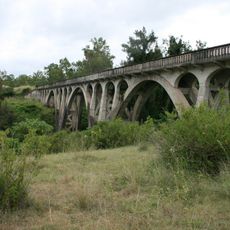
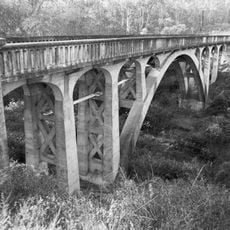
Main Range Railway runs from the end of Murphys Creek railway station to the Ruthven Street overbridge at Harlaxton, on the edge of Toowoomba. Its hardest section, the ascent of the Main Range, has gradients of 1 in 50, nine tunnels, 47 bridges and 126 curves over nearly 18 miles of track, with curves of 5 chains radius.
Built between 1865 and 1867 by contractors Peto, Brassey and Betts for the Queensland Government, the line was surveyed by Abraham Fitzgibbon, who in 1863 argued for a 3 ft 6 in (1,067 mm) gauge. Queensland adopted it, and the Ipswich–Toowoomba railway became the first use of narrow gauge for a main line. Section 5, the Main Range ascent, was the hardest, with gradients of 1 in 50.
The railway shaped pastoral communities across the Darling Downs by linking sheep stations directly to coastal ports for wool trading. This connection helped local settlements grow economically and stay connected to distant markets.
The heritage-listed section runs from the end of Murphys Creek railway station up to the Ruthven Street overbridge at Harlaxton, on the outskirts of Toowoomba. The climb is engineered in two stages divided at the site of Spring Bluff railway station, where the sharpest work begins: five tunnels and three major bridges lie between there and Toowoomba.
Section 5, the climb from Murphys Creek to Toowoomba, packed nine tunnels, 47 bridges and 126 curves into nearly 18 miles of track, with gradients of 1 in 50 and curves of 5 chains radius. In April 1866, 1009 workmen were employed along this section alone.
The community of curious travelers
AroundUs brings together thousands of curated places, local tips, and hidden gems, enriched daily by 92,914 contributors worldwide.