Kalkajaka National Park, Protected natural area in Cook Shire, Australia.
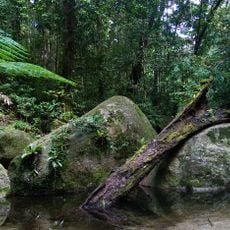
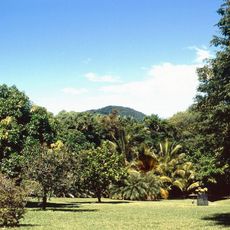
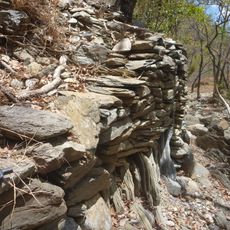
Kalkajaka National Park is a 781-hectare protected area of granite boulders, some the size of houses, with soil-free gaps forming a maze of passages. The rock is Trevethan Granodiorite, a white-to-grey intrusive rock 259–252 million years old, blackened by a film of blue-green algae. The Mulligan Highway marks its western border.
The Trevethan Granodiorite that forms the mountain solidified as magma beneath the Earth's crust between 259 and 251 million years ago, in the Late Permian. Softer rock above it eroded away, exposing the fractured top as the boulder field seen today. The park is managed under the Nature Conservation Act 1992 and lies at the northern end of the Wet Tropics World Heritage Area.
Kalkajaka means "place of the spear" in the language of the Kuku Nyungkal people, for whom the mountain is a central feature of their cultural landscape. At least four sites of mythological importance lie on the mountain: Kambi, a large rock with a cave where flying-foxes are found; Julbanu, a grey rock shaped like a kangaroo facing Cooktown; Birmba, a stone facing Helenvale where sulphur-crested cockatoos are seen; and Yirrmbal, a taboo place near the foot of the range.
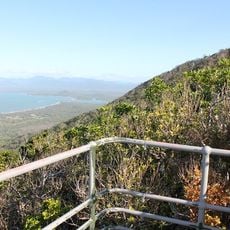
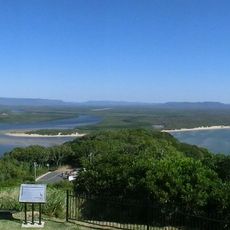
You can visit the park through a viewing platform with information displays, as there are no marked walking trails or camping facilities available. Plan your visit for the cooler months, as heat in this region can be overwhelming.
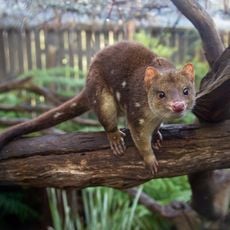
The park holds the only known populations of three animal species found nowhere else: the Black Mountain boulderfrog, Black Mountain skink, and Black Mountain gecko. These three creatures live together in this isolated rock maze and exist nowhere else on Earth.
The community of curious travelers
AroundUs brings together thousands of curated places, local tips, and hidden gems, enriched daily by 92,646 contributors worldwide.