Nabukelevu, Volcanic mountain on Kadavu Island, Fiji
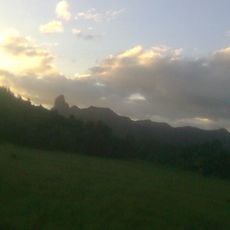
Nabukelevu is a volcano on Kadavu Island that rises roughly 800 meters above sea level on the island's southwestern side. Its structure consists of multiple andesite lava domes that shape the distinctive character of this landscape.
Nabukelevu is the youngest volcano in a Plio-Pleistocene chain of volcanic islands tied to a now inactive subduction zone. Four Holocene eruptive episodes have been dated: 246 ±70 BCE, 318 ±40 CE, 1224 ±50 CE and 1630 ±50 CE, the last corresponding to the eruption around 1660. These eruptions produced pyroclastic flows and tephra, and debris avalanches of 10 to 100 million cubic metres of material are also evidenced.
Nabukelevu lies within the traditional territory of Kadavu's villages, and the mountain's name is used locally alongside Mount Washington. The old-growth forest on its slopes and the Collared Petrel breeding site are cited in Fiji's Biodiversity Strategy and Action Plan as nationally significant, so the mountain features in national conservation planning as well as in village life.
Nabukelevu lies in the southwest of Kadavu Island, and the 2,900-hectare Nabukelevu Important Bird Area is centred on the mountain. The summit reaches 805 m, so plan for a full day on foot and carry water; the terrain is old-growth forest, not a marked trail network. Access is arranged through villages on Kadavu, and a local guide is needed to cross customary land.
Nabukelevu is the youngest volcano in a Plio–Pleistocene chain tied to a now inactive subduction zone. Four Holocene eruptions have been dated to 246 ±70 BCE, 318 ±40 CE, 1224 ±50 CE and 1630 ±50 CE, producing pyroclastic flows and tephra. Debris avalanches left deposits of 10–100 million m³ of material.
The community of curious travelers
AroundUs brings together thousands of curated places, local tips, and hidden gems, enriched daily by 92,617 contributors worldwide.