Ndakunimba Stones, Ancient petroglyph site in Dakuniba, Cakaudrove Province, Fiji.
The Ndakunimba Stones are about 14 fragments of a monolith that once stood roughly 50 feet tall, carved with deeply cut angular figures. The pieces lie where the monolith toppled back against a hillside and broke apart; one fragment was estimated at 40 tons. They stand in Dakuniba, a remote village in Cakaudrove Province on Vanua Levu, Fiji.
The Fahnestock brothers, Bruce and Sheridan, found the fallen monolith in 1935–1937 while collecting for the American Museum of Natural History. The fragments lay where the stone had toppled back against the hillside and shattered. Early hopes that the carvings were Chinese were dismissed by scholars in China; in 2016 an Israeli team likened one character to the Hebrew letter Yodh.
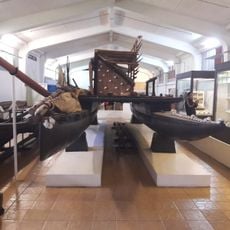
The local Mabuco people call the stones Vatu Vola and say the monolith was carried on the Rogovoka's last voyage from Verata, a ship that had also brought sacred rocks to the king of Tonga. The legend holds that after the Vatu Vola was erected, the ship was sunk so it could not be used to find the stones again.
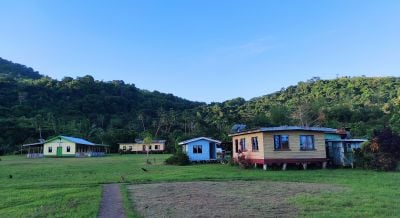
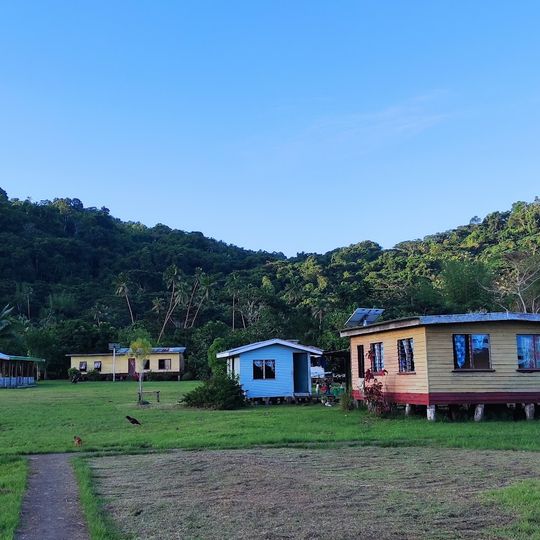
The stones lie in Dakuniba, a remote village in Cakaudrove Province on Vanua Levu, reached only with local guidance; arrange access through the village beforehand. The fragments rest against the hillside where the monolith fell, so expect uneven ground and no marked path.
In 2016 a team of scientists from Israel visited the site and identified one carved character as similar to the Hebrew letter Yodh. Earlier, the Fahnestocks and Fiji Museum officials believed the symbols were Chinese, until scholars in China disproved it.
The community of curious travelers
AroundUs brings together thousands of curated places, local tips, and hidden gems, enriched daily by 92,695 contributors worldwide.