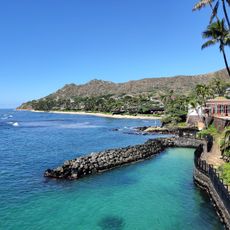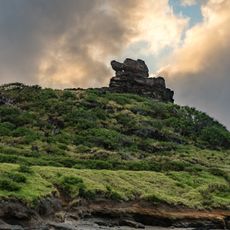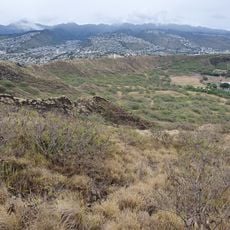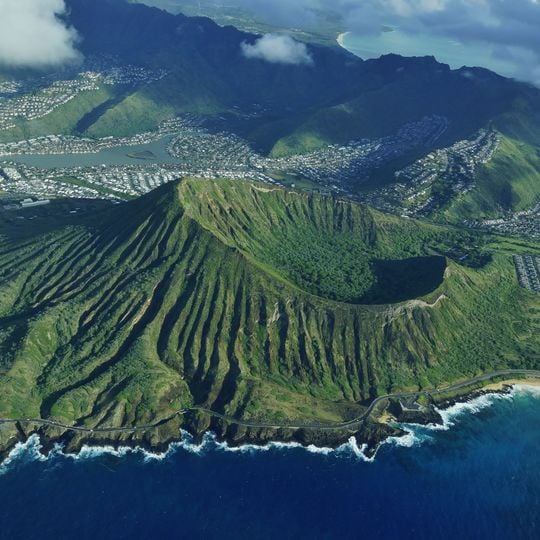
Koko Crater, Volcanic tuff cone in Hawaii Kai, United States
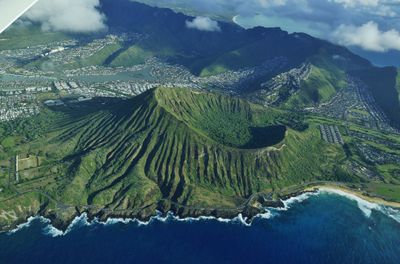
Koko Crater is a volcanic tuff cone that rises approximately 1,208 feet and forms part of the Honolulu Volcanics series on Oahu. Its steep walls display consolidated ash layers that reveal the geological history of the region.
The crater formed approximately 7,000 years ago during the most recent volcanic activity on Oahu. During World War II, the United States military constructed bunkers and a railroad track to the summit, which remained in place until 1966.
The Hawaiian name Kohelepelepe is rooted in mythology about Pele, the volcano goddess, and her encounter with Kamapuaa. This story remains part of local identity and connects visitors to the island's spiritual traditions.
The trail follows former railroad tracks on a steep climb with approximately 1,048 steps, typically taking 30 to 45 minutes to reach the top. Visitors should wear sturdy footwear, bring water, and start early to avoid afternoon heat.
Radiocarbon dating reveals that this tuff cone represents the most recent volcanic activity on Oahu, making it geologically young compared to the island's other formations. This scientific evidence adds a special dimension to understanding the archipelago's volcanic history.
The community of curious travelers
AroundUs brings together thousands of curated places, local tips, and hidden gems, enriched daily by 91,103 contributors worldwide.