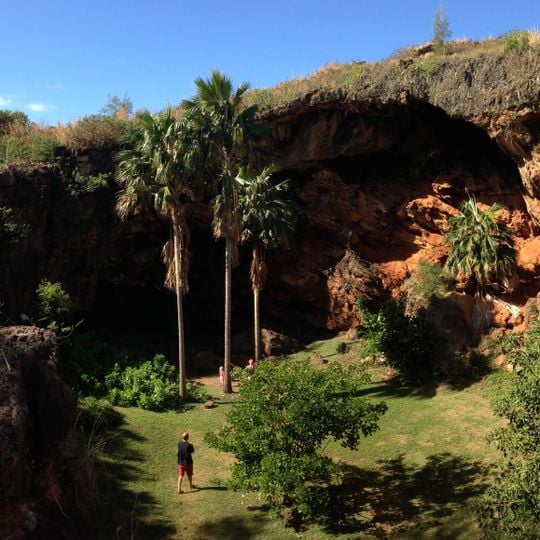
Makauwahi Cave, Archaeological cave site in Kauai County, United States.
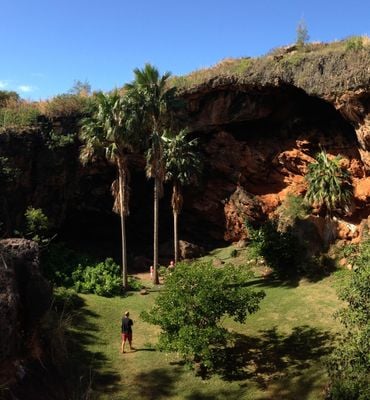
Makauwahi Cave is the largest limestone cave in Hawaii, a sinkhole paleolake formed in eolianite limestone on Kauaʻi's south coast in the Māhāʻulepū Valley. Its dark mouth sits beneath a wide overhanging roof of reddish-brown rock, with three tall palms in front and a shadowed interior of reddish walls. The reserve covers 17 ha (42.0 acres).
The cave was known to island inhabitants and used as a burial site by ancient Hawaiians. Its paleontological value was first recognized in 1992, when David Burney, Lida Pigott Burney, Helen F. James and Storrs L. Olson found the access sinkhole while searching for fossil sites on Kauaʻi's south coast. Remains of some 40 bird species have been found, half of them now extinct.
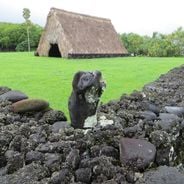
The cave's Hawaiian name, Makauwahi, means "smoke eye"; archaeologist William Pila Kikuchi rediscovered it in 2000 in a high school student's essay written more than a century earlier. Ancient Hawaiians used the cave as a burial site, and excavations have since yielded Polynesian artifacts from the sediment.
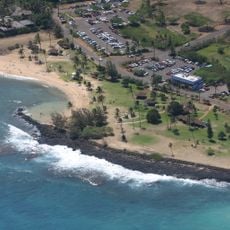
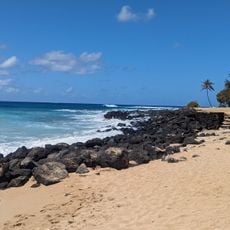
The cave is reached through a sinkhole in the Māhāʻulepū Valley, near Māhāʻulepū Beach on Kauaʻi's south coast. The approach crosses uneven ground, and the cave interior is shadowed and deep, so bring a light. In 2024 it was announced that the cave would close to the public, with ownership passing to Grove Farm.
African sulcata tortoises graze the grounds surrounding the cave to control invasive plant growth. This unconventional conservation approach also supports restoration of native plant species in the area.
The community of curious travelers
AroundUs brings together thousands of curated places, local tips, and hidden gems, enriched daily by 93,022 contributors worldwide.