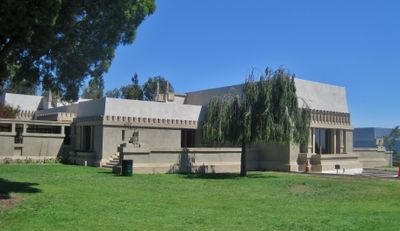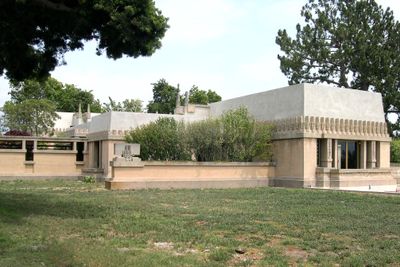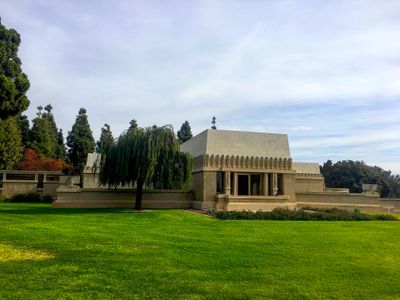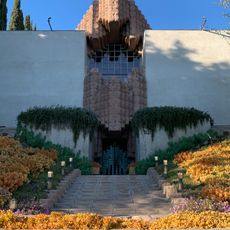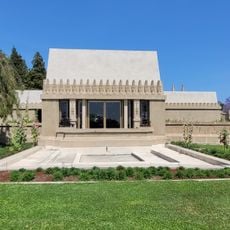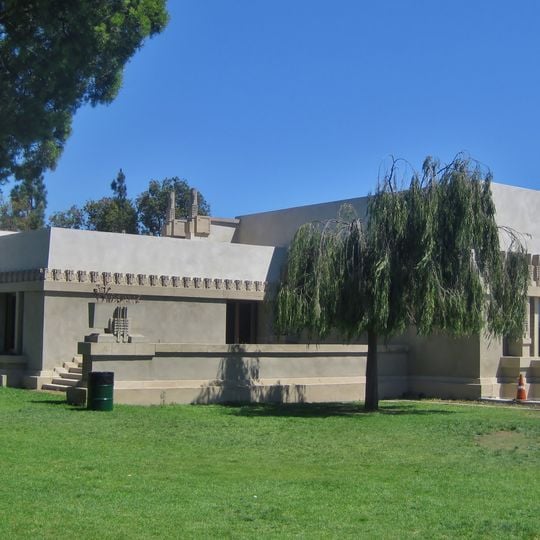
Hollyhock House, UNESCO World Heritage Site in Hollywood, United States.
Hollyhock House is a single-family residence in Hollywood designed by Frank Lloyd Wright using concrete blocks and ornamental patterns based on Mayan Revival principles. The structure features geometric designs, thoughtful room layouts, and expansive gardens that integrate indoor and outdoor spaces.
Frank Lloyd Wright built the house in 1921 for Aline Barnsdall, a prominent arts patron and collector. Barnsdall later bequeathed the property to the city of Los Angeles, transforming it into a public landmark.
The house reflects a blend of Mayan architectural forms with California design principles, showing how international artists reshaped local building traditions. The rooms and gardens tell of a time when patrons and artists shaped the character of Southern California.
The property is open for guided tours on specific days, allowing visitors to explore the rooms and gardens. It is helpful to wear comfortable shoes, as there is considerable walking and the grounds include uneven terrain.
The house is named after the hollyhock flower, a plant that appears throughout its decorative elements and reflects the original owner's personal preference. These floral motifs show up in concrete ornamentation, glass, and other details across the building.
Location: Hollywood
Location: Los Angeles
Inception: 1921
Architects: Frank Lloyd Wright
Architectural style: Mayan Revival architecture
Part of: The 20th-Century Architecture of Frank Lloyd Wright
Website: https://barnsdall.org/hollyhock-house
GPS coordinates: 34.09996,-118.29431
Latest update: December 6, 2025 16:00
Frank Lloyd Wright developed one of the most influential architectural styles of the 20th century over seven decades of practice. His buildings connect interior spaces with surrounding landscapes through horizontal lines, natural materials, and open floor plans. From the Prairie Houses of the Midwest to the post-war Usonian homes, Wright created designs that transformed American residential architecture. His major works include Fallingwater, built over a waterfall in Pennsylvania, the Guggenheim Museum in New York with its spiral ramp, and the Imperial Hotel in Tokyo, which survived the great 1923 earthquake. The Robie House in Chicago demonstrates his Prairie School principles, while Taliesin West in Arizona served as his winter home and architecture school. His structures are located across the United States, Japan, and Europe, demonstrating his vision of organic architecture that works in harmony with nature.
Griffith Observatory
2.1 km
Ennis House
1.8 km
Museum of Death
2.5 km
John Sowden House
884 m
Greek Theatre
2.2 km
Lovell House
2.1 km
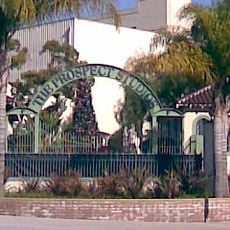
The Prospect Studios
1.1 km
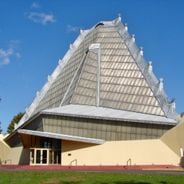
Holy Transfiguration Russian Orthodox Church
1.4 km
Old Warner Brothers Studios
2 km
Canfield-Moreno Estate
2.6 km
Metromedia Square
2 km
Barnsdall Art Park
88 m
Chateau Elysee
2.3 km
Tiki Ti
834 m
Shakespeare Bridge
1.5 km
Jardinette Apartments
2.2 km
Hollywood & Western Building
1.5 km
Hollywood Melrose Hotel
2.5 km
Los Angeles Municipal Art Gallery
78 m
St. Andrews Bungalow Court
2.5 km
St. Mary of the Angels Church, Hollywood
1 km
Lipetz House
2.4 km
Cahuenga Branch
1.1 km
Silvertop
2.3 km
Pro-Cathedral of Saint Vladimir
1.9 km
Carousel Restaurant Hollywood
650 m
Zeiss telescope
2.1 km
Albert Einstein Statue
2.1 kmReviews
Visited this place? Tap the stars to rate it and share your experience / photos with the community! Try now! You can cancel it anytime.
Discover hidden gems everywhere you go!
From secret cafés to breathtaking viewpoints, skip the crowded tourist spots and find places that match your style. Our app makes it easy with voice search, smart filtering, route optimization, and insider tips from travelers worldwide. Download now for the complete mobile experience.
A unique approach to discovering new places❞
— Le Figaro
All the places worth exploring❞
— France Info
A tailor-made excursion in just a few clicks❞
— 20 Minutes