Palomar Observatory, Astronomical observatory in San Diego County, United States
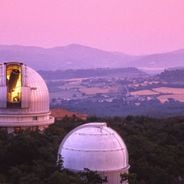
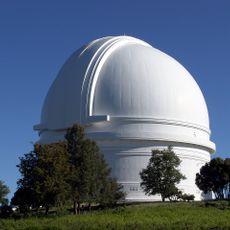
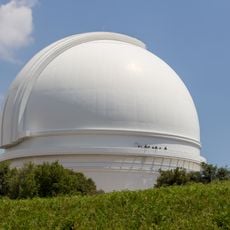
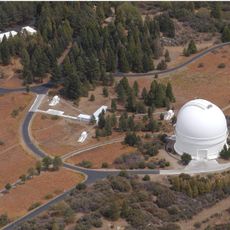
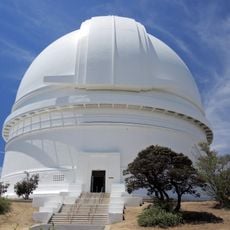
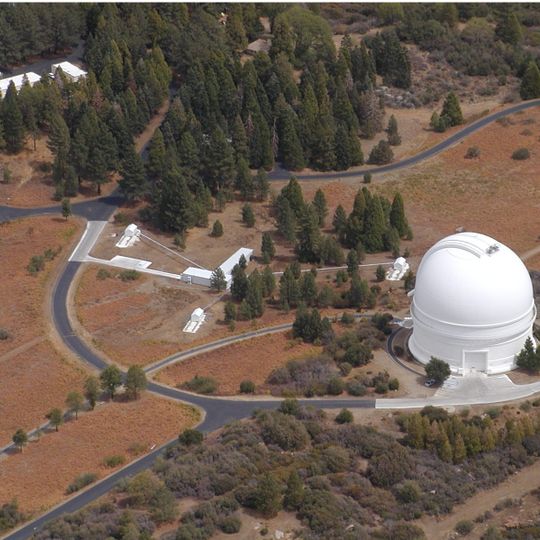
Palomar Observatory is an astronomical research facility owned and operated by Caltech on Palomar Mountain in San Diego County, California, at an altitude of 1,706 m. Its best-known structure is the white hemispherical dome of the 200-inch Hale Telescope, designed in Art Deco style by Russell W. Porter, which rests on a cylindrical base beside a flat-roofed rectangular entry annex. The dome stands in a clearing of dry ground and scattered dark green trees, with a curved paved road sweeping around its front.
Construction began in 1936 following funding from the Rockefeller Foundation, and the California Institute of Technology opened the completed facility in 1949. The main telescope was the largest optical instrument of its kind worldwide until the mid-1970s.
The observatory's name comes from the Luiseño word for 'place of the pigeons,' referring to wild birds that once nested in the mountain area. The site is also known for the Art Deco architecture of its buildings, designed by Russell W. Porter, including the dome of the 200-inch Hale Telescope. Visitors can take self-guided tours of the 200-inch telescope daily from 9 a.m. to 3 p.m., and guided tours of the Hale Telescope dome are available on weekends from April through October.
The observatory sits at the end of a winding mountain road that may close in winter during snow or ice conditions. Visitors should bring warm clothing, as temperatures at this elevation remain cooler than in the valley even during summer months.
The main mirror of the Hale Telescope was cast from a special heat-resistant glass that took almost a year to cool after pouring. The finished mirror element weighs about 14.5 tons and was transported by rail across the United States to the mountain.
The community of curious travelers
AroundUs brings together thousands of curated places, local tips, and hidden gems, enriched daily by 92,832 contributors worldwide.