Black Peaks Formation, Geological formation in Big Bend National Park, Texas, US
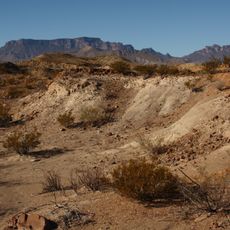
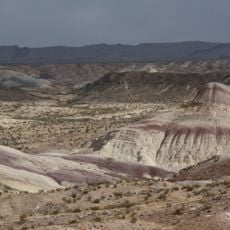
The Black Peaks Formation is a geological layer in Big Bend National Park made of colorful clay mixed with yellow, buff, and gray sandstone. The rock layers show clear patterns of water movement and span significant depths below the surface.
The formation was first documented in 1965 when Maxwell and Dietrich mapped the geology of the Big Bend region. Their work helped geologists understand the earth's history in this desert area.
The formation holds fossils of crocodiles, fish, turtles, and mammals that reveal what animal life looked like in this region millions of years ago. Visitors can observe these ancient remains in the exposed rock layers throughout the park.
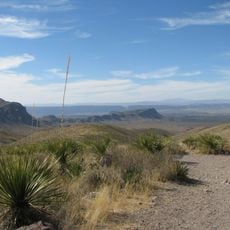
You can see the rock layers at several exposed spots in the northern part of the park where they rise above the ground. It helps to stay on established trails when exploring to view the formations safely.
The name comes from three small black peaks on the east side of Tornillo Flat that stand out in the landscape. These dark rocky tops gave the entire geological layer its distinctive name.
The community of curious travelers
AroundUs brings together thousands of curated places, local tips, and hidden gems, enriched daily by 60,000 contributors worldwide.