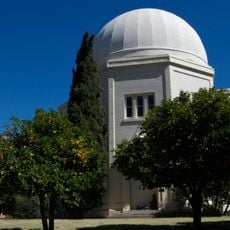
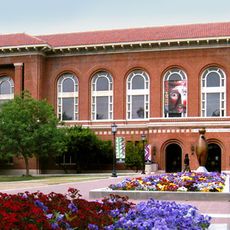
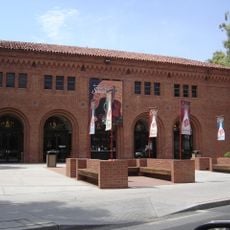
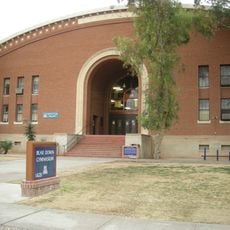
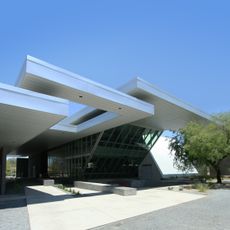
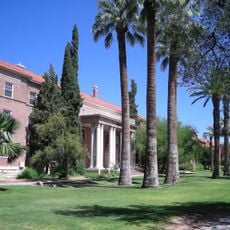
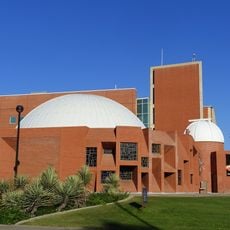
University of Arizona College of Optical Sciences, Advanced optics research center at University of Arizona, United States
The University of Arizona College of Optical Sciences is a research and teaching facility on the University of Arizona campus in Tucson, focused on the science of light and its applications. Its laboratories are equipped with lasers, spectrometers, and other optical instruments used across fields such as fiber optics, quantum technology, and medical imaging.
The college was founded in 1964 with support from the Air Force Institute of Technology, with Dr. Aden Meinel serving as its first director. That early focus on applied optics shaped its growth into one of the most recognized programs of its kind.
The college is seen worldwide as a reference point for optics research, which draws students and scientists from many countries to Tucson. This mix of backgrounds is noticeable on campus and shapes how people work and study there day to day.
The facility sits on the main University of Arizona campus in Tucson and is easy to reach on foot from other parts of the university. Public lectures and open house events are held occasionally, so it is worth checking ahead if you want to visit.
The college's faculty has included two Physics Nobel laureates: Willis Lamb, who discovered the Lamb shift and won the 1955 prize, and Nicolaas Bloembergen, a 1981 laureate who pioneered non-linear optics. Peter Franken, also on the faculty, gave the first experimental demonstration of second-harmonic generation.
The community of curious travelers
AroundUs brings together thousands of curated places, local tips, and hidden gems, enriched daily by 92,734 contributors worldwide.