Curaçao Museum, History museum in Willemstad, Curaçao
The Curaçao Museum displays historical objects, furniture, and artifacts within a former military hospital building constructed in 1853 in Willemstad. The collections span from the 18th through early 20th centuries and are arranged across several rooms.
The museum was established in 1948 after Chris Engels founded the Curaçao Museum Foundation. Government support and community donations enabled the creation of the island's first comprehensive collection documenting local history.
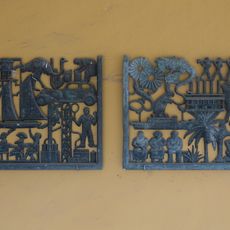
The traditional kitchen stands out for its red wall with white dots. In the West Indies room hangs Charles Eyck's 1953 Arbeiderspaneel, while another room holds Willem Bogtman's stained-glass map of the Caribbean made for the 1939 World's Fair. A carillon named De Vier Koningskinderen, cast by Eijsbouts-Lips and inaugurated in 1952, still plays above the rear gallery.
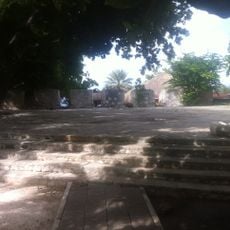
The museum occupies the former quarantine hospital Mundo Novo on a hill above Otrobanda, reached by a large entrance stair added in the 1951–1953 conversion. The separate pavilions are linked by galleries, and the grounds hold a sculpture garden and a botanical garden, so allow time to walk between the buildings and the outdoor pieces.
The Snip gallery holds the Fokker Snip that made the first West-Indisch Bedrijf flight. The garden also has a phosphate train from the Tafelberg mine and a historical-cultural children's village.
The community of curious travelers
AroundUs brings together thousands of curated places, local tips, and hidden gems, enriched daily by 94,128 contributors worldwide.