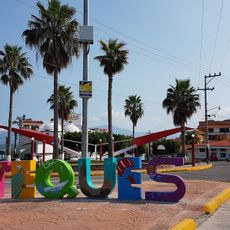
Tequesquitengo Lake, Natural lake in Morelos, Mexico
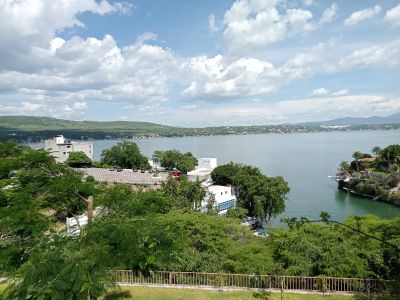
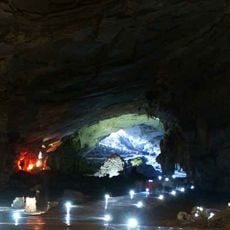
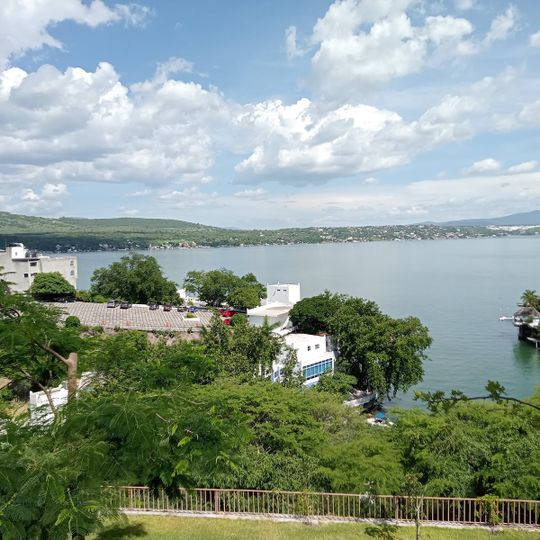
Tequesquitengo Lake is a natural, teardrop-shaped lake in a closed basin of 28 km², with a water surface of 8 km² measuring 4.2 km long, 2.5 km wide and 16 km around, at 887 m above sea level between Puente de Ixtla and Jojutla de Juárez. Geologically it is a tectonic depression over 130 m deep, formed when the roof of large limestone caverns collapsed. It is fed mainly by springs within the lake and by ravines such as Barranca Honda and Barranca del Muerto in the rainy season.
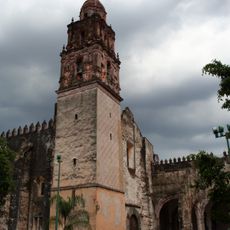
The town of San Juan Bautista Tequesquitengo was founded around 1650 beside a small spring, where locals harvested tequesquite for soap and fodder and grew sesame and corn. In the 19th century the Mosso brothers of the San José Vista Hermosa hacienda diverted irrigation runoff into the valley, raising the lake until it covered the town and its church tower by 1865.
Every third Thursday of May, the feast of the Señor de la Ascensión is held with a solemn boat procession around the lake, followed by a mass, traditional dances and a display of regional crafts. The name Tequesquitengo comes from tequesquite, the mineral salt once harvested here for soap-making and livestock purging.
The water welcomes activities like sailing, jet skiing, diving, and boating, with rentals and launching points scattered around the shore. Many visitors choose a spot along the bank to settle in for swimming, dining, or simply watching the water.
In winter, surface water cools and mixes with denser, oxygen-poor water from the bottom, deoxygenating the lake and killing fish. The old town's church dome lies about 6 metres down, marked by a buoy, and divers reach it from the central part of the lake.
The community of curious travelers
AroundUs brings together thousands of curated places, local tips, and hidden gems, enriched daily by 93,830 contributors worldwide.