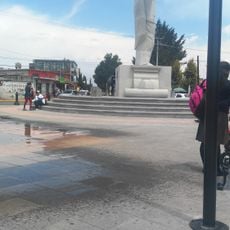
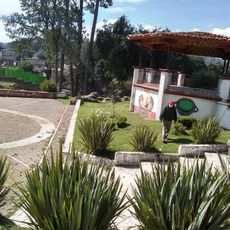
Centro Cultural Mexiquense, Cultural complex in Toluca, Mexico.
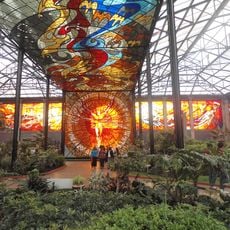
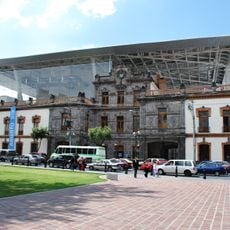
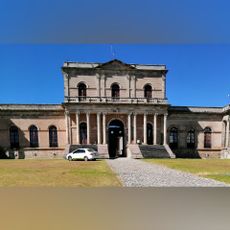
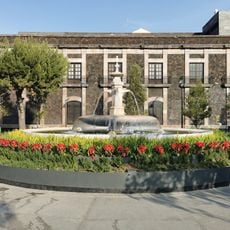
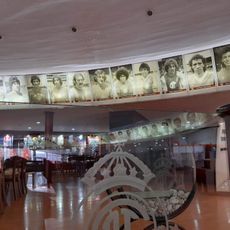
The Centro Cultural Mexiquense occupies part of the former San José de la Pila hacienda on Toluca's western edge. Architect Pedro Ramírez Vázquez designed its three museums, inaugurated in 1987: Anthropology and History, Popular Cultures in the old hacienda house, and Modern Art in a circular former planetarium with an aluminum-ringed roof. The grounds hold about seventy iron, bronze and wood sculptures.
The land belonged to the Franciscan monastery of Nuestra Señora de la Asunción before becoming the San José de la Pila Hacienda, one of the largest cattle estates in the Toluca Valley, with a freshwater spring. The state acquired the hacienda in 1976 and set aside 177,989 hectares for the cultural center, designed by architect Pedro Ramírez Vázquez and inaugurated in 1987.
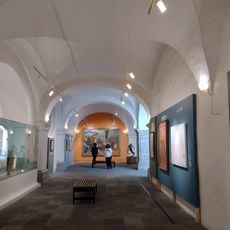
The Museum of Popular Cultures occupies the former main house of the San José de la Pila hacienda, a monastery built at the end of the 17th century. Its five permanent halls show a double-sided Tree of Life 5.2 meters tall with over 5,500 decorative elements, Otomi rugs from Temoaya, Mazahua textiles, Metepec ceramics and a charrería room with two pistols from 1850.
The grounds are large, so plan enough time for your visit and wear comfortable shoes. The library and museums have different hours, so check ahead for the specific times of the areas that interest you.
In 2005, this location hosted an unusual art project where hundreds of graffiti artists worked together on large-scale murals. The event showed how the complex brings together contemporary and popular art forms.
The community of curious travelers
AroundUs brings together thousands of curated places, local tips, and hidden gems, enriched daily by 94,537 contributors worldwide.