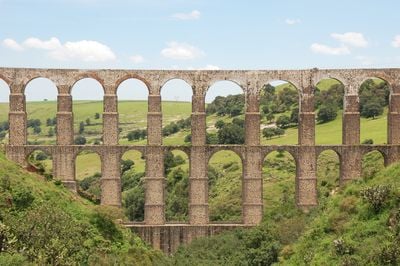
Tepotzotlán Aqueduct, Colonial aqueduct in Tepotzotlan, Mexico
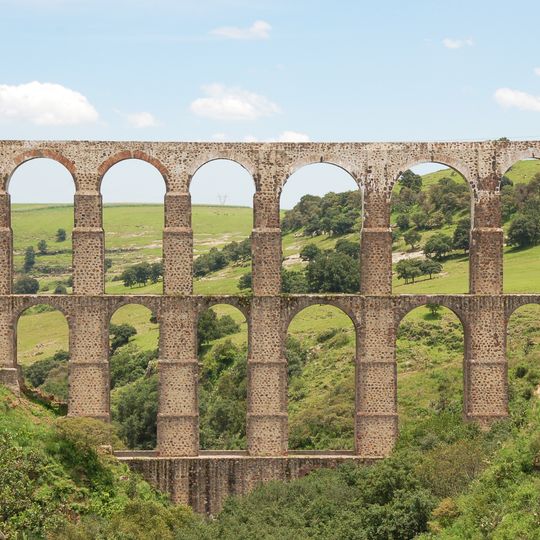
The Tepotzotlán Aqueduct is a colonial-era arch structure stretching 425 meters across four main sections. Its 43 arches rise to approximately 61 meters, creating a distinctive stone engineering work.
Construction began in 1706 under Jesuit supervision to carry water from the Xalpa mountains. Completion came later in 1854 under Count Manuel Romero.
The structure supplied water to the Jesuit monastery of San Francisco Javier during colonial times. It shows how European builders and local workers collaborated to move water across long distances.
The aqueduct is accessible to visitors daily and allows walking along and around its structure. Convenient pathways run along the construction, with morning and early afternoon being the best times to visit.
The structure ranks among Latin America's tallest aqueducts, and its architectural boldness was remarkable for the region at the time. Today visitors can experience modern activities like zip lines that blend historical surroundings with contemporary adventure.
The community of curious travelers
AroundUs brings together thousands of curated places, local tips, and hidden gems, enriched daily by 91,370 contributors worldwide.