Corpus Christi Cathedral, Tlalnepantla, Catholic cathedral in Tlalnepantla de Baz, Mexico
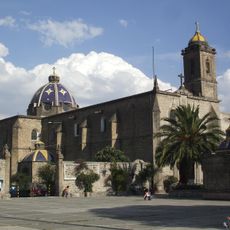
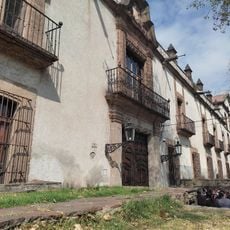
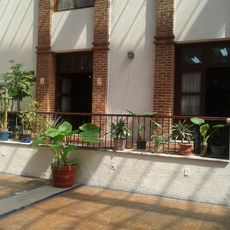
Corpus Christi Cathedral has a single nave with a barrel vault, following the layout of 16th-century monasteries: a central nave attached to a cloister, with an atrium outside both. On the north door, indigenous hands carved the glyphs of Tenayuca and Teocalhueyecan, the towns the Franciscans gathered to form Tlalnepantla. The cloister retains tequitqui-style paintings in its niches and friezes, and a sundial sits on its upper level.
The site originally held a Franciscan convent founded in 1525, which was reconstructed after a fire in 1666 into the Baroque structure seen today. This rebuilding transformed the religious space into the current architectural form.
The name Tlalnepantla comes from Nahuatl and means "land in the middle", referring to the Franciscan congregation of the peoples of Tenayuca and Teocalhueyecan. On the north door, indigenous hands carved the glyphs of both towns. In the cloister, tequitqui-style paintings remain in the niches and friezes, and a sundial is still visible on the upper part.
The cathedral is open during daylight hours for visitor exploration, with regular worship services held throughout the week. Arriving early allows for better viewing of the stone details in natural light.
The north door, or porciúncula, carries glyphs carved by indigenous hands for Tenayuca and Teocalhueyecan, the two towns the Franciscans joined to form Tlalnepantla, 'land in the middle'. A sundial survives on the upper part of the cloister.
The community of curious travelers
AroundUs brings together thousands of curated places, local tips, and hidden gems, enriched daily by 94,121 contributors worldwide.