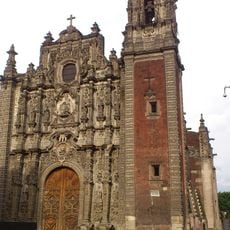
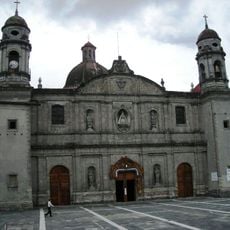
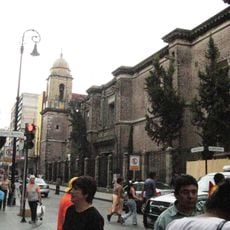
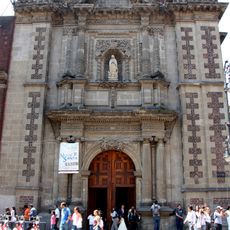
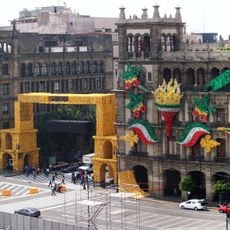
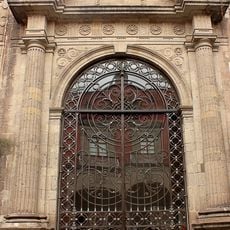
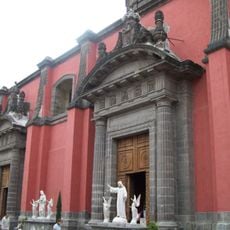
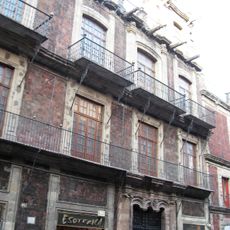
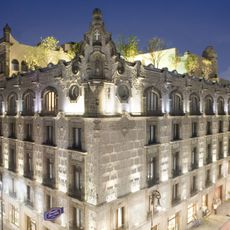
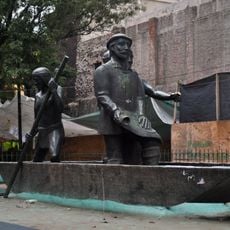
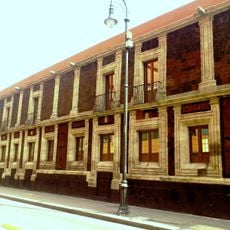
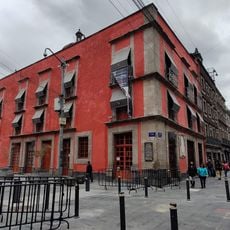
Plaza Juan José Baz, Public square in Centro, Mexico City.
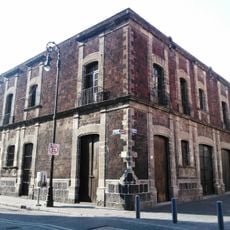
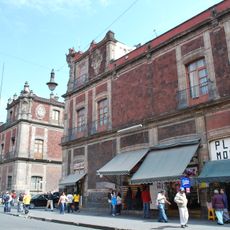
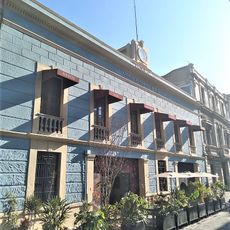
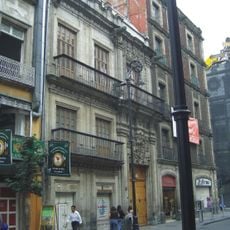
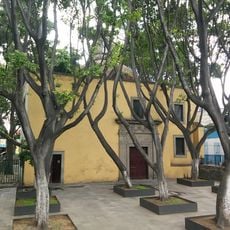
Plaza Juan José Baz, known as La Aguilita, sits between Mesones and Misioneros streets in the La Merced neighborhood of Mexico City's Colonia Centro. Its central fountain carries a column topped by an eagle with a serpent in its beak, and 42 ceramic eagles reproducing every national coat of arms line the planter walls. Shops surround the square, and an old street plaque reading "puente de curtidores" marks the corner with Misioneros.
The square received its name on March 20, 1868, honoring liberal governor Juan José Baz, who championed the secularization of church properties. This naming reflects his role in Mexico's political development during the 19th century.
The planters around the square are decorated with mosaics showing a range of Mexican national coats of arms, and the fountain column carries an eagle with a serpent in its beak. The name La Aguilita comes from that founding symbol. Nearby stands the Casa Talavera, and at the corner of Misioneros an old street plaque reads "puente de curtidores", recalling the leather-tanning trade once centred here.
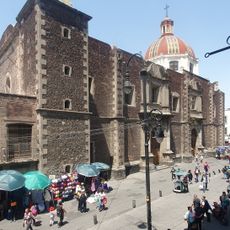
The square provides access to numerous local shops with competitive prices compared to large retail chains in other parts of the city. Its central location makes it easy to reach and a good starting point for exploring the historic center.
Local tradition holds that this location marks the spot where Aztecs discovered the eagle devouring a serpent, an event that led to the founding of Tenochtitlan. This legendary moment connects the square's present form to the mythical origins of the city.
The community of curious travelers
AroundUs brings together thousands of curated places, local tips, and hidden gems, enriched daily by 94,669 contributors worldwide.