Church of Nuestra Señora de Valvanera, Mexico City, Spanish Baroque cathedral in Centro Histórico, Mexico City, Mexico
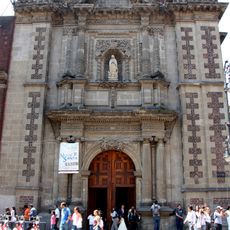
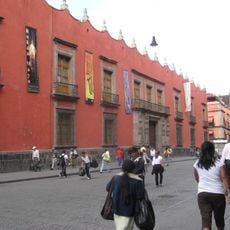
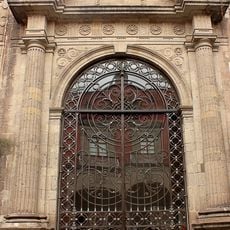
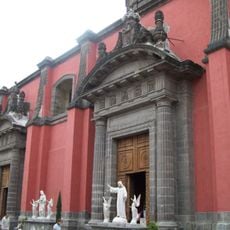
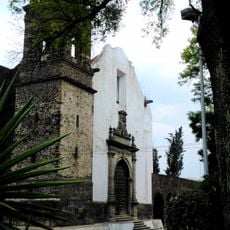
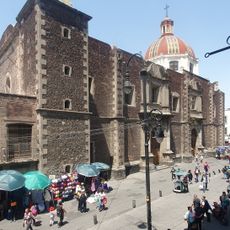
The Church of Nuestra Señora de Valvanera stands at Correo Mayor and República de Uruguay, southeast of the Zócalo. Its tezontle facade is divided by five buttresses and topped by an entablature whose frieze carries anagrams of the names of Jesus and Mary. Twin Neoclassical portals were added in the early 19th century, and the bell tower is clad in Puebla tile. The main entrance is on the side, as was usual for Mexican convent churches.
The church began as part of the Convent of Santo Niño Perdido, founded in 1573. In the 17th century the convent became Conceptionist and was rebuilt with the church in 1667, funded by Beatriz de Miranda, who gave the temple its current name. The Reform Laws forced the nuns out in 1861 and the cloister was demolished from 1929. It was declared a historic monument on August 30, 1932.
The name comes from the Black Virgin of Valvanera, whose 17th-century oil painting survived the near-destruction of the main altar in the 19th century. The painting and sculptures were donated by a Maronite church, and the building now serves as the cathedral of the Maronite Catholic Eparchy of Our Lady of the Martyrs of Lebanon in Mexico.
The church is active as a place of worship and welcoming to visitors interested in viewing the interior. The best time to visit is outside of service hours when you have more freedom to explore the architectural details.
Only this church and La Encarnación have Puebla tile on their bell towers. The facade of tezontle is divided by five buttresses and topped by a frieze with anagrams of the names of Jesus and Mary.
The community of curious travelers
AroundUs brings together thousands of curated places, local tips, and hidden gems, enriched daily by 93,794 contributors worldwide.