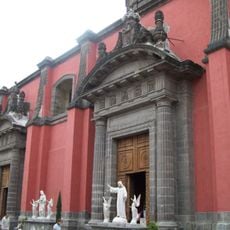
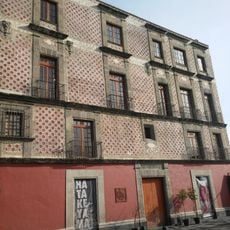
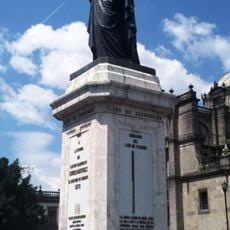
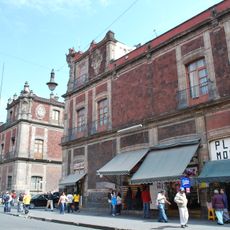
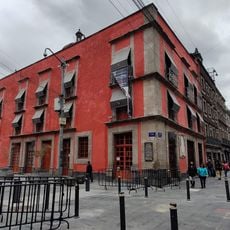
Antigua Casa de Moneda de México, Colonial mint building in Centro Histórico, Mexico City.
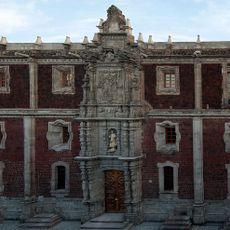
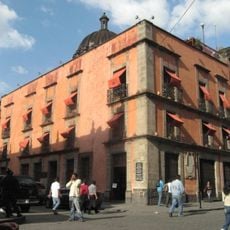
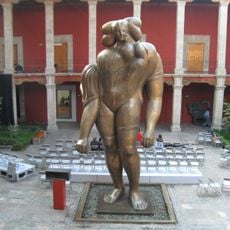
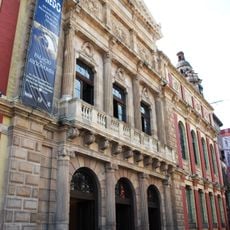
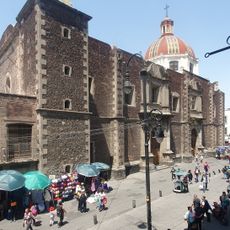
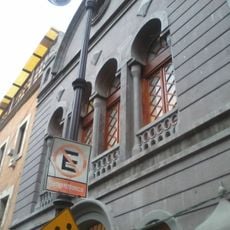
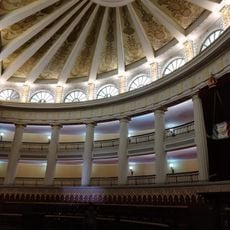
The former mint is a three-story stone building in the historic center with large arched windows, carved stone details, and a central courtyard showing traditional Mexican design. The structure retains its colonial layout and continues to shape the streetscape of this historical neighborhood.
The Real Casa de Moneda opened in 1535 in the rear of the 'casas viejas de Moctezuma', on land rented from Hernán Cortés. In 1569 the government bought the 'casas nuevas' from Martín Cortés and built this third mint building between 1570 and 1572 under Miguel Martínez, using stone from Cortés's demolished shipyards. The Crown took direct control in 1729 and expanded the building in 1732–1734 and again in 1772–1779. Minting moved to the Casa del Apartado in 1848.
The building now houses the National Museum of Cultures, where visitors encounter exhibits about civilizations from around the world and Mexico's monetary past. These collections show how money and culture intertwine across different societies.
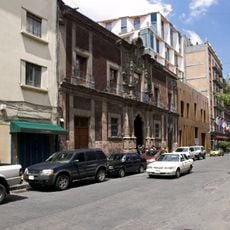
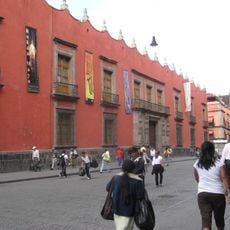
The building stands on the north side of the Palacio Virreinal, and the street it faces is named Calle de Moneda after it. It now houses the Museo Nacional de las Culturas, run by the Instituto Nacional de Antropología e Historia. The Zócalo metro station is nearby.
In 1778 the engraver Jerónimo Antonio Gil opened an engraving school in an annex of the mint; its success led him to propose the Academy of San Carlos in 1781, first housed in the mint itself until it moved to its own premises in 1791. The building later served as a barracks, the Ministry of Finance and the Supreme Court.
The community of curious travelers
AroundUs brings together thousands of curated places, local tips, and hidden gems, enriched daily by 93,856 contributors worldwide.