Templo Mayor, Archaeological site in Cuauhtémoc, Mexico City, Mexico
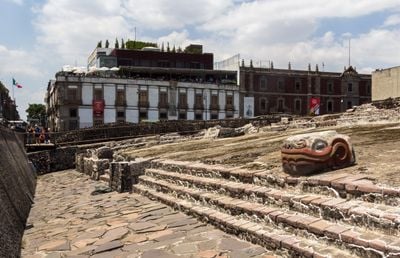
The Templo Mayor is a multi-level sanctuary in the historic center of the capital whose stone platforms and stairways now lie below modern street level. The excavated areas reveal the foundations of several structures built one atop another, along with remnants of altars and ceremonial objects.
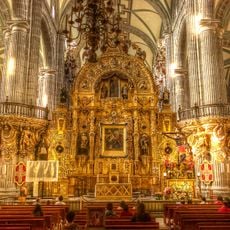
The first structure rose in the early 14th century on an island in Lake Texcoco as the central sanctuary of a newly founded city. Successive rulers expanded the complex over two centuries until Spanish forces dismantled it in the early 16th century and repurposed its stones for the cathedral.
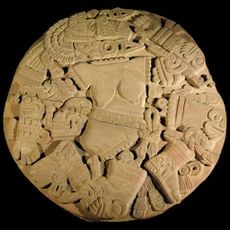
The Nahuatl name Huēyi Teōcalli means "great house of god"; the Spanish Templo Mayor simply means "Main Temple". The twin shrines on the summit held Tláloc, god of rain, on the north side painted blue, and Huitzilopochtli, god of war, on the south side painted red. A stone disk of their sister Coyolxauhqui, over 3.25 m across, was found at the base in 1978.
The grounds open Tuesday through Sunday in the morning and close in the late afternoon, giving visitors ample time to explore the exposed levels at a comfortable pace. Arriving early means fewer crowds and cooler temperatures for the outdoor walk.
Archaeologists discovered seven earlier building phases beneath the visible ruins, each erected by a different ruler over nearly two centuries. These nested layers allow visitors today to trace the development of religious architecture from the founding to the fall of the realm.
The community of curious travelers
AroundUs brings together thousands of curated places, local tips, and hidden gems, enriched daily by 92,266 contributors worldwide.