Palace of the Marqués del Apartado, Colonial palace in Centro Histórico, Mexico City, Mexico
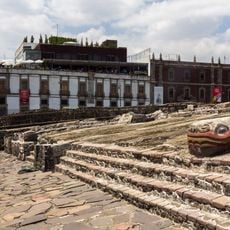
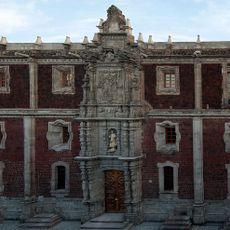
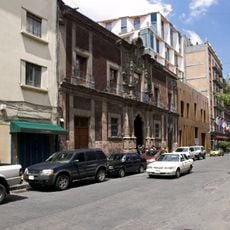
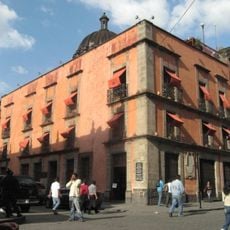
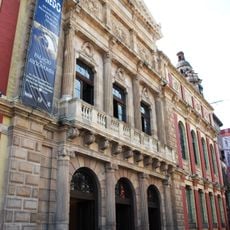
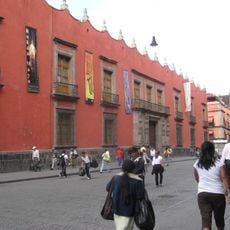
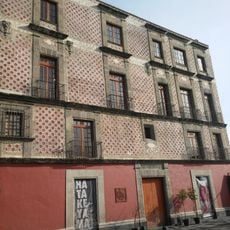
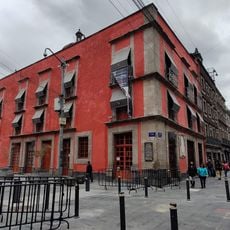
The Palace of the Marqués del Apartado is a three-level neoclassical building of grey quarried stone at the corner of Donceles and República de Argentina streets, attributed to Manuel Tolsá. Its main facade faces the Templo Mayor site, with a pediment over four round Doric pilasters; square fluted pilasters frame the windows and stone balconies of the upper floors, and a stone balustrade tops the whole building. Inside are two courtyards, the main one with a fountain.
The palace was built between 1795 and 1805 by architect Manuel Tolsá on the site of an Aztec pyramid dedicated to the goddess Cihuacóatl. This construction represented the shift from pre-Columbian structures to colonial centers of power in the urban landscape.
The title "Marqués del Apartado" was granted by King Charles III to Francisco Manuel Cayetano de Fagoaga y Arozqueta, the official gold and silver assayer (apartador) from 1718 to 1778. The palace's name thus refers to this royal office, not to a landowner. In the 19th century the lower floor was rented to businesses while families lived on the upper two floors.
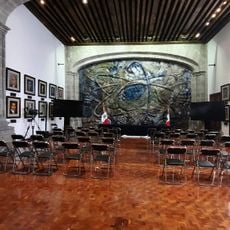
The building now houses the National Institute of Anthropology and History and is accessible to researchers and professionals. Visitors should note that access may be restricted to research hours, and it is wise to check in advance which areas are open to the public.
The eagle sculpture found in 1985 under the main staircase is the only Aztec eagle preserved in situ. It measures 1.39 m long and 0.72 m high, weighs about 1.5 tons, and still shows ochre, orange and red paint; the right side of its face is missing. Archaeologist Elsa Hernández Pons excavated it.
The community of curious travelers
AroundUs brings together thousands of curated places, local tips, and hidden gems, enriched daily by 94,262 contributors worldwide.