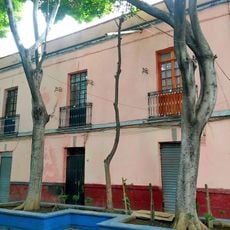
Palace of the Inquisition, Colonial judicial building in Historic Center, Mexico
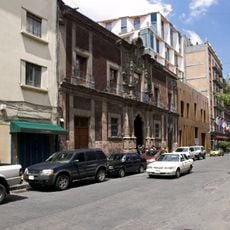
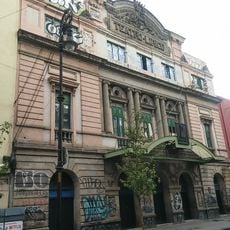
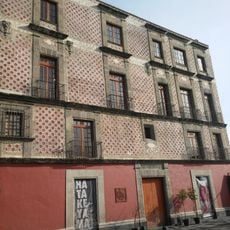
The Palace of the Inquisition is a colonial building at the corner of República de Brasil and República de Venezuela streets, with its entrance on a canted corner facing Santo Domingo Plaza. Its facade is covered in reddish tezontle stone, with windows and doors framed in greyish-white chiluca. The courtyard arches appear to hang from the ceiling, crossing those supported by pilasters and columns.
The Inquisition was officially disbanded in Mexico in 1820, not 1812; its tribunal had operated here since 1571, and the present palace was built between 1732 and 1736 by Pedro de Arrieta. After 1820 the building served as lottery offices, a primary school and a military barracks before being sold to the School of Medicine in 1854. A third floor was added in 1879, and the Museum of Mexican Medicine opened on 22 December 1980.
The museum's 24 rooms trace Mexican medicine from pre-Hispanic times to the 20th century. One room is devoted to indigenous herbal medicine, and a collection of wax figures was used to teach pathology. The building also holds UNAM's Dr. Nicolás León Library and the historical archive of the Faculty of Medicine.
The building sits at the corner of República de Brasil and República de Venezuela streets, easy to locate in the downtown area. Plan enough time to walk through the different exhibition areas, as the museum spans multiple floors and rooms with substantial collections.
The southwest corner is cut at an angle so the entrance faces Santo Domingo Plaza, an innovation by architect Pedro de Arrieta in New Spain. The palace was nicknamed Casa Chata, "Flat-faced House", for this canted corner. The jail inside was called la cárcel de la perpetua, since many inmates were confined for life.
The community of curious travelers
AroundUs brings together thousands of curated places, local tips, and hidden gems, enriched daily by 93,774 contributors worldwide.