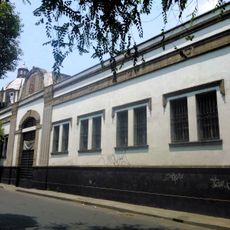
Sepulcro de Villaseca, Renaissance sepulcher in Historic Center, Mexico
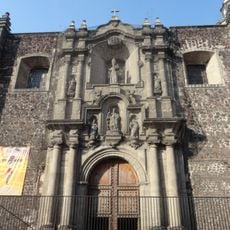
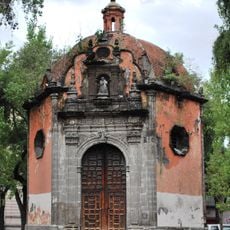
The Sepulcro de Villaseca is a funerary monument inside the San Miguel Arcángel church at San Jerónimo 95, in the Historic Center of Mexico City. It was built in the late 16th century for Alonso de Villaseca and later moved here, where neoclassical additions turned it into a side altar. The Jesuit chronicler Francisco de Florencia described it in the mid-17th century.
Alonso de Villaseca died in 1580 and was first buried in the Jesuit chapel; his remains were moved in 1603 to the sepulcher built in the still-unfinished church of San Pedro y San Pablo. After the Jesuits' expulsion in 1767, the church was closed, and on the night of 20 July 1784 his remains were transferred to the Convento de San Francisco. The tomb itself was dismantled in the early 19th century and moved to San Miguel Arcángel, where it was adapted as a side altar.
The sepulcher was made for Alonso de Villaseca, a benefactor of the Society of Jesus who funded the Colegio Máximo de San Pedro y San Pablo. The Jesuit chronicler Francisco de Florencia described the monument in the mid-17th century, and that account later allowed Gonzalo Obregón to identify the marble elements in 1958.
The sepulcher now serves as a side altar inside the parish church of San Miguel Arcángel, at Calle de San Jerónimo 95 in the Centro Histórico. Look for the marble elements with Renaissance reliefs on one of the lateral altars, since neoclassical additions were made when it was moved here in the early 19th century.
In 1956 Manuel Romero de Terreros and Gonzalo Obregón saw Renaissance marble pieces on a side altar of San Miguel but could not identify them; two years later Obregón recognized the tomb while reading Francisco de Florencia's Jesuit chronicle, which describes the monument. The historian Joaquín García Icazbalceta had declared it lost in the mid-19th century.
The community of curious travelers
AroundUs brings together thousands of curated places, local tips, and hidden gems, enriched daily by 94,483 contributors worldwide.