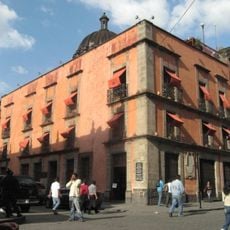
Tlaxcala House, Mexico City, Colonial building at San Ildefonso Street 40, Historic Center, Mexico City.
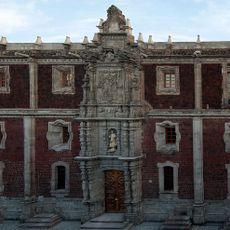
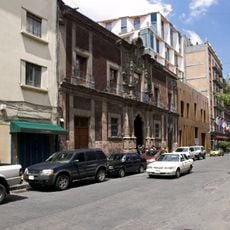
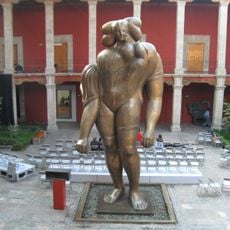
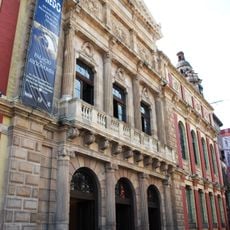
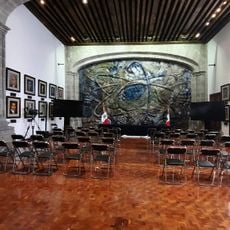
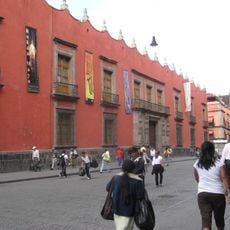
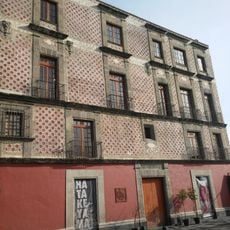
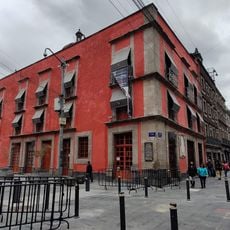
Tlaxcala House is a two-level house at 40 San Ildefonso Street, its facade mostly covered in blood-red tezontle volcanic stone, with grayish-white chiluca framing the windows and doors. The main doorway leads to an entrance hall and then the inner patio, where only three of four sides have corridors and rooms; the fourth is a plain wall. The north and south corridors have arches, the north corridor has heavy beamed ceiling, and an octagonal skylight lights the stairway.
Built in the 18th century as a middle-class residence between the mansions of the wealthy and the homes of commoners, the house later sheltered the Cuban writer José Martí near the end of the 19th century; a plaque at the entrance records his stay. It now houses the Tlaxcala State delegation to the federal government in Mexico City.
The house is named for the state whose delegation occupies it today, and the plaque by the door marks where the Cuban writer José Martí lived in the late 19th century. The building is a working office, so the courtyard and corridors are seen in passing rather than visited.
The building at 40 San Ildefonso Street is the working office of the Tlaxcala State delegation, so the interior courtyard and corridors are not open to visitors; the facade and the entrance plaque to José Martí can be seen from the street. The Zócalo and the Metro station of the same name lie a short walk away.
Only three of the four sides of the inner patio have corridors and rooms; the fourth is a plain wall. The north corridor keeps a ceiling of heavy beams, and the staircase to the upper floor is lit by an octagonal skylight. A plaque at the entrance marks that the writer José Martí lived here in the late 19th century.
The community of curious travelers
AroundUs brings together thousands of curated places, local tips, and hidden gems, enriched daily by 94,045 contributors worldwide.