National Museum of Anthropology, Archaeological museum in Chapultepec Park, Mexico City, Mexico
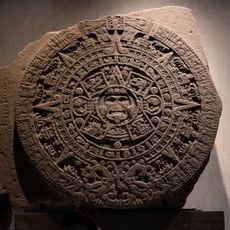
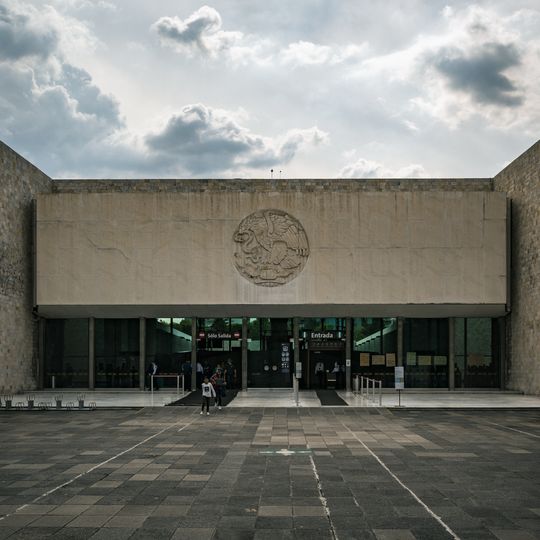
The National Museum of Anthropology is an archaeological museum in Chapultepec Park, Mexico City, with 22 permanent exhibition halls arranged around a central courtyard. Its facade combines smooth pale stone with a large circular relief and textured stone walls; inside, galleries with alternating light and dark floor tiles display carved stone monuments, including a relief slab and a thick-rimmed basin.
The museum opened in September 1964, replacing an older building that could no longer hold the growing collections. Architect Pedro Ramírez Vázquez designed a new concept with a large concrete umbrella covering the courtyard, supported by a single column.
The name comes from the Greek anthropos, "human", and logos, "study". The ground floor holds the archaeology of pre-Hispanic peoples and the upper floor the ethnography of Mexico's indigenous groups today. The Mexica hall, the largest, was placed at the centre of the circuit, a choice Octavio Paz criticised as turning the museum into a temple to Mexico-Tenochtitlan.
The museum opens Tuesday through Sunday and remains closed on Mondays. Admission costs 95 pesos, though students, teachers, and seniors enter free with valid identification.
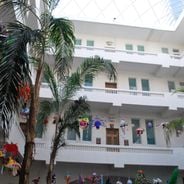
The courtyard shows a rectangular curtain of water falling from the concrete umbrella and flowing over the central column. This continuous waterfall forms a moving wall between sky and ground, visible in any weather.
The community of curious travelers
AroundUs brings together thousands of curated places, local tips, and hidden gems, enriched daily by 92,305 contributors worldwide.