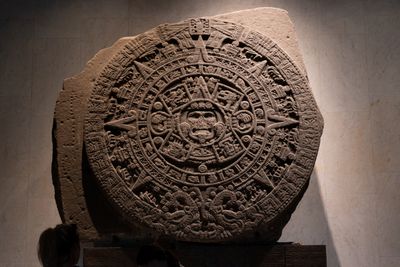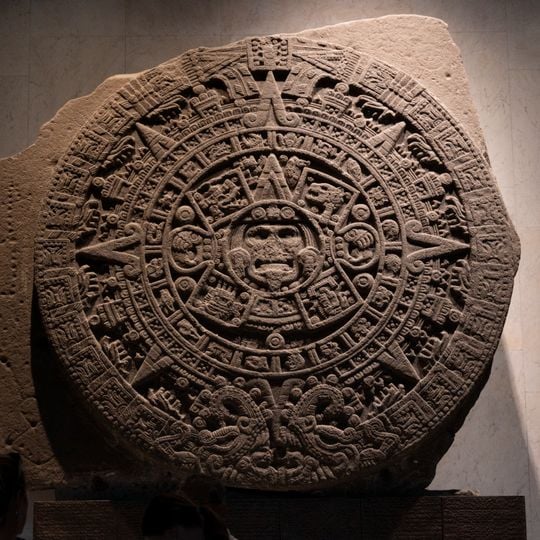
Aztec sun stone, Monumental sculpture at National Museum of Anthropology, Mexico.
The Aztec sun stone is a round basalt sculpture at the National Museum of Anthropology in Mexico City. The disc of dark stone displays concentric circles carved with deities and geometric figures.
Mexica craftsmen carved the stone around 1510, roughly a decade before the Spanish conquest. Workers unearthed it in 1790 during excavations in the capital's center, after it had lain underground for more than two centuries.
The glyphs carved into the basalt reflect the Mexica ritual system organized around solar cycles. Each symbol refers to a section of the 260-day calendar, which remains in use among some communities in Mexico today.
The sculpture stands upright in the Mexica Hall on the ground floor, where you can view it from several angles. Fewer visitors gather in this room during the morning, which allows for a quieter experience.
The craftsmen who made the stone used obsidian and other hard tools to cut more than a thousand symbols into the basalt. This carving work demanded several years of labor from a team of specialized stonemasons.
The community of curious travelers
AroundUs brings together thousands of curated places, local tips, and hidden gems, enriched daily by 60,000 contributors worldwide.