Cerro de las Minas, Archaeological site in Huajuapan de León, Mexico.
Cerro de las Minas is an archaeological site spread across a hilltop, featuring earthen mounds, a ball court, and residential zones arranged with terraced structures. Multiple ceremonial areas are visible throughout the complex, showing how the settlement was organized.
The site was founded in the late Preclassic period by people from Santa Teresa, 2 km south, during the Ñudee phase (400 BCE–250 CE), when fills up to 4 m thick were laid to level the hill. From 250 CE it became a city-state of the Ñuiñe phase, ruling an area of 10–15 km radius with 1,000–2,000 inhabitants, until decline around 800 CE. Huajuapan was refounded in the valley in 1525.
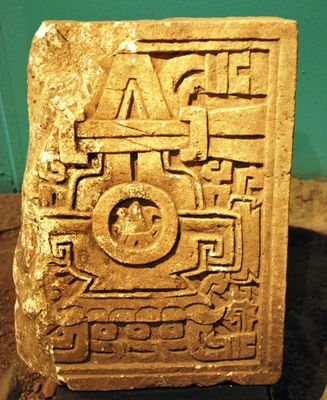
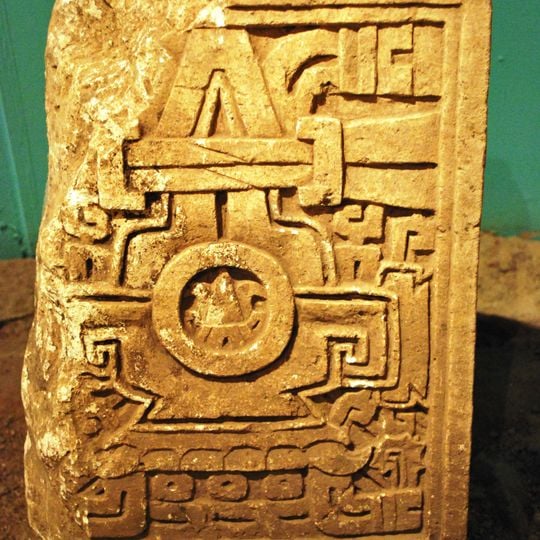
The site gave its name to the Ñuiñe writing system, whose relief inscriptions resemble the Zapotec stelae of Monte Albán. Tomb 5, south of the main plaza in the palace complex, held three burials, probably of the ruling family, with vessels and gravestones bearing the names of the dead.
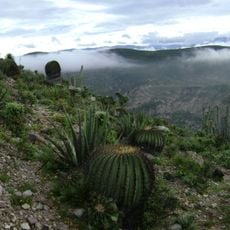
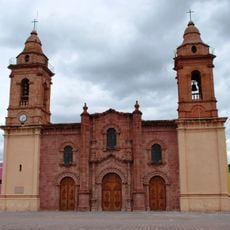
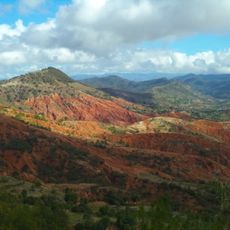
The site lies on a hill within the neighborhoods of Chapultepec, Santa Rosa, Alta Vista and Del Maestro, north of central Huajuapan de León. Paths climb the terraced slopes, so allow time for walking and wear sturdy shoes. The excavated areas are open to the public, and the hilltop position gives views over the valley farmland.
Tomb 5, south of the main plaza in the palace complex, held three burials probably of the ruling family; nine tombs and over 100 ordinary graves were found at the site. Obsidian, ceramics, textiles, metals, salt, wood, charcoal, fruit and copal moved along the valley routes, but these were trade goods, not excavated finds.
The community of curious travelers
AroundUs brings together thousands of curated places, local tips, and hidden gems, enriched daily by 93,764 contributors worldwide.