Chapelle des Doux Noms, Catholic chapel in downtown Monterrey, Mexico
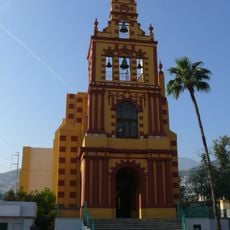
The Chapel of the Sweet Names is a small religious building in downtown Monterrey built with thick stone walls and a simple rectangular form. The structure has the solid appearance typical of chapels from its era, with traditional Catholic design elements throughout.
The chapel was built around 1830 on the orders of the widow of José Antonio de la Garza Saldívar, fulfilling a clause in his will. It was declared a national heritage site on 7 January 1938. In 1945 its ashlar walls were covered with sand and cement mortar, and in 1956 a demolition attempt was halted when the building was deemed a relic. On 11 May 1985 the municipal government handed it to the archdiocese of Monterrey and a citizen board was formed for its care.
The name refers to the Dulces Nombres (Sweet Names) of Jesus and Mary, the devotion under which the chapel was founded by the widow of José Antonio de la Garza Saldívar. On 11 May 1985 the municipality handed the building to the archdiocese of Monterrey, and a citizens' board (patronato) was formed to care for it. The interior has no windows or side elements, so services are held in a single unlit nave.
The chapel stands at the corner of Zaragoza and Padre Mier streets in the historic center of Monterrey, reachable on foot from the surrounding downtown blocks. Its interior has no windows and no side elements, so light comes only through the entrance. The building is a national heritage site, handed to the archdiocese in 1985 and cared for by a citizen patronage.
The chapel has no windows or side elements inside; light enters only through the wooden two-leaf door of the main facade. Its walls are ashlar masonry 1.3 m thick, and in 1945 they were covered with sand and cement mortar. The facade ends in a truncated pediment with circular recesses at its ends.
The community of curious travelers
AroundUs brings together thousands of curated places, local tips, and hidden gems, enriched daily by 94,125 contributors worldwide.