Oakleigh Historic Complex, Historic house museum in Mobile, Alabama, United States
Oakleigh Historic Complex is a c. 1833 raised, galleried Greek Revival villa in Mobile, Alabama, with a T-shaped plan that allows cross-ventilation. Its lower floor, originally a raised basement of handmade brick from the site's clay pit, served as workspace and storage, while the main living quarters occupy the second floor. A quarter-turn cantilever staircase designed by builder James W. Roper rises to the front door. The complex also includes the 1850 Cox-Deasy Cottage, a Creole raised cottage, and the 1867 Union Barracks.
The house was built in 1833 by brick mason James W. Roper and changed ownership several times over the following decades. The Irwin family eventually acquired the property and shaped how it was used for many years afterward.
The estate's name joins the word oak with the Anglo-Saxon lea, meaning meadow, and the surrounding Oakleigh Garden Historic District takes its name from the estate. Tours are led by Oakleigh Belles and docents, and the complex also holds the Cox-Deasy Cottage, an 1850 Creole raised cottage now used as a program space by the Historic Mobile Preservation Society.
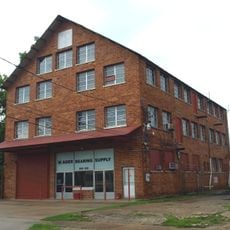
Visits are by guided tour led by Oakleigh Belles or docents, so plan to join a scheduled tour rather than wander the buildings alone. The complex groups the main house, the 1867 Union Barracks, the 1850 Cox-Deasy Cottage and the Minnie Mitchell Archives closely together, making the grounds easy to cover on foot.
The name of the complex joins the word oak with the old English term lea, meaning meadow or open ground. This points to the wooded and open land that once covered the site before any building took place.
The community of curious travelers
AroundUs brings together thousands of curated places, local tips, and hidden gems, enriched daily by 94,629 contributors worldwide.