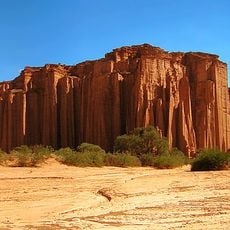
Talampaya National Park, Nature reserve in La Rioja Province, Argentina
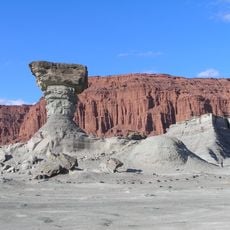
Talampaya National Park is a protected area in La Rioja Province stretching across dry plains and deep gorges with reddish sandstone walls. Wind and water have shaped the rock into forms resembling towers, pillars, and sometimes familiar figures.
The Talampaya Formation's red sandstone records over 45 million years of the planet's evolution and the breakup of Pangea more than 250 million years ago. Fossils found here include Lagosuchus talampayensis, one of the earliest archosaurs, and turtles such as Palaeocheris talampayensis, about 210 million years old. The area was made a provincial reserve in 1975, a national park in 1997, and a UNESCO World Heritage Site in 2000 together with Ischigualasto.
The name Talampaya comes from the extinct Cacán language and means "dry river of the tala". Petroglyphs survive at the Puerta del Cañón, and the park also holds collective mortars and traces of indigenous dwellings. The Talampaya River bed is dry today.
Visitors can enter the reserve only with guides, either in off-road vehicles or on foot along marked trails inside the gorge. The best time to visit is between autumn and spring, as summer months can become extremely hot.
A narrow section of the gorge hosts a collection of native plants adapted to dry conditions. Visitors can often spot guanacos grazing between rock walls here, or condors circling above the cliffs.
The community of curious travelers
AroundUs brings together thousands of curated places, local tips, and hidden gems, enriched daily by 92,661 contributors worldwide.