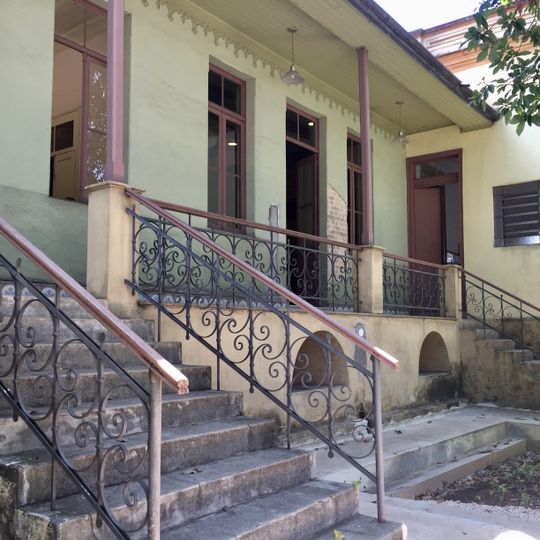
Casa de Dona Yayá, Historic building in República District, São Paulo, Brazil
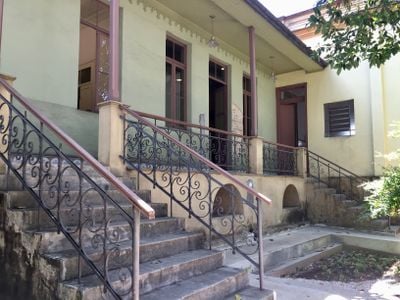
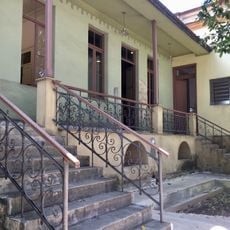
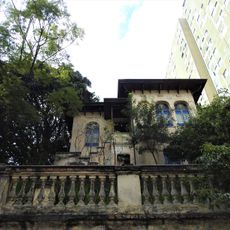
Casa de Dona Yayá is a single-storey pale green building in the República District, with a projecting veranda supported by two slender salmon-pink columns. Four tall rectangular openings with dark reddish-brown frames sit in the facade, and a wooden handrail on a black wrought-iron balustrade with scrollwork runs down grey stone steps. Two arched recesses lie beneath the veranda floor.
José Maria Tulon built a brick chalet on the site, first documented in an 1888 sale to Afonso Augusto Milliet. João Guerra added four rooms and neoclassical decoration between 1902 and 1919, inscribing "JG, 1902" at the top of the house. From 1921 to 1961 the property belonged to Sebastiana de Melo Freire, Dona Yayá, declared incapable of managing her inheritance at 31 and kept confined there until her death at 74.
The house is named after Sebastiana de Melo Freire, called Yayá, who lived confined here from 1921 until her death in 1961. Her rooms were altered so she could not open the windows from inside, and meals were passed through small openings in the walls. A solarium built in 1952 gave her only access to open air.
The house is the headquarters of the Centro de Preservação Cultural of the University of São Paulo, which has carried out maintenance and repairs since 1991. It stands in the Bixiga area of the República district, central São Paulo. Access is arranged through the center, so confirm opening before travelling.
Food was passed through a hole in the wall during decades of isolation, a daily routine that revealed the extent of confinement. A solarium constructed in 1952 marked a shift in care practices by finally providing access to sunlight.
The community of curious travelers
AroundUs brings together thousands of curated places, local tips, and hidden gems, enriched daily by 94,351 contributors worldwide.