Gurupi Biological Reserve, Biological reserve in Maranhão, Brazil
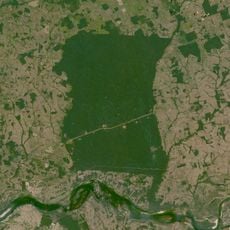
The Gurupi Biological Reserve covers around 271,000 hectares of dense Amazon rainforest in Maranhão state with varied terrain and elevation. The landscape contains different forest types and habitats that support a wide range of plant and animal life.
Brazil established this protected area in 1988 as a federal reserve to safeguard the remaining rainforest in eastern Maranhão. The creation marked an important effort to preserve large continuous forest territories in the Amazon region.
The reserve adjoins three indigenous territories — Alto Turiaçu, Awá-Guajá and Caru — and together they form the last continuous block of Amazon forest in Maranhão. The Awá-Guajá include isolated groups, and illegal timber from the Caru territory has been traced to logging operations inside the reserve, as in the 2016 Hymenaea operation.
The reserve is a strict nature reserve (IUCN category Ia) managed by the Chico Mendes Institute for Biodiversity Conservation, with full protection of biota and no human intervention. It lies in western Maranhão near the Pará border, in the municipalities of Centro Novo do Maranhão and Bom Jardim, between the Serra da Desordem and the Serra do Tiracambu. Access is not open to visitors; the area is reached overland from these municipal seats, and the reserve is one of the ten conservation units most threatened by deforestation in Brazil.
The reserve is one of twelve Pleistocene refuges identified in the Brazilian Amazon through studies of plants, butterflies and birds. It also shelters the Kaapori capuchin (Cebus kaapori), a primate endemic to eastern Amazonia and classified as critically endangered.
The community of curious travelers
AroundUs brings together thousands of curated places, local tips, and hidden gems, enriched daily by 93,862 contributors worldwide.