Wonderwerk Cave, Archaeological site near Kuruman, South Africa.
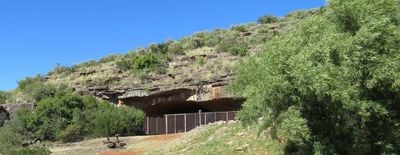
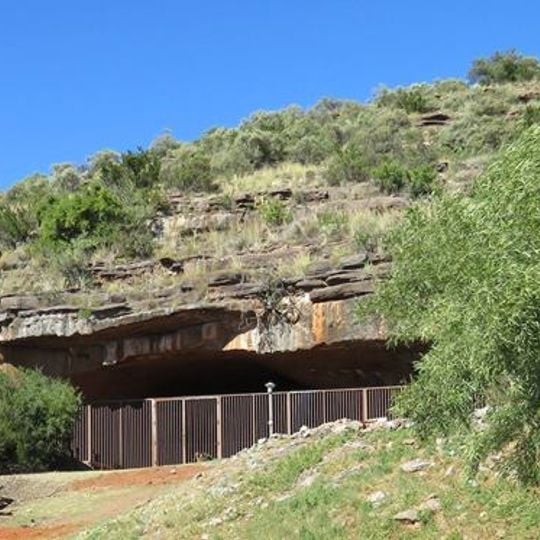
Wonderwerk Cave is a horizontal solution cavity washed out of Precambrian dolomite in the Kuruman Hills, about 45 km south of Kuruman. It runs roughly 140 m into the hillside and has a floor area of about 2,400 m², with up to 6 m of deposits over bedrock.
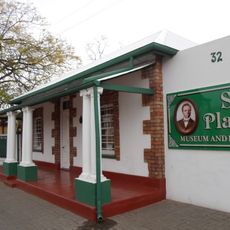
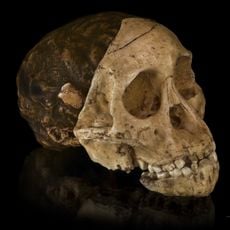
The cave's deposits were first disturbed in the 1940s, when local farmers dug out organic-rich sediment to sell as fertiliser, exposing stone tools and bone. Malan, Cooke and Wells began the first studies then; Peter Beaumont of the McGregor Museum excavated from 1978 to 1993, and Michael Chazan's team has worked there since about 2008. Oldowan tools and animal bones in a 2.5-metre layer indicate Early Stone Age occupation around two million years ago.
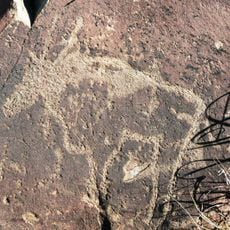
The name Wonderwerk means "miracle" in Afrikaans. Parietal paintings lie within the first 40 m from the entrance and may be under 1000 years old, while small engraved stones from the Later Stone Age date back about 10,500 years. Local African people still occasionally collect water in the cave for healing.
The cave opens on the eastern side of the Kuruman Hills, about 45 km south of Kuruman between Danielskuil and Kuruman. Access is by road; the site is managed as a satellite of the McGregor Museum in Kimberley, which holds the excavated assemblages. The interior extends roughly 140 m horizontally, so bring a torch and expect unlit, uneven ground.
A 2026 study dated the earliest fire evidence at Wonderwerk to between 1.07 and 1.79 million years ago, pushing the known timeline back by hundreds of thousands of years. Researchers concluded that early hominins probably harvested and kept natural wildfires burning in the cave rather than making fire on demand.
The community of curious travelers
AroundUs brings together thousands of curated places, local tips, and hidden gems, enriched daily by 94,321 contributors worldwide.