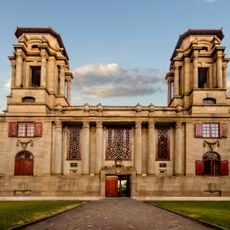
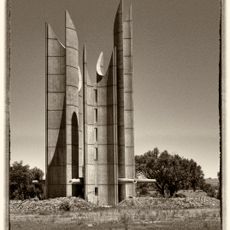
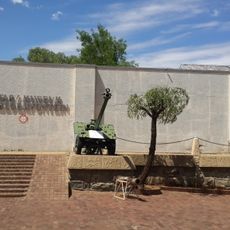
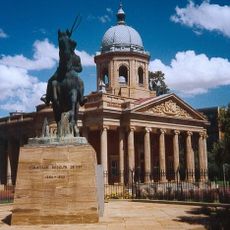
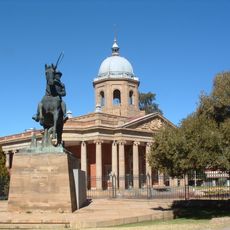
Canteen Kopje, Archaeological site near Barkly West, South Africa
Canteen Kopje is an open-air archaeological site outside Barkly West, Northern Cape, where late 19th- and early 20th-century diamond pits cut through up to 10 m of Younger Gravels, roughly 0.5 to 1.7 million years old, and through reddish Hutton Sands up to 4 m thick. The gravels hold Earlier Stone Age tools, including Acheulean cores of the Victoria West type in the upper part and simpler, older industries below; the sands above contain Fauresmith, Middle Stone Age, Later Stone Age and late Iron Age material.
Canteen Kopje's stone tools were first noted by Colonel James Henry Bowker and Mary Elizabeth Barber during the earliest diamond workings. Henri Breuil visited in 1929 and again in the 1940s, remarking that there was enough material on site to fill a museum and to build one. A 10 morgen portion was proclaimed a national monument in 1948, and the site became a provincial heritage site in 2000.
The name Klipdrift, meaning stony drift, translates an earlier !Ora name, !a |aub. The site lies on the Vaal River gravels where the first alluvial diamond diggings on the Diamond Fields began in 1870, and digging continued until the early 1940s. Visitors can walk the trail past the old diggings and research excavations.
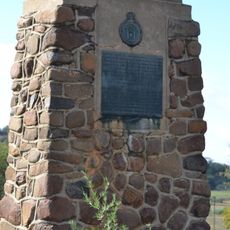
The location features information panels and an established walking trail to help visitors understand the archaeological findings. Early morning visits are recommended to avoid the heat on the open grounds and to see the exposed layers more clearly.
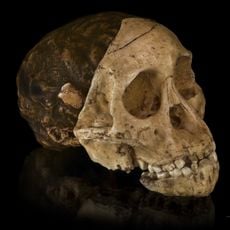
The Canteen Kopje skull, found by a diamond digger in 1925 and described by Robert Broom in Nature in 1929, was later reassessed as falling within the range of Holocene Khoisan populations. The site's gravels also yielded Victoria West cores from the upper alluvial levels, a technique first identified at a town in the Karoo.
The community of curious travelers
AroundUs brings together thousands of curated places, local tips, and hidden gems, enriched daily by 93,959 contributors worldwide.