Basilica of Our Lady of Guadalupe, Catholic basilica in Gustavo A. Madero, Mexico
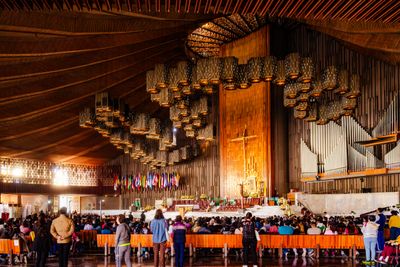
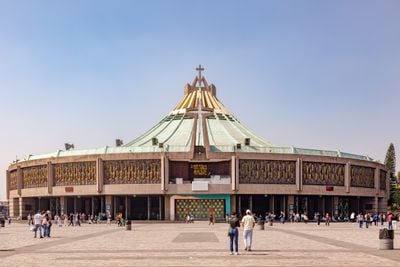
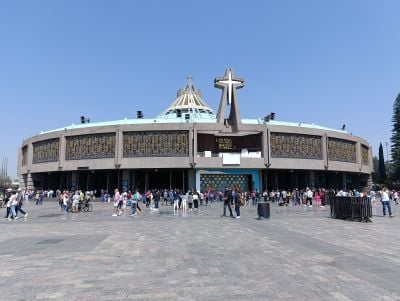
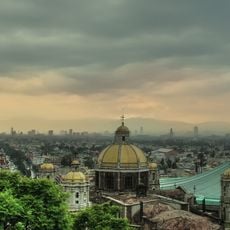
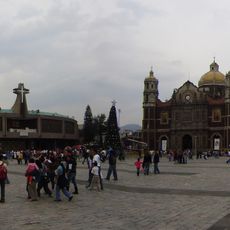
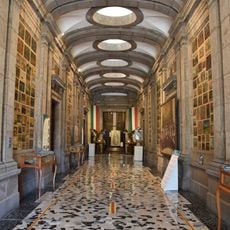
The Basilica of Our Lady of Guadalupe is a shrine in Gustavo A. Madero, Mexico, composed of two main buildings: the old colonial-style basilica and a round modern structure. The contemporary part, designed by architect Pedro Ramírez Vázquez, features a tent-shaped roof with an open floor plan and freestanding supports, allowing visitors to view the venerated image from any point inside.
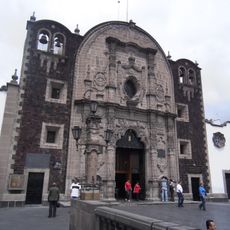
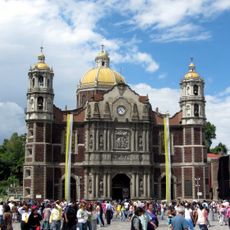
The first sanctuary on Tepeyac Hill was ordered by Bishop Juan de Zumárraga after Juan Diego reported the apparition; the present Old Basilica, designed by Pedro de Arrieta, opened on 1 May 1709. It became a collegiate church in 1749 and was elevated to basilica in 1904. The modern basilica was built between 1974 and 1976, and the image was moved there on 12 October 1976.
Pilgrims arrive in greatest numbers around 12 December, the feast of Our Lady of Guadalupe, when about nine million of the roughly twenty million annual visitors come. The name Guadalupe comes from the Spanish devotion; the Nahuatl account of the apparitions, the Nican Mopohua, is the earliest surviving written witness. The image is displayed above and behind the main altar, raised about a metre after the 1921 bomb repair.
The complex is open daily and offers ramps and moving walkways for visitors with walking difficulties. A conveyor belt passes behind the altar, allowing pilgrims to view the image up close without blocking the flow of people.
The eyes on the image contain tiny human figures visible under magnification, which scientists have studied since the 1950s. This reflection is said to depict a scene from 1531, imprinted on the iris fibers without detectable brushwork or external pigment layer.
The community of curious travelers
AroundUs brings together thousands of curated places, local tips, and hidden gems, enriched daily by 92,283 contributors worldwide.