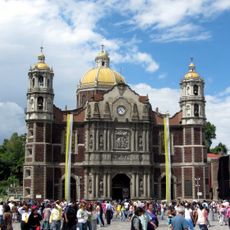
Christ of Buga, Catholic shrine in Buga, Colombia.
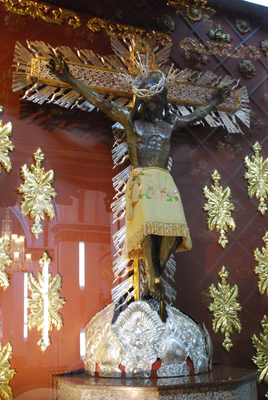
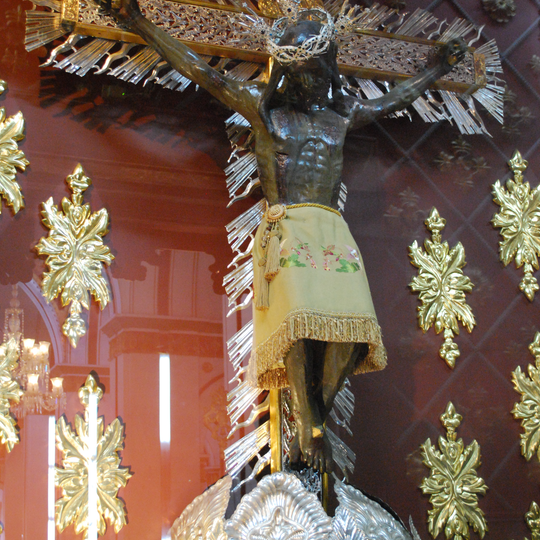
The Lord of Miracles of Buga is a dark-skinned crucifix about 1.70 m tall and 1.30 m wide, kept in the camarín of the Minor Basilica of the Lord of Miracles in Buga, Valle del Cauca. The figure has a bowed head, blood-soaked hair and parted lips, and stands on a silver shell-shaped base beneath a gold sunburst cross.
In September 1573 a laundress found a small crucifix carried by the current of the Guadalajara River; it reportedly grew to life size in her home. A first hermitage was built, and by 1605 the bishop of Popayán ordered the image burned, but it did not burn and instead exuded an oily liquid collected on cotton. Earthquakes destroyed later hermitages, and the Redemptorists took charge in 1875; the present basilica was inaugurated on 2 August 1907.
The image is called the Lord of Miracles because of sworn testimonies of healings, liberation and restored homes and marriages. The Catholic Church commemorates the devotion every 14 September. The Redemptorist community that cares for the shrine also promotes veneration of a reproduction of Our Lady of Perpetual Help.
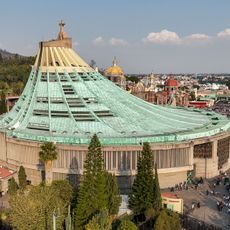
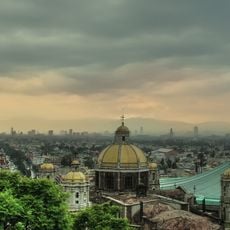
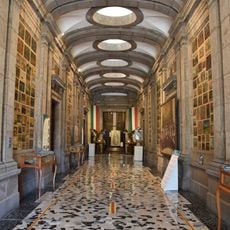
The image sits in the camarín of the Minor Basilica of the Lord of Miracles, in Buga, Valle del Cauca. The feast is kept on 14 September, and the basilica museum permanently displays the three fragments of the dagger from the 1956 attack. The building stands in a seismically active region, so check local conditions before travelling.
Scientific analysis reveals the crucifix is not carved from wood but composed of earth and plant material, making its survival since the 1500s particularly puzzling. This unexpected composition adds to the mystery that draws pilgrims year after year.
The community of curious travelers
AroundUs brings together thousands of curated places, local tips, and hidden gems, enriched daily by 92,627 contributors worldwide.