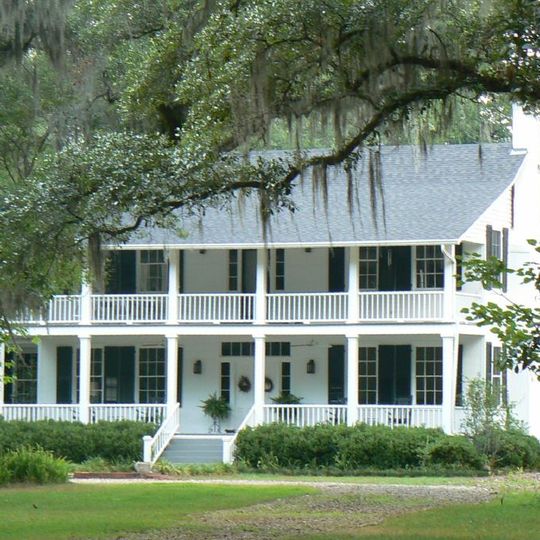
Bannerman Plantation, human settlement in Florida, United States of America
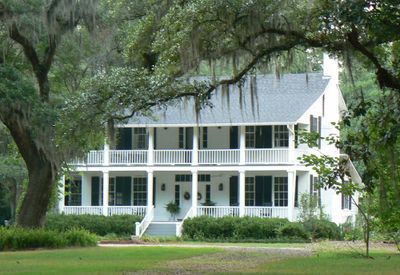
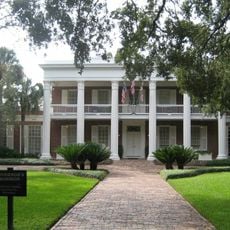
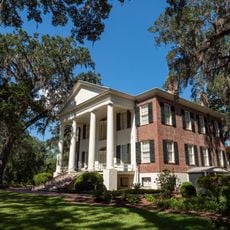
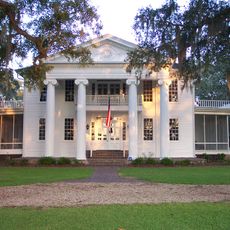
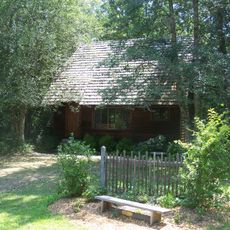
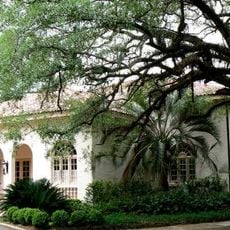
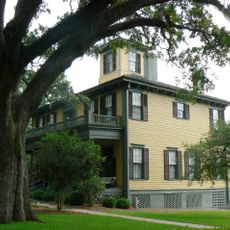
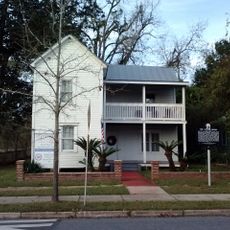
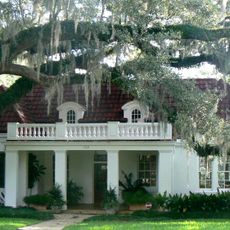
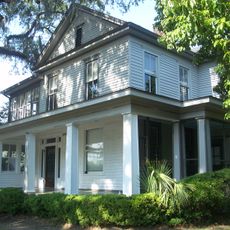
Bannerman Plantation is a historic farm in Florida established around 1852, spanning approximately 1,500 acres (607 hectares) in northwest Leon County near Lake Iamonia. The main house is a two-story structure with eight large supporting columns, fireplaces on both sides, and a detached kitchen, while around 700 acres (283 hectares) were developed for cultivating cotton and corn.
The plantation was founded around 1852 or earlier by Charles Bannerman, a migrant from North Carolina who developed the operation. By 1860, the site employed approximately 67 enslaved people and produced up to 120 cotton bales annually along with about 4,000 bushels of corn, eventually being added to the National Register of Historic Places in 2002.
The name Bannerman comes from Charles Bannerman, who established the plantation after migrating from North Carolina. The two-story main house with its eight supporting columns and wraparound porches reflects the architectural style and social status of 19th-century plantation owners in the region.
The site is easy to reach with nearby parking available, making it suitable for a short excursion. Wear comfortable shoes and bring water, as the Florida weather is typically warm and sunny, and walking the grounds requires appropriate footwear for exploring the plantation's historic structures and open spaces.
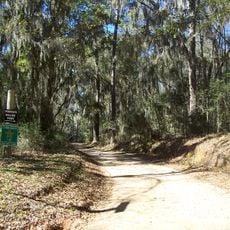
The plantation produced impressive agricultural yields, with cotton harvests reaching up to 120 bales annually and corn production around 4,000 bushels, reflecting its significance as a working agricultural center. Notably, the total 1,500 acres were split into two sections, with only about 700 acres actively cultivated while the remaining 800 acres remained undeveloped and wild.
The community of curious travelers
AroundUs brings together thousands of curated places, local tips, and hidden gems, enriched daily by 92,353 contributors worldwide.