Pebble Hill Plantation, Historic plantation and museum in Thomasville, United States.
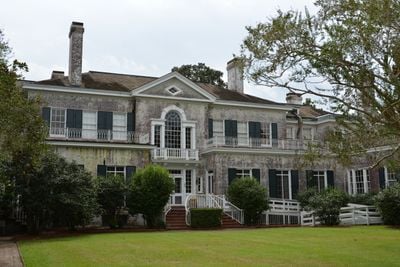
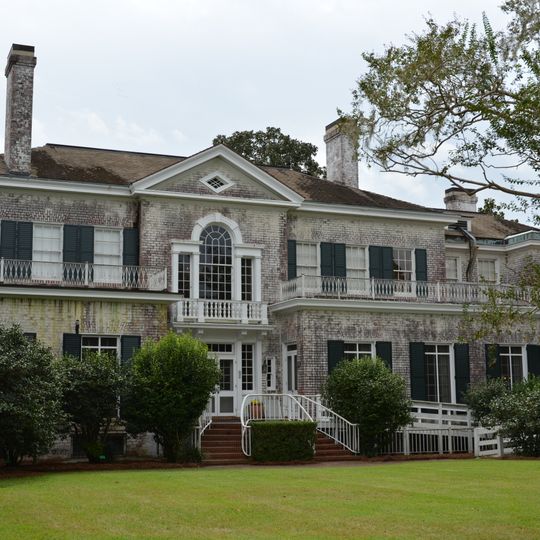
Pebble Hill Plantation is a two-story mansion near Thomasville, Georgia, built in 1936 to Abram Garfield's design after the earlier house burned in 1934. Its grey and white mottled brick facade has a dark hipped roof, two tall brick chimneys, a projecting central bay with a white-trimmed arched window above a recessed white-doored entrance, and white-railed balconies along the upper story. It stands behind a broad lawn.
Thomas Jefferson Johnson built the first house in the 1820s; his daughter Julia Ann and her husband John H. Mitchell later hired English architect John Wind for a new mansion, and the enslaved people grew cotton, tobacco and rice. Howard Melville Hanna bought the plantation in 1896 and his daughter Kate turned it into a hunting estate from 1901. After the main house burned in 1934, Abram Garfield designed the present mansion, finished in 1936.
The collection displays hunting and equestrian art alongside vintage carriages and riding equipment that reflect how wealthy families spent their leisure time. Visitors can explore these objects throughout the property and understand the pastimes of the Southern upper class.
The house is reached by a short stair with white railings to a recessed entrance with white doors; the grounds are entered through the Pebble Hill Foundation, which opened the plantation to the public. Allow time to walk the broad lawn in front of the two-story brick facade.
The property holds one of the earliest film recordings from Georgia, filmed in 1917 and now stored at the University of Georgia archives. This rare footage captures everyday life on the estate during the early days of motion pictures.
The community of curious travelers
AroundUs brings together thousands of curated places, local tips, and hidden gems, enriched daily by 93,036 contributors worldwide.