Augusta Cotton Exchange Building, Augusta, GA, listed on the NRHP in Georgia
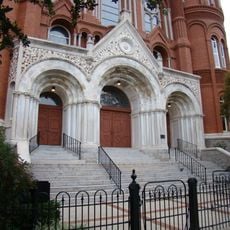
The Augusta Cotton Exchange Building is a High Victorian structure on Reynolds Street in Augusta, Georgia, designed by Enoch William Brown and built in the mid-1880s during a cotton boom. Its ornate details and ironwork were supplied by Charles F. Lombard's local foundry. It housed brokers and a trading floor, and was listed on the National Register of Historic Places on July 20, 1978.
The Augusta Cotton Exchange Building was designed by Enoch William Brown and built in the mid-1880s during a cotton boom, with materials supplied locally by Charles F. Lombard's foundry. The exchange housed brokers and a trading floor. Bill Moore of Aiken, South Carolina, bought and restored the building in 1988, and it was added to the National Register of Historic Places on July 20, 1978.
The exchange was organized for the cotton trade and housed brokers and a trading floor. Women were excluded from the floor, and off hours saw cockfights and Saturday football meetups in the building. It now serves as a branch of South State Bank.
The building stands on Reynolds Street in downtown Augusta, within the Augusta Downtown Historic District and the Augusta Canal National Monument Heritage Area. It now operates as a branch of South State Bank, so the interior is a working bank rather than a museum; the High Victorian ironwork and ornate facade are what to look at from the street.
Workers discovered a hidden blackboard roughly 45 feet long during renovation, containing original cotton prices and trading notes from the early 1900s. This rare find offers a window into the daily trading operations and economic conditions of a bygone era.
The community of curious travelers
AroundUs brings together thousands of curated places, local tips, and hidden gems, enriched daily by 92,750 contributors worldwide.