San Francisco cable car system, Cable car network in San Francisco, United States
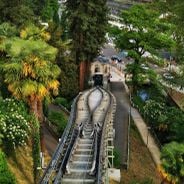
The San Francisco cable car system is a tram network in San Francisco, United States, operating three lines through the steep slopes of the city. The cars are pulled by an underground cable that moves continuously and is gripped and released through a mechanical lever.
Andrew Smith Hallidie conceived the system in 1869 after a horsecar slid backwards on wet cobblestones, killing its horses. The Clay Street Hill Railroad made its inaugural run on August 2, 1873, with William Eppelsheimer as engineer, and regular service began September 1. Twenty-three lines were built by 1890; the 1906 earthquake destroyed nearly all, and only steep-grade routes survived.
Visitors hear the clanging of bells and the clicking of cables beneath the streets as operators handle the grips and call out directions. Passengers can stand on the open sides during the ride and watch the city pass by.
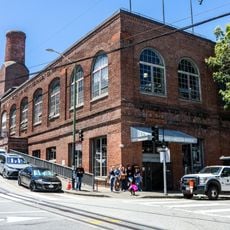
The three remaining lines are Powell–Hyde, Powell–Mason and California Street; the Powell lines start near Union Square and end at Fisherman's Wharf. Waits to board can reach two hours or more, so board early in the day. The car barn and powerhouse at Washington and Mason is the system's operating centre.
Operators control the cars manually by gripping and releasing the underground cable, relying on physical skill rather than engines. Worldwide, this is the only such network still in service and running without automated controls.
The community of curious travelers
AroundUs brings together thousands of curated places, local tips, and hidden gems, enriched daily by 92,371 contributors worldwide.