See the monuments around you in AROpen chests in the app
Around Us is built for your phone — point your camera at the streets and discover the monuments and places around you in augmented reality.Around Us is built for your phone — chests unlock when you walk, explore and capture nearby places.
Three modes of experiencing San Francisco: ride the cable cars, cross the bridge, or explore the neighborhoods where history lives.
San Francisco brings together historical monuments and natural sites that reflect the city's unique history and geography. The Golden Gate Bridge, a 2,737-meter-long suspension bridge completed in 1937, is one of the region's most recognizable structures. Alcatraz Island, a former high-security federal prison operating from 1934 to 1963, is located in the bay and is visited by ferry. The Painted Ladies, seven Victorian houses built between 1892 and 1896, exemplify San Francisco’s characteristic residential architecture with their colorful facades facing Alamo Square Park.
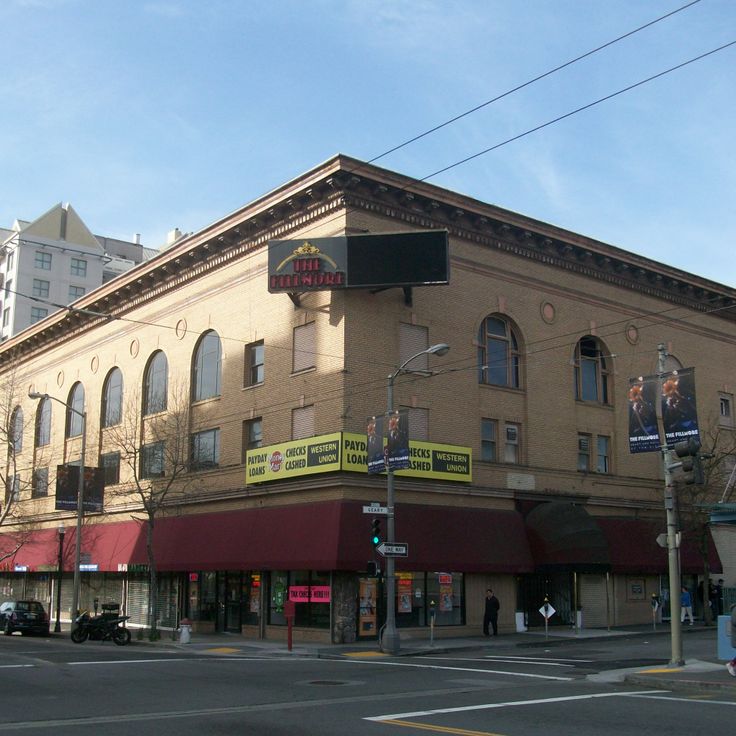
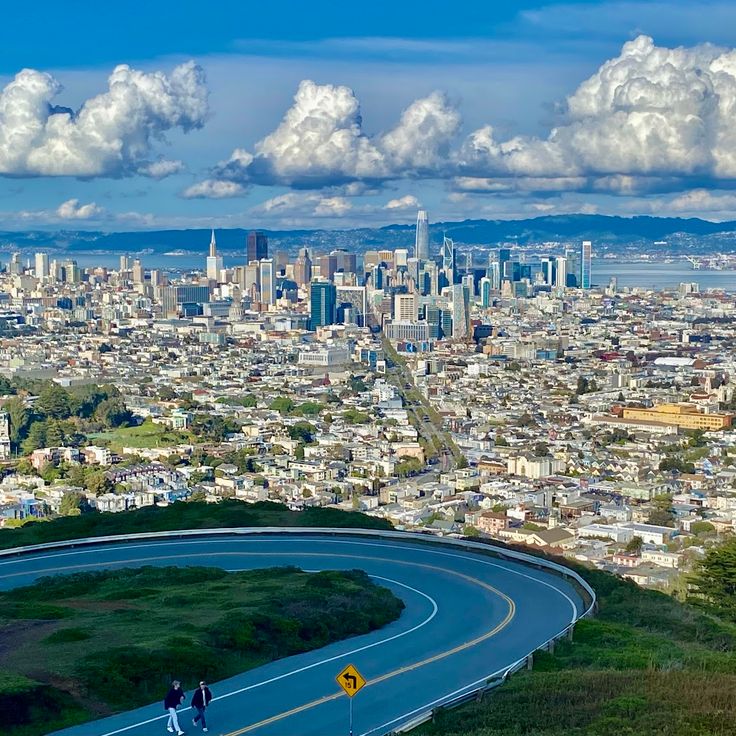
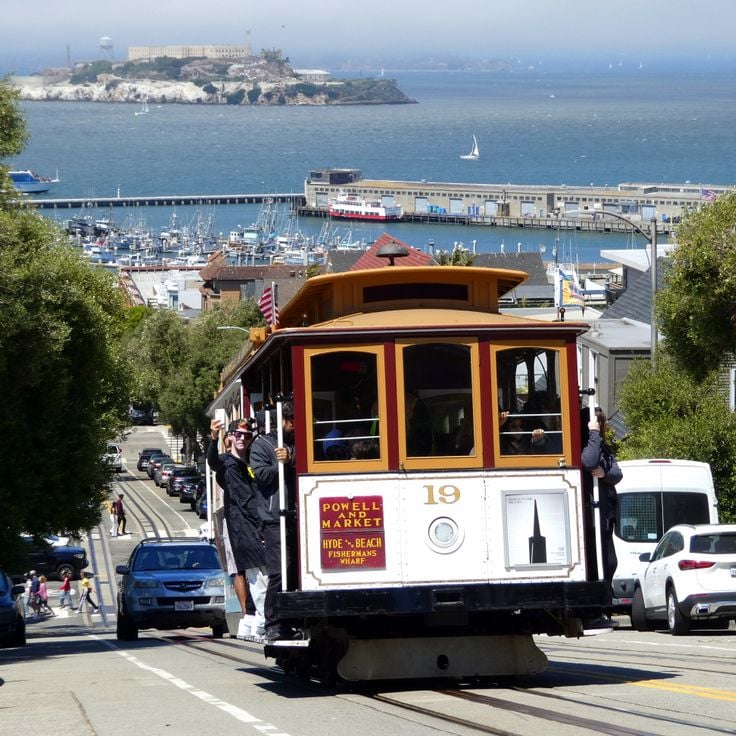
The city also includes Fisherman's Wharf, a historic port district developed from late 19th-century Italian fishing piers, and the Fillmore, a performance hall from the 1910s that contributed to the development of the West Coast music scene. Twin Peaks provide viewpoints at 928 feet (283 meters), while Lands End features rocky cliffs and hiking trails at the western tip of the peninsula. The Cable Cars, a mechanical transportation system operating since 1873, run on three lines through San Francisco's sloped streets.
Three modes of experiencing San Francisco: ride the cable cars, cross the bridge, or explore the neighborhoods where history lives.
San Francisco brings together historical monuments and natural sites that reflect the city's unique history and geography. The Golden Gate Bridge, a 2,737-meter-long suspension bridge completed in 1937, is one of the region's most recognizable structures. Alcatraz Island, a former high-security federal prison operating from 1934 to 1963, is located in the bay and is visited by ferry. The Painted Ladies, seven Victorian houses built between 1892 and 1896, exemplify San Francisco’s characteristic residential architecture with their colorful facades facing Alamo Square Park.
The city also includes Fisherman's Wharf, a historic port district developed from late 19th-century Italian fishing piers, and the Fillmore, a performance hall from the 1910s that contributed to the development of the West Coast music scene. Twin Peaks provide viewpoints at 928 feet (283 meters), while Lands End features rocky cliffs and hiking trails at the western tip of the peninsula. The Cable Cars, a mechanical transportation system operating since 1873, run on three lines through San Francisco's sloped streets.
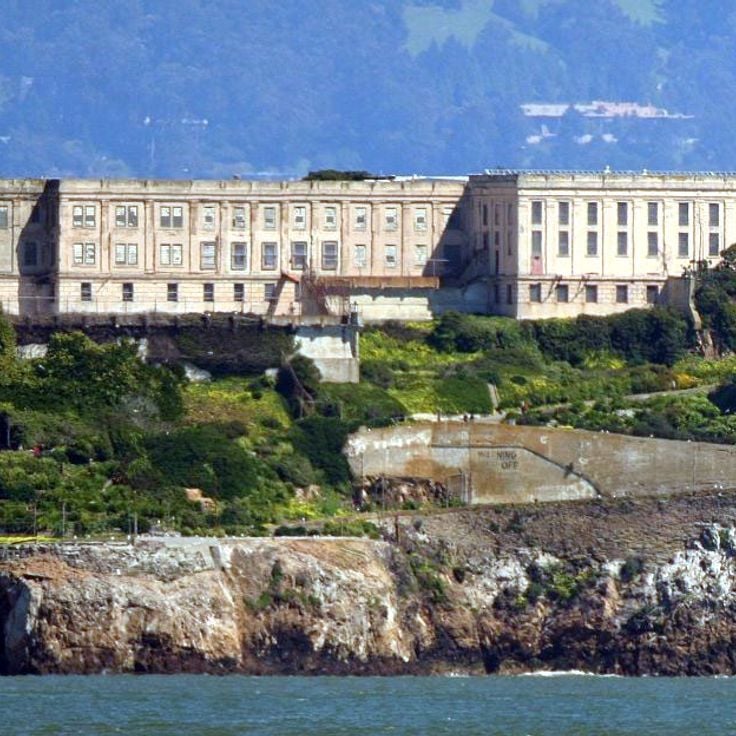
Alcatraz Island sits in the middle of San Francisco Bay, reached by a short ferry ride from the waterfront. The island first served as a military fortification before becoming a federal prison for maximum security inmates from 1934 to 1963. Visitors can walk through the cell blocks, the dining hall, and other sections of the old facility that have been kept intact. The ferry crossing also offers open views of the city skyline and the Golden Gate Bridge.
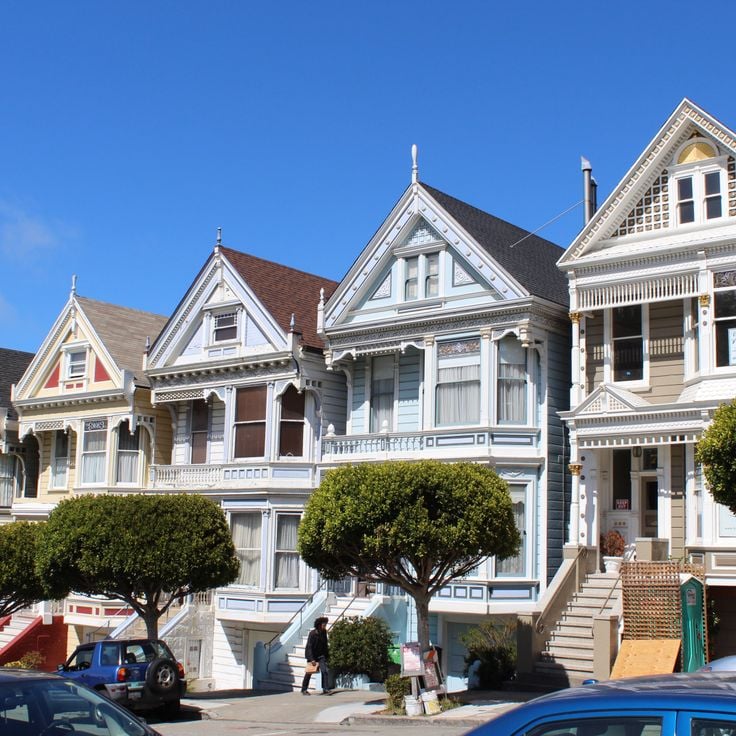
The Painted Ladies are seven Victorian houses on Steiner Street, built between 1892 and 1896. These row houses in the Queen Anne style face Alamo Square Park and show how San Francisco was built in the late 19th century. Their facades are painted in different pastel shades that bring out the wooden ornaments and cornices. The Painted Ladies are among the most recognized examples of Victorian architecture in the city and stand as a rare survivor of the building style that endured the 1906 earthquake.
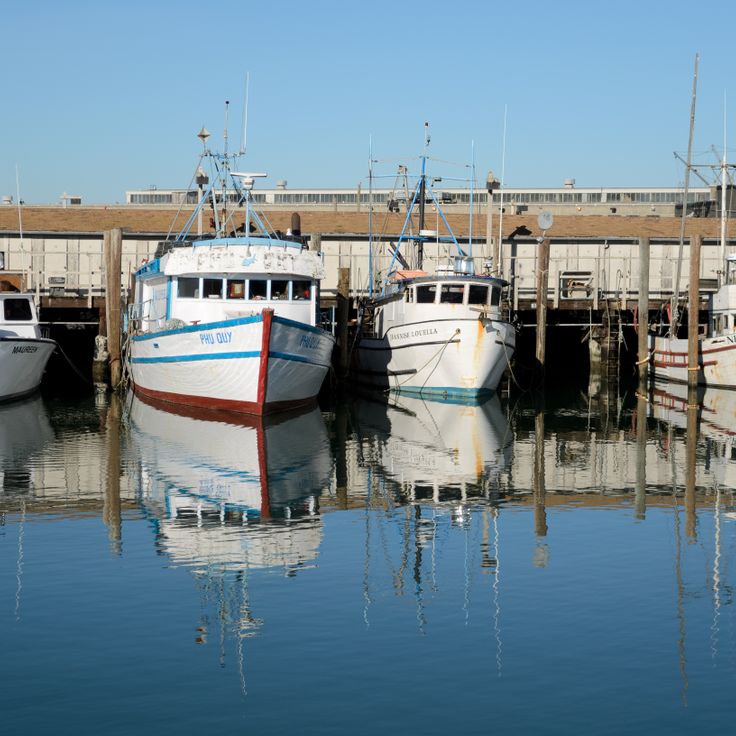
Fisherman's Wharf is a waterfront district in San Francisco that grew out of the docks used by Italian fishing boats in the late 19th century. Today, the area is lined with restaurants, shops, and a market where fresh seafood from the bay is sold daily. Dungeness crab and clam dishes are among the most common foods on offer. Street performers add to the activity along the waterfront, and the market gives visitors a direct look at the local fishing trade.
The Fillmore is a music hall from the 1910s located in the Western Addition neighborhood of San Francisco. It started as a dance hall and later became one of the most recognized concert venues on the West Coast. During the 1960s, it hosted many rock and jazz artists connected to the counterculture of that era. Today it still holds regular concerts and keeps its reputation as an active performance space.
Twin Peaks are two hills rising near the center of San Francisco, offering wide views over the city, the bay, and the surrounding landscape. From up here, you can see the rows of houses, the bridges, and the water that wraps around the peninsula on three sides. The viewpoints are reachable by road, and many visitors come at sunset when the light spreads across the rooftops. It is one of the best places to understand how San Francisco sits between hills and sea.
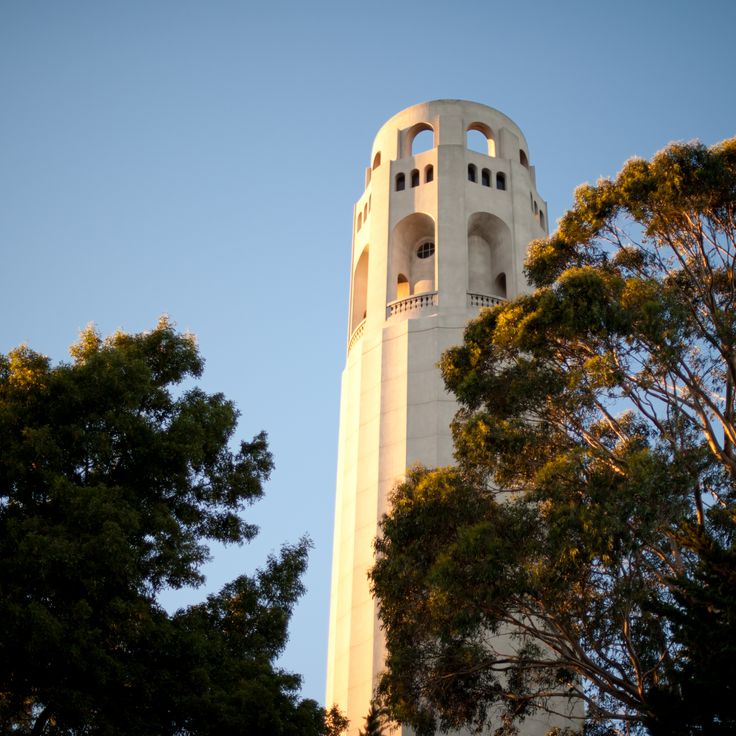
Coit Tower is a concrete tower built in 1933 on top of Telegraph Hill, one of San Francisco's most recognizable hills. Inside, the walls are covered with murals painted in the 1930s that show scenes from California life, including farmworkers, city streets, and everyday people. An observation deck at the top offers open views over San Francisco and the bay. The tower was built as a memorial to the city's firefighters and stands about 210 feet (64 meters) tall.
The Cable Cars of San Francisco have been running through the city streets since 1873. They move along three lines across steep hills, pulled by steel cables that run continuously beneath the road surface. Operators hook the cars onto these cables or release them to control speed. This allows the cars to climb grades of up to 21 percent. The Cable Cars connect several neighborhoods and are among the few systems of this kind still in operation today.
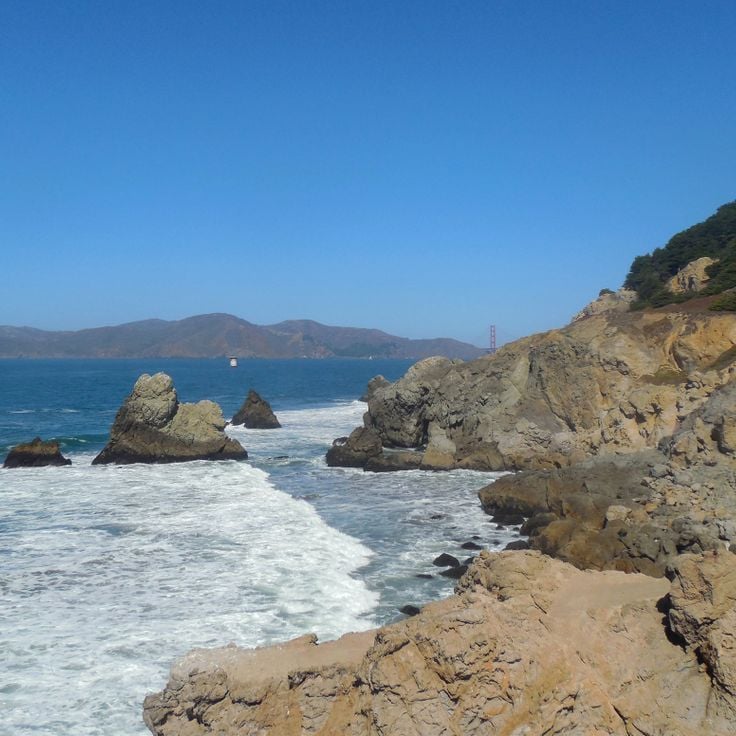
Lands End occupies the western edge of San Francisco, extending along rocky cliffs above the Pacific Ocean. The area features hiking trails that wind through coastal vegetation and provide views of the Golden Gate Bridge. The ruins of the Sutro Baths, once a large public bathhouse from the late 19th century, sit at the shoreline. The Lands End Trail connects Eagle's Point to the Sutro Baths complex, passing through cypress groves. This natural area demonstrates the geology of the San Francisco peninsula and preserves historical remnants of the city's early development as a recreational destination.
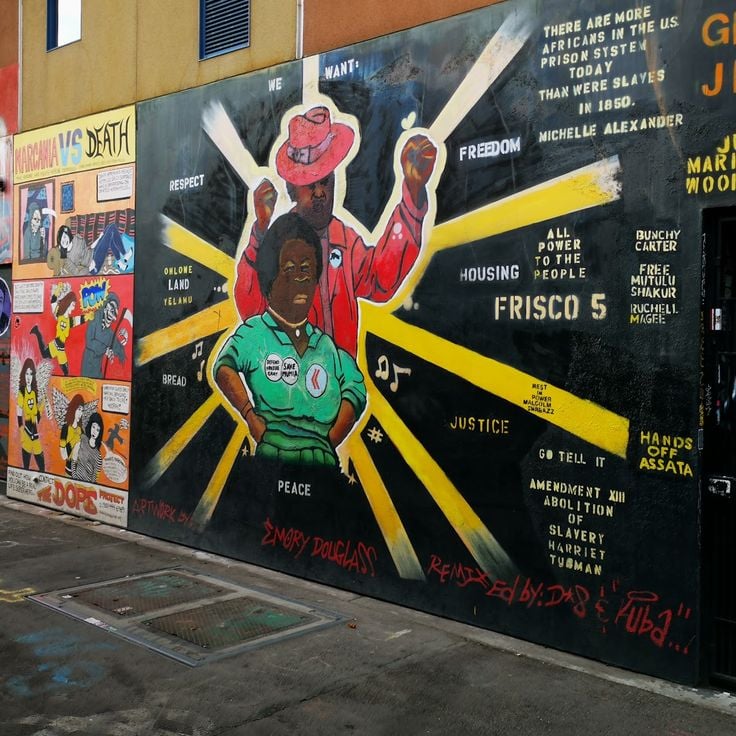
The Clarion Alley Mural Project displays over 50 murals in the Mission District. This street gallery presents works by local artists addressing social and political themes. The alley between 17th and 18th Streets has developed since 1992 into a center for urban art. The murals are regularly renewed and reflect current social discussions. The project connects San Francisco's artistic tradition with the cultural heritage of the Mission neighborhood.
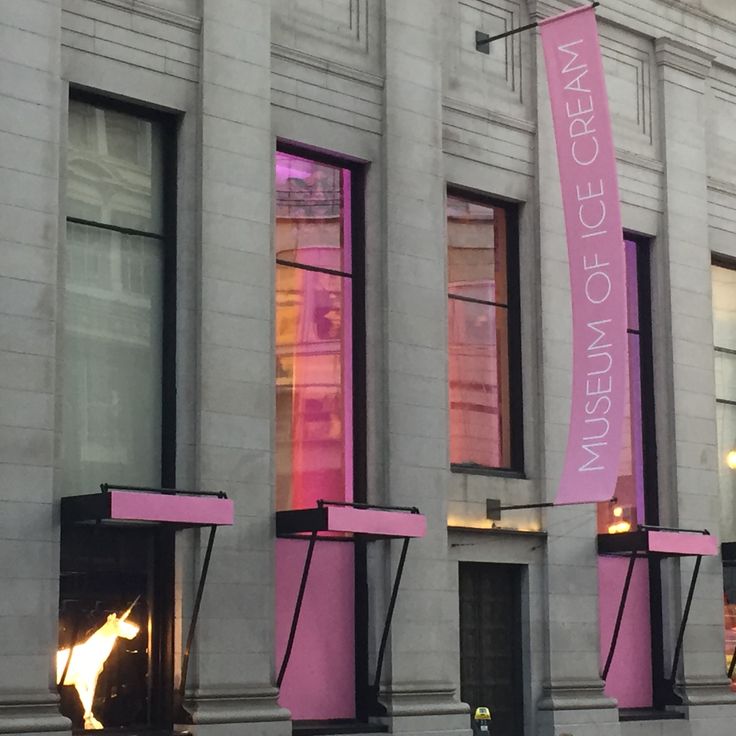
This museum explores the history of ice cream through multiple exhibition rooms and interactive installations. Visitors can touch and photograph the displays. The museum combines historical information about frozen desserts with hands-on experiences. The rooms contain representations of different eras of ice cream production and its cultural significance across various societies.
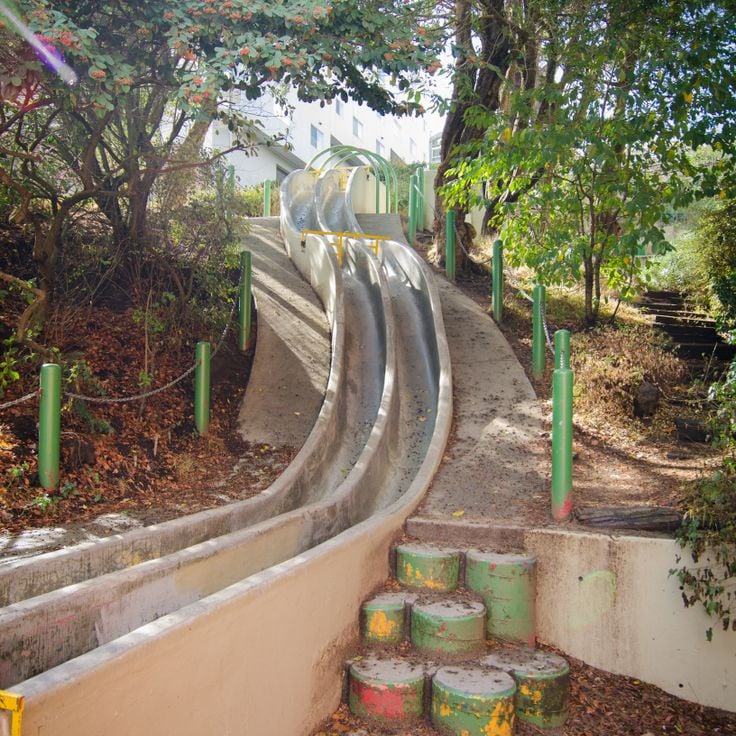
These concrete slides were built in 1973 with the help of neighborhood residents in Seward Street Park. The two sliding structures use the natural slope of the hill to provide outdoor play for children. The park is located in a residential area of San Francisco and serves as public recreation space. The slides are made of concrete and follow the topography of the hillside. They were created through community involvement and represent an example of civic participation in urban design from the 1970s.
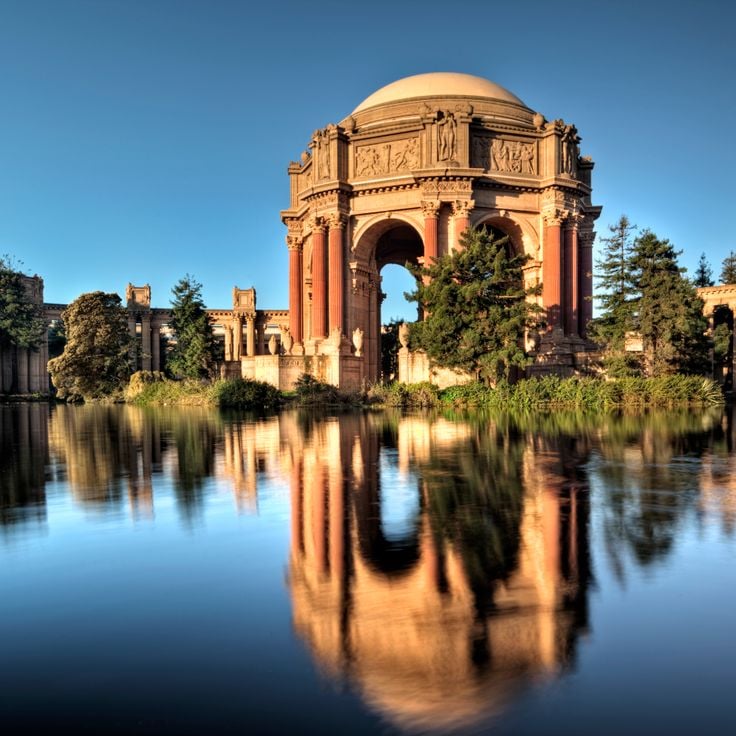
The Palace of Fine Arts was built in 1915 for the Panama-Pacific International Exposition. Located in the Marina District, it features a domed rotunda in Roman style with Corinthian columns and long colonnades. Bernard Maybeck designed the structure following classical models from antiquity. The building was fully rebuilt in the 1960s and now serves as an event venue with a theater. On the grounds, a small artificial pond with swans and ducks sits alongside landscaped gardens.
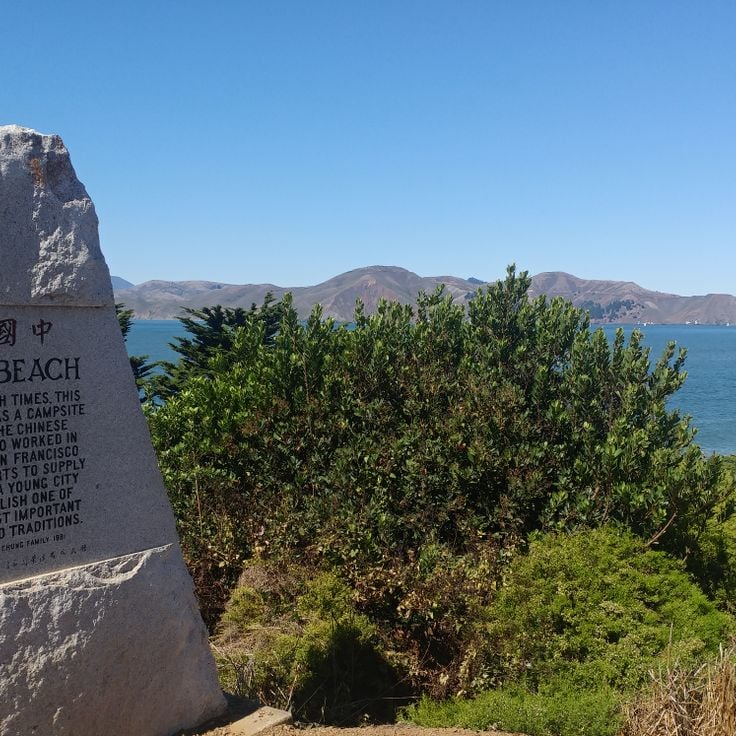
China Beach sits in a protected cove between steep cliffs on the western edge of San Francisco. The beach takes its name from the Chinese fishermen who moored their boats here in the 19th century. From the sand, visitors get a clear view of the Golden Gate Bridge, making it a natural stop on any tour of the city's most famous sites. Stairs lead down from the parking lot to the beach. At low tide, it is possible to explore tide pools and walk to China Cove, a smaller inlet just south of the main beach.
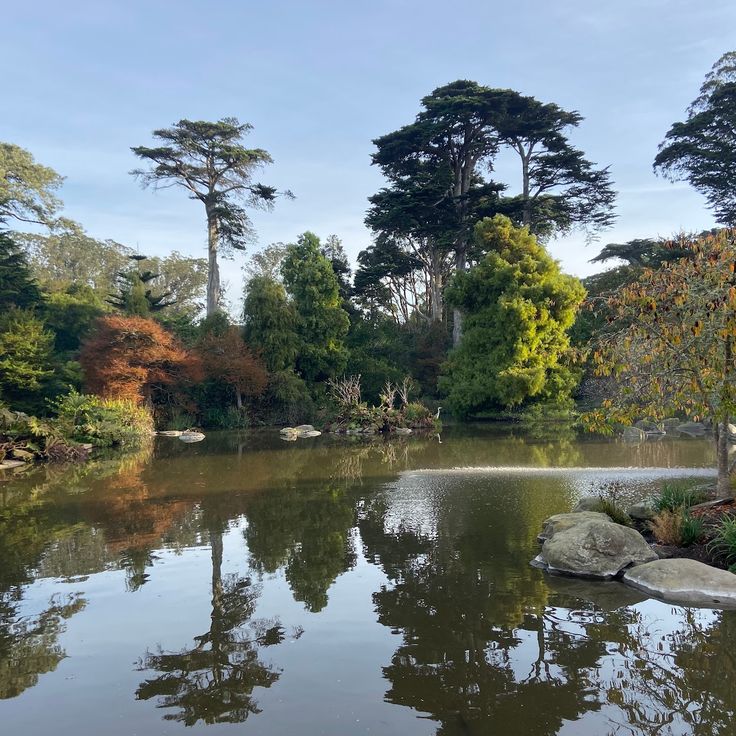
The San Francisco Botanical Garden sits inside Golden Gate Park and brings together plants from five continents. It has a strong focus on species from Central America and Southeast Asia. Walking through, you pass themed sections with greenhouses that recreate different climate zones. Native California plants grow alongside species from distant parts of the world. The garden also supports botanical research and the protection of endangered plant species.
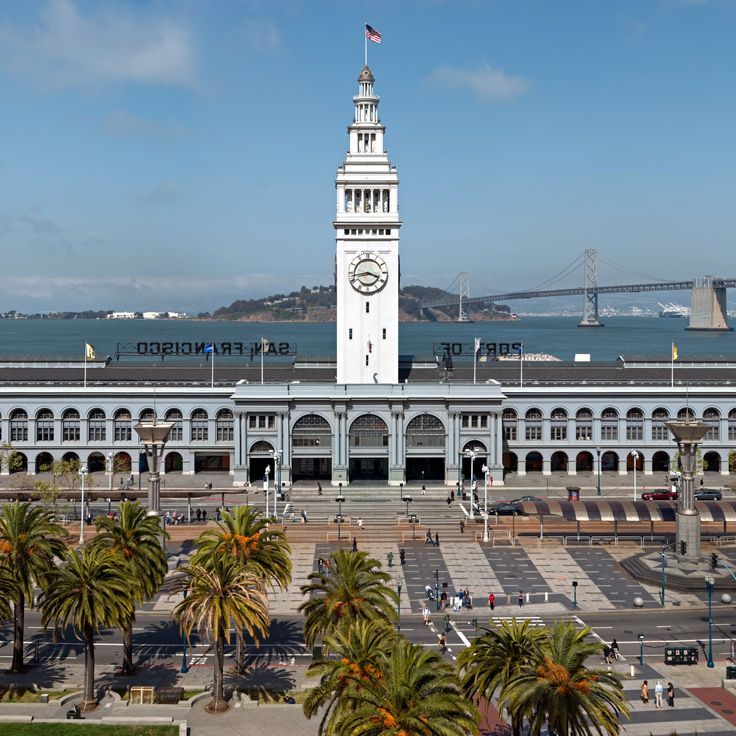
The Ferry Building Marketplace offers local food and restaurants in a historic building from 1898 on the Embarcadero. The structure features a clock tower and has served as a transportation hub and gathering place for over a century. The halls house vendors selling regional produce, bakeries, cheese shops, and fishmongers. Visitors find restaurants and cafes along with a farmers market held multiple times weekly on the plaza outside. The building connects historic architecture with culinary culture in San Francisco.
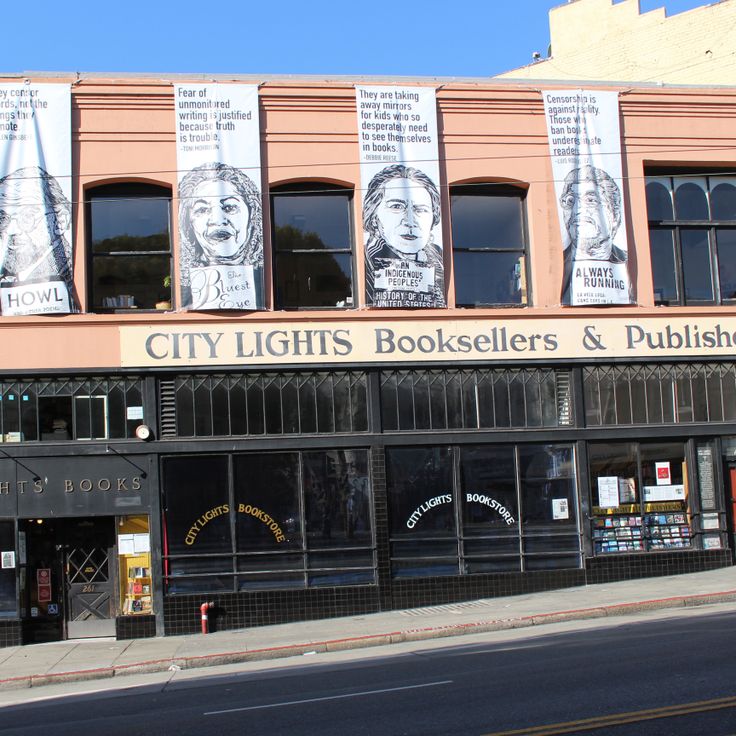
Established in 1953, this independent bookstore and publishing house specializes in Beat Generation literature and contemporary poetry. The City Lights Bookstore is located in San Francisco's North Beach neighborhood and served as an important gathering place for writers including Allen Ginsberg and Jack Kerouac. The three-story building offers an extensive selection of literary works, political writings, and cultural publications, with the upper floor dedicated to poetry.
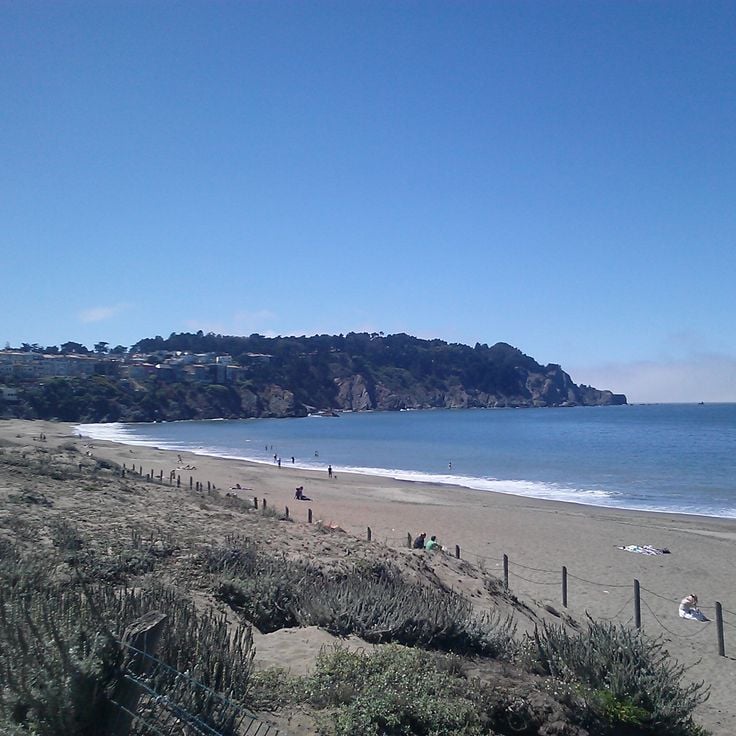
Baker Beach is a 0.6 mile (one kilometer) long sandy beach on the western coast of San Francisco, offering direct views of the Golden Gate Bridge and the Marin Headlands. The beach sits below the Presidio and attracts both locals and visitors. The northern section is designated as a clothing optional area. At low tide, visitors can walk along the rocky shoreline, while the western exposure creates cool winds and cold water. The beach features picnic areas and grills in the sheltered sections.
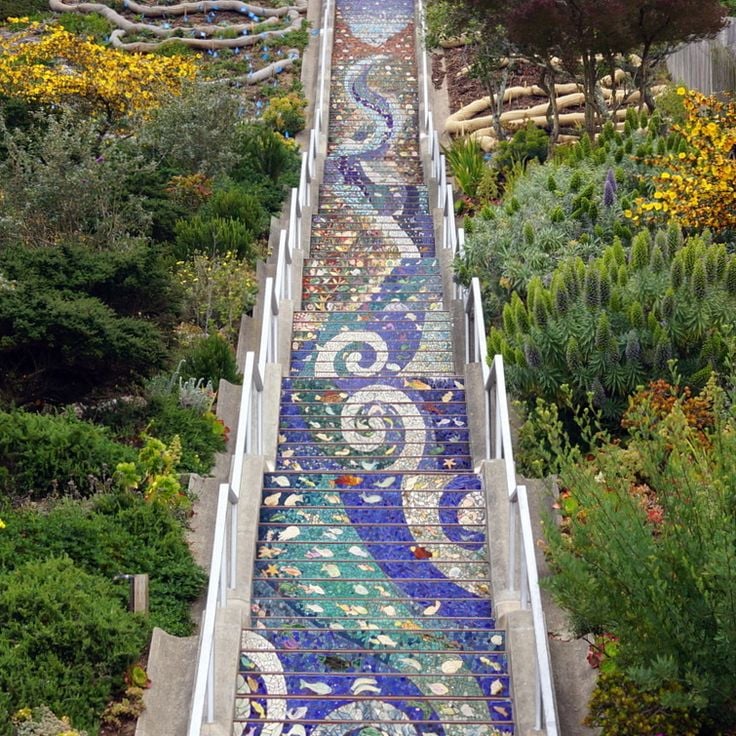
This stairway in San Francisco consists of 163 steps decorated with mosaic tiles. The mosaics depict natural motifs and were created by more than 300 neighborhood residents. The ceramic work extends across the entire staircase and forms a community art project. The stairway connects different street levels in a residential area of the city and serves as a public art path. Visitors can observe the individual mosaic elements while ascending, which together form a continuous artistic composition. The project emerged through local community collaboration and displays various representations of plants, animals, and landscapes.
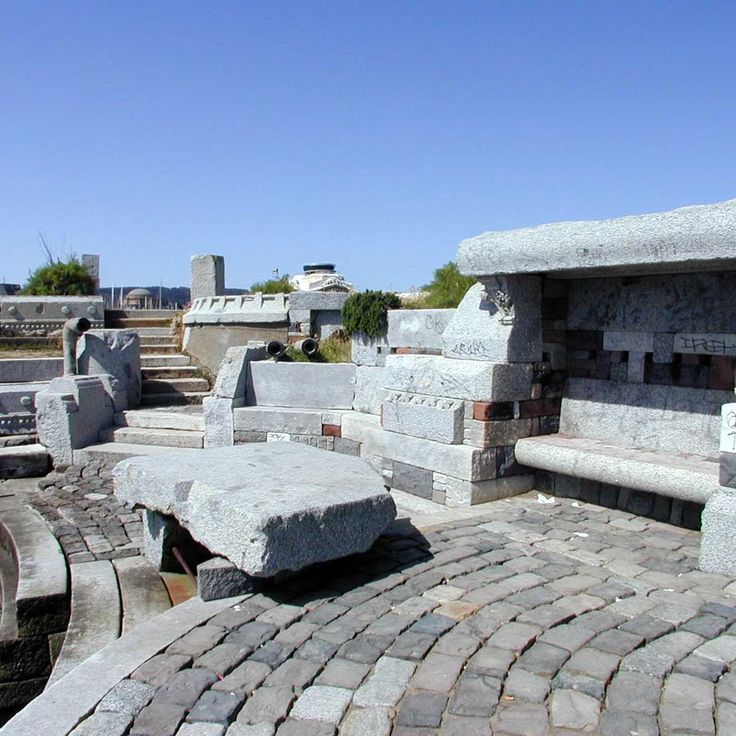
The Wave Organ is an acoustic sculpture on the shore of San Francisco Bay featuring 25 organ pipes made of concrete and PVC. The movement of tides through the water generates sounds of varying pitch and volume within the pipes. The installation uses recycled gravestones from a demolished cemetery as construction material and provides visitor access via a jetty. The sounds vary with tide height and are best heard at high tide. This monument combines architectural design with natural water movements along the San Francisco waterfront.
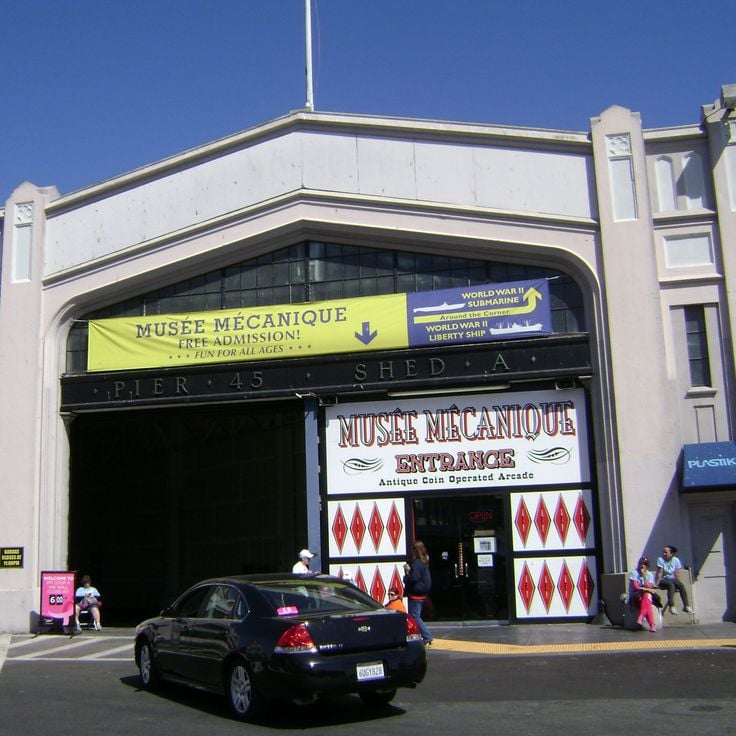
The Musée Mécanique sits at Fisherman's Wharf and holds a large collection of mechanical arcade machines from the 20th century. Visitors can operate coin-powered pinball machines, slot machines, music boxes, and mechanical dioramas that span several decades. This museum traces how entertainment machines evolved from the early 1900s through the mid-century, with exhibits drawn from amusement parks and arcades along the American West Coast.
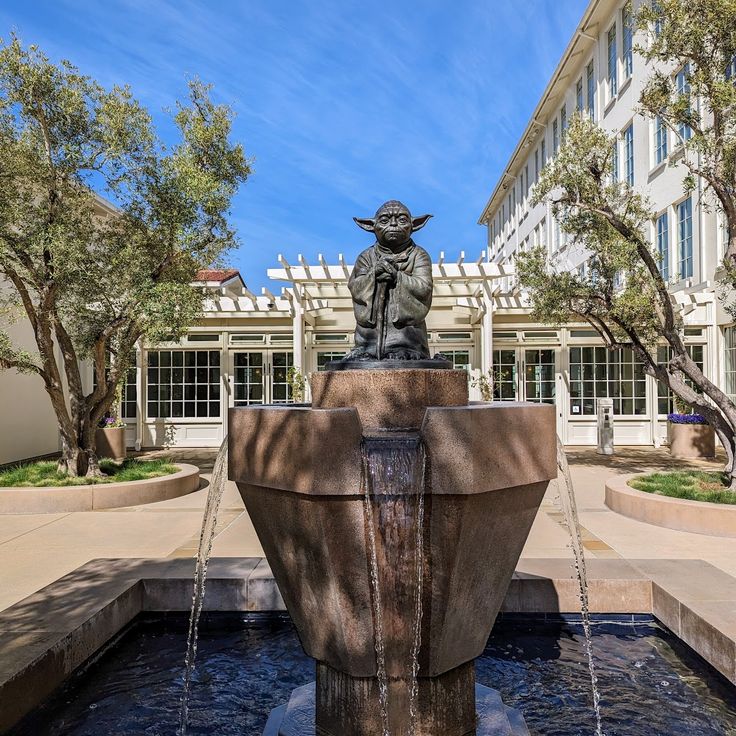
The Yoda Fountain stands at the entrance of the Lucasfilm headquarters in the Presidio, a former military post in northern San Francisco. This bronze statue depicts the Jedi Master from the Star Wars saga and was unveiled in 2005. The life-sized figure is visible from the public sidewalk and sits within the historic grounds of the Presidio, now a national park. It draws both film fans and visitors exploring this corner of the city.
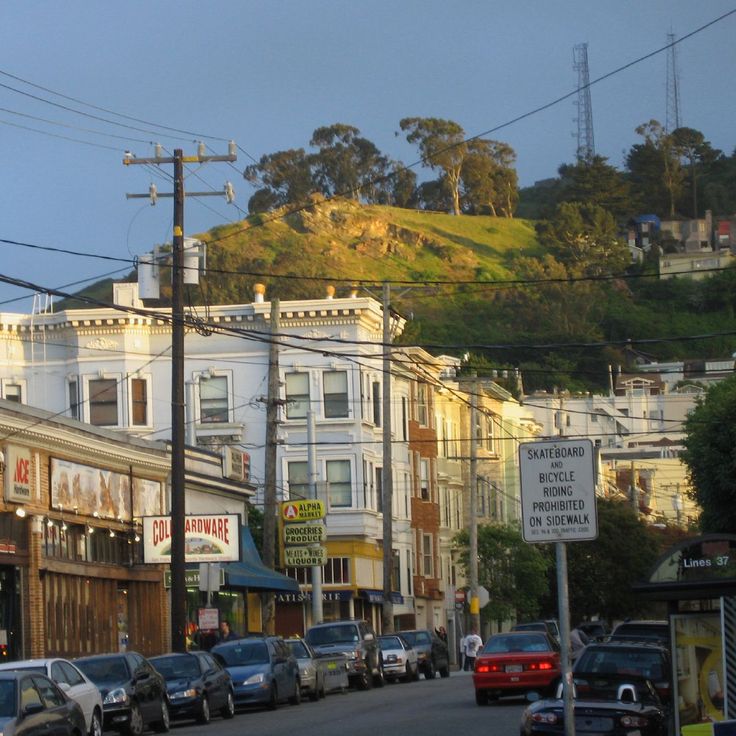
This green space sits at an elevation of 646 feet (197 meters) and provides views across the city. The name refers to the municipal water storage facility built in 1894 that once stood here and supplied the surrounding neighborhoods.
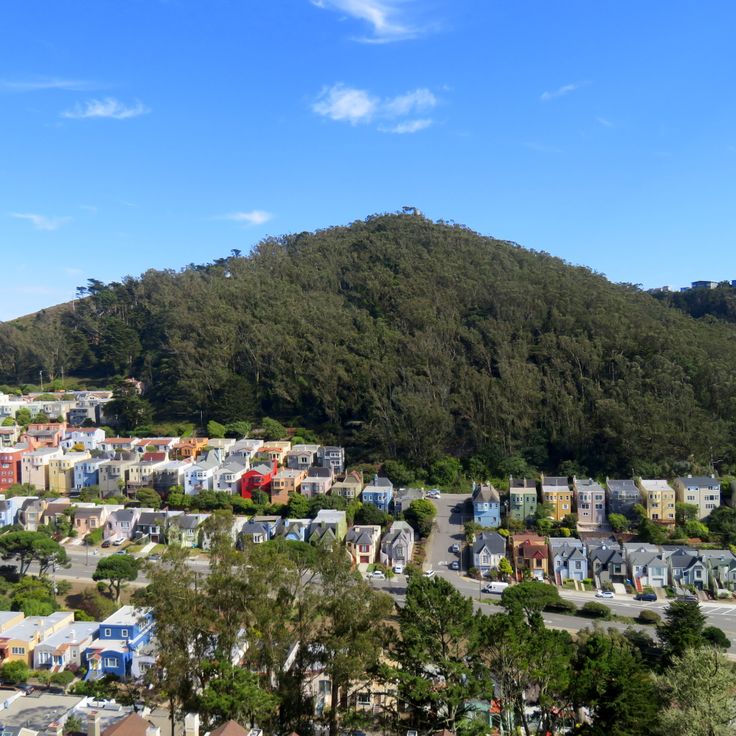
Mount Davidson is the highest natural point in San Francisco. From its wooded summit, you can see the city and the bay. A concrete cross, about 31 meters tall and erected in 1934, stands at the top, replacing earlier wooden structures. Trails wind through the forested hillside up to the summit. The mountain sits in the western part of the city, surrounded by residential neighborhoods.
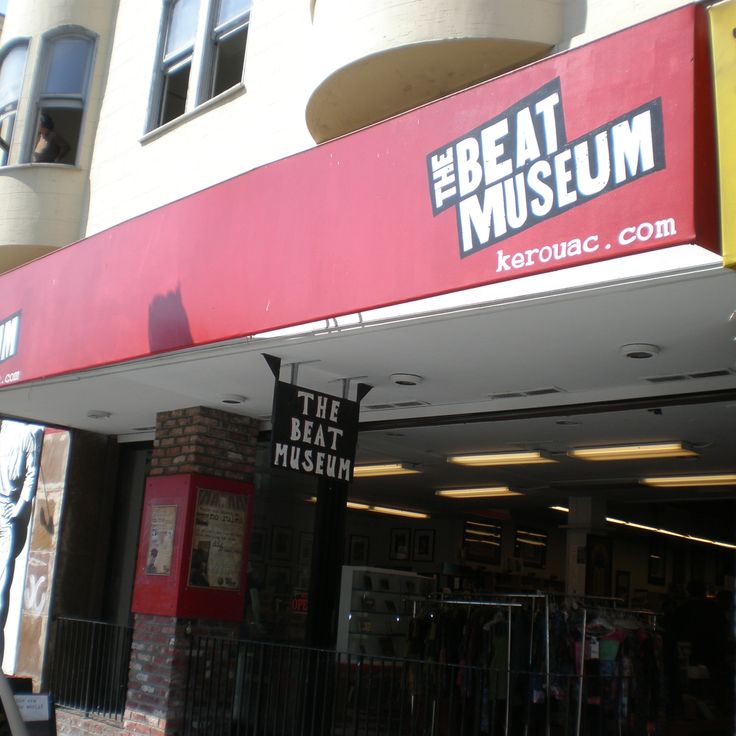
The Beat Museum sits in the heart of San Francisco and is dedicated to the writers of the Beat Generation. It holds manuscripts, photographs, and personal belongings of authors such as Allen Ginsberg and Jack Kerouac. Visitors can see first editions, letters, and everyday objects that shaped American literature in the 1950s. The museum gives a close, personal feel to a literary movement that changed how people wrote and thought.
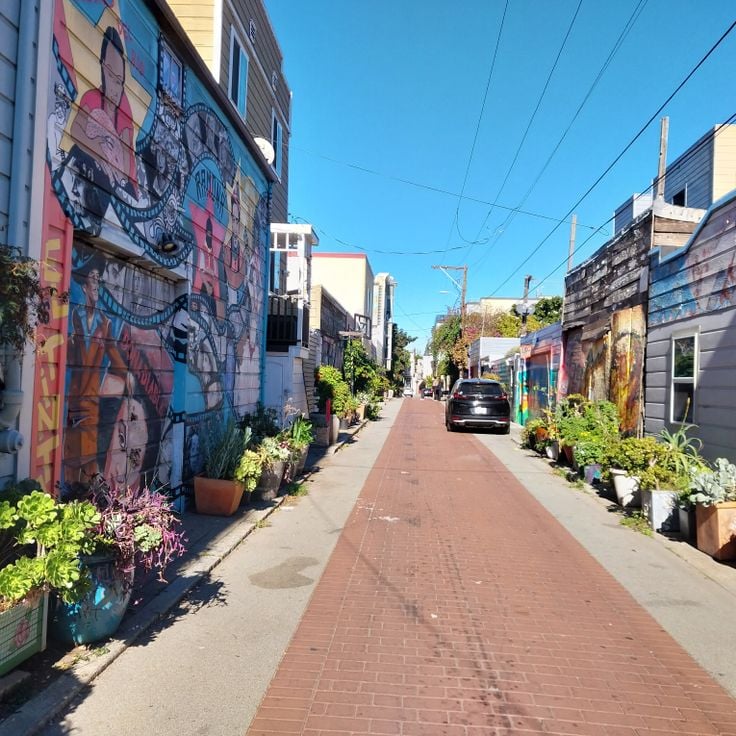
Balmy Alley is a short street in the Mission District where artists have been painting murals on political and social themes since 1984. The alley runs for one block between 24th Street and 25th Street. The walls are covered with images about immigration, human rights, and the identity of the Latino community. Some murals are repainted or replaced over time, while others are kept and restored. Walking through the alley, visitors can see many different styles and messages that speak to the history and everyday concerns of the people who live in this neighborhood.
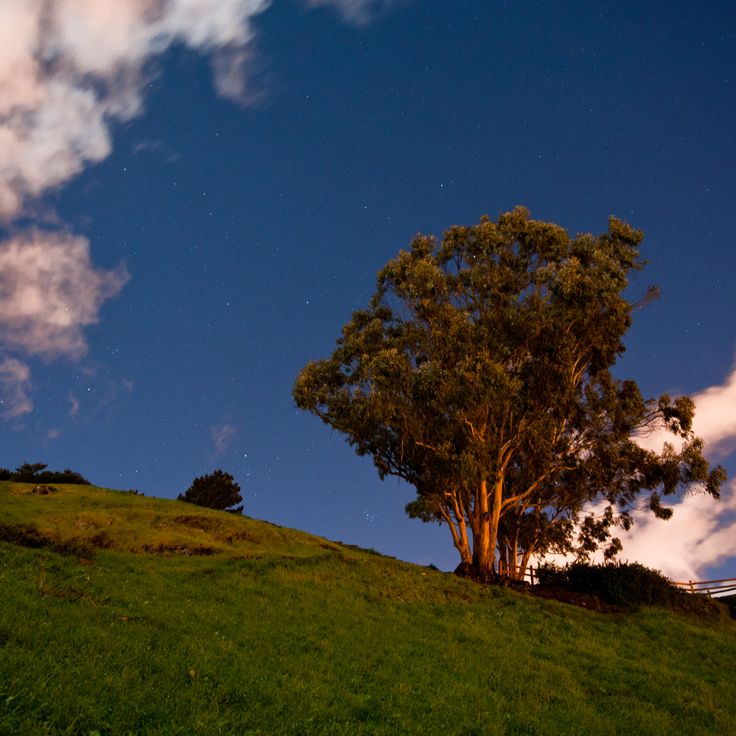
This rope swing attached to a tree at the summit of Billy Goat Hill provides views of the city, bay, and northern mountains. The swing sits in one of San Francisco's elevated parks and offers a vantage point over various neighborhoods and the surrounding landscape. The hill is part of the natural elevations that shape the city's terrain, and the swing was installed by local residents. Visitors can experience a perspective on the urban fabric and geographic features of the region from this location.
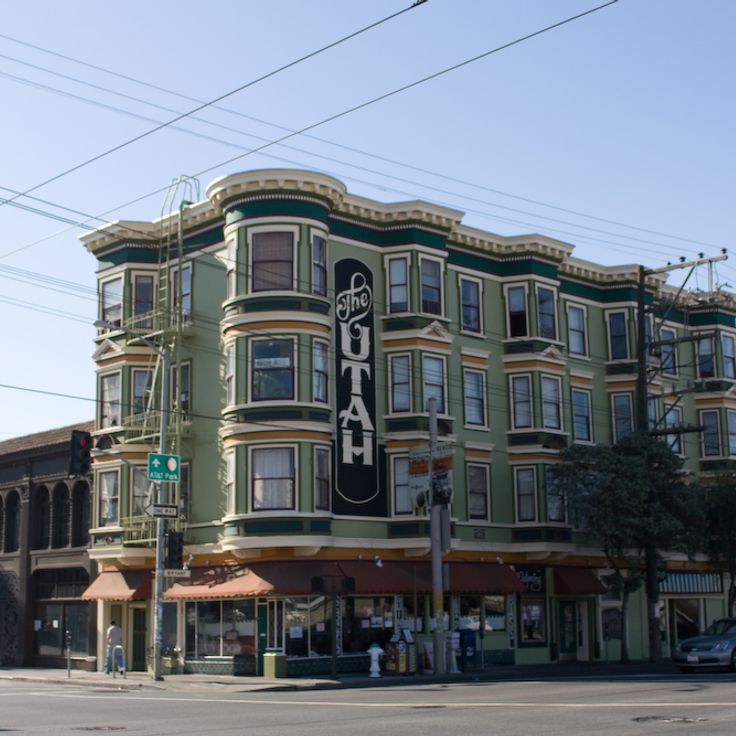
The Hotel Utah Saloon is a bar that has been open since 1908, with original woodwork still covering the walls and counter. It sits in the South of Market neighborhood, close to the bay. The place serves local beers and other drinks, and most evenings a band plays on the small stage. It gives a good sense of what San Francisco's working-class bar life looked and felt like a century ago.
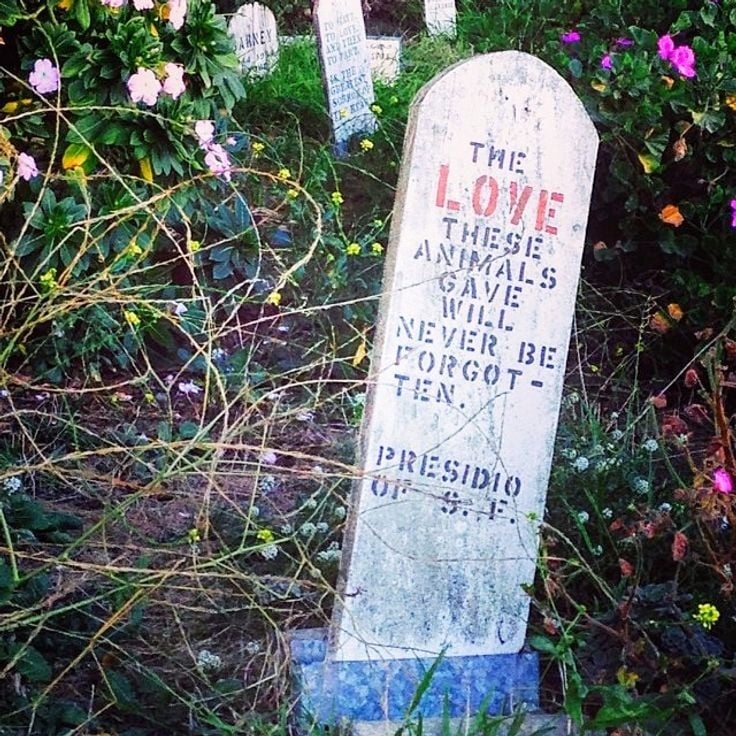
The Presidio Pet Cemetery sits on the grounds of the historic Presidio of San Francisco and served as a burial place for the pets of military families. Most of the graves date from the 1950s and belong to dogs, cats, and rabbits. The handmade markers carry names, dates, and sometimes short personal messages that show how much these animals meant to their owners. Walking through this small cemetery gives a quiet and personal sense of what daily life was like for the soldiers and their families stationed here.
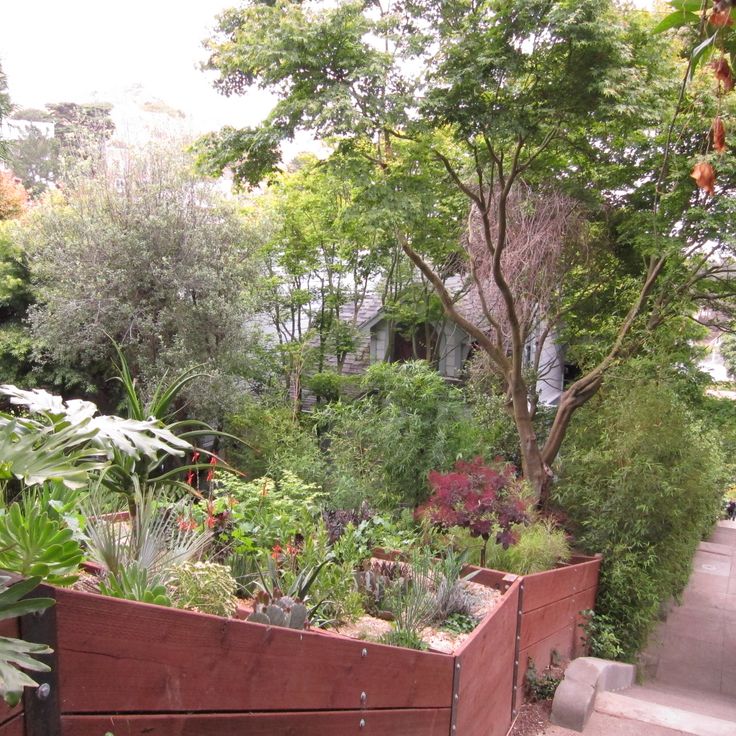
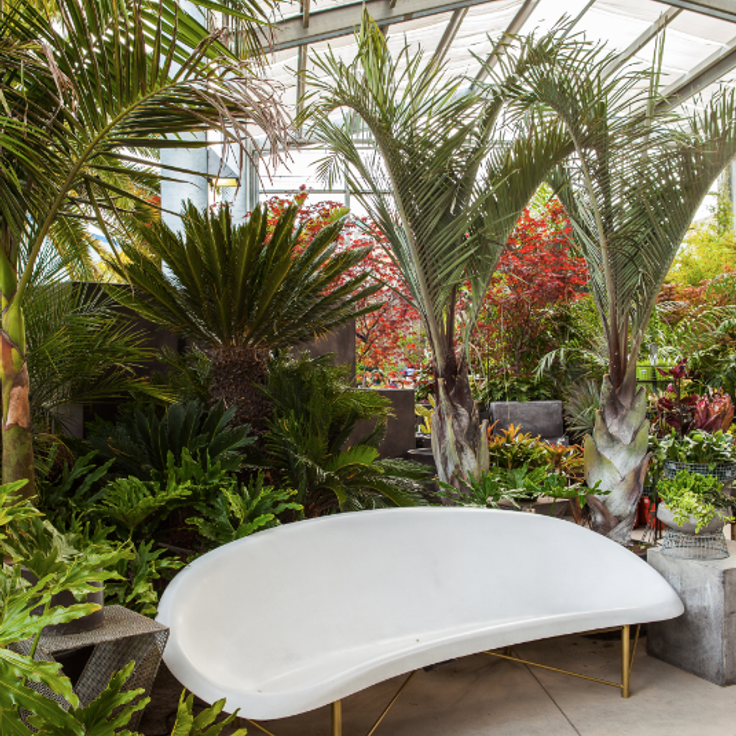
This gardening center with an attached café offers native plants, succulents, and landscaping services for urban spaces in San Francisco. Flora Grubb Gardens combines horticulture with a café and caters to city gardeners and plant enthusiasts. The center carries a selection of plants suited to the Bay Area climate, along with design services for outdoor spaces and balconies.
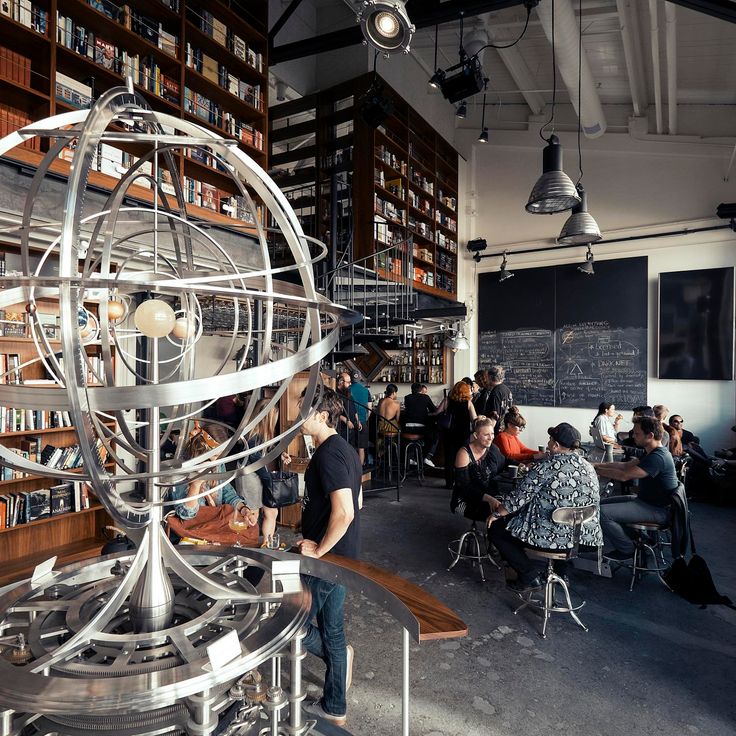
The Interval at Long Now is a gathering place in San Francisco that brings together a large book collection, a mechanical clock prototype, and a bar in one room. The books cover a wide range of subjects, and the clock represents a project focused on measuring time across centuries. It is a place where people come to think, talk, and have a drink in a setting that feels both curious and welcoming.
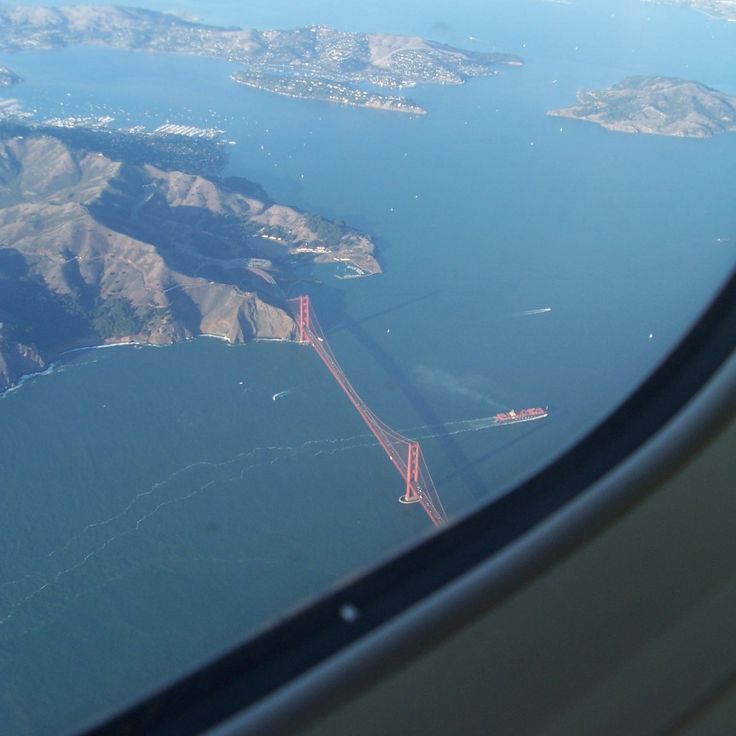
The Golden Gate Bridge crosses the entrance to San Francisco Bay, linking the city to Marin County to the north. Completed in 1937, the bridge has two main towers that rise 745 feet (227 meters) above the water. Its orange color is visible from many parts of the city and surrounding hills, and from the water below. Pedestrians and cyclists can walk or ride across it, with open views of the bay on both sides.
Alcatraz Island sits in the middle of San Francisco Bay, reached by a short ferry ride from the waterfront. The island first served as a military fortification before becoming a federal prison for maximum security inmates from 1934 to 1963. Visitors can walk through the cell blocks, the dining hall, and other sections of the old facility that have been kept intact. The ferry crossing also offers open views of the city skyline and the Golden Gate Bridge.
The Painted Ladies are seven Victorian houses on Steiner Street, built between 1892 and 1896. These row houses in the Queen Anne style face Alamo Square Park and show how San Francisco was built in the late 19th century. Their facades are painted in different pastel shades that bring out the wooden ornaments and cornices. The Painted Ladies are among the most recognized examples of Victorian architecture in the city and stand as a rare survivor of the building style that endured the 1906 earthquake.
Fisherman's Wharf is a waterfront district in San Francisco that grew out of the docks used by Italian fishing boats in the late 19th century. Today, the area is lined with restaurants, shops, and a market where fresh seafood from the bay is sold daily. Dungeness crab and clam dishes are among the most common foods on offer. Street performers add to the activity along the waterfront, and the market gives visitors a direct look at the local fishing trade.
The Fillmore is a music hall from the 1910s located in the Western Addition neighborhood of San Francisco. It started as a dance hall and later became one of the most recognized concert venues on the West Coast. During the 1960s, it hosted many rock and jazz artists connected to the counterculture of that era. Today it still holds regular concerts and keeps its reputation as an active performance space.
Twin Peaks are two hills rising near the center of San Francisco, offering wide views over the city, the bay, and the surrounding landscape. From up here, you can see the rows of houses, the bridges, and the water that wraps around the peninsula on three sides. The viewpoints are reachable by road, and many visitors come at sunset when the light spreads across the rooftops. It is one of the best places to understand how San Francisco sits between hills and sea.
Coit Tower is a concrete tower built in 1933 on top of Telegraph Hill, one of San Francisco's most recognizable hills. Inside, the walls are covered with murals painted in the 1930s that show scenes from California life, including farmworkers, city streets, and everyday people. An observation deck at the top offers open views over San Francisco and the bay. The tower was built as a memorial to the city's firefighters and stands about 210 feet (64 meters) tall.
The Cable Cars of San Francisco have been running through the city streets since 1873. They move along three lines across steep hills, pulled by steel cables that run continuously beneath the road surface. Operators hook the cars onto these cables or release them to control speed. This allows the cars to climb grades of up to 21 percent. The Cable Cars connect several neighborhoods and are among the few systems of this kind still in operation today.
Lands End occupies the western edge of San Francisco, extending along rocky cliffs above the Pacific Ocean. The area features hiking trails that wind through coastal vegetation and provide views of the Golden Gate Bridge. The ruins of the Sutro Baths, once a large public bathhouse from the late 19th century, sit at the shoreline. The Lands End Trail connects Eagle's Point to the Sutro Baths complex, passing through cypress groves. This natural area demonstrates the geology of the San Francisco peninsula and preserves historical remnants of the city's early development as a recreational destination.
The Clarion Alley Mural Project displays over 50 murals in the Mission District. This street gallery presents works by local artists addressing social and political themes. The alley between 17th and 18th Streets has developed since 1992 into a center for urban art. The murals are regularly renewed and reflect current social discussions. The project connects San Francisco's artistic tradition with the cultural heritage of the Mission neighborhood.
This museum explores the history of ice cream through multiple exhibition rooms and interactive installations. Visitors can touch and photograph the displays. The museum combines historical information about frozen desserts with hands-on experiences. The rooms contain representations of different eras of ice cream production and its cultural significance across various societies.
These concrete slides were built in 1973 with the help of neighborhood residents in Seward Street Park. The two sliding structures use the natural slope of the hill to provide outdoor play for children. The park is located in a residential area of San Francisco and serves as public recreation space. The slides are made of concrete and follow the topography of the hillside. They were created through community involvement and represent an example of civic participation in urban design from the 1970s.
The Palace of Fine Arts was built in 1915 for the Panama-Pacific International Exposition. Located in the Marina District, it features a domed rotunda in Roman style with Corinthian columns and long colonnades. Bernard Maybeck designed the structure following classical models from antiquity. The building was fully rebuilt in the 1960s and now serves as an event venue with a theater. On the grounds, a small artificial pond with swans and ducks sits alongside landscaped gardens.
China Beach sits in a protected cove between steep cliffs on the western edge of San Francisco. The beach takes its name from the Chinese fishermen who moored their boats here in the 19th century. From the sand, visitors get a clear view of the Golden Gate Bridge, making it a natural stop on any tour of the city's most famous sites. Stairs lead down from the parking lot to the beach. At low tide, it is possible to explore tide pools and walk to China Cove, a smaller inlet just south of the main beach.
The San Francisco Botanical Garden sits inside Golden Gate Park and brings together plants from five continents. It has a strong focus on species from Central America and Southeast Asia. Walking through, you pass themed sections with greenhouses that recreate different climate zones. Native California plants grow alongside species from distant parts of the world. The garden also supports botanical research and the protection of endangered plant species.
The Ferry Building Marketplace offers local food and restaurants in a historic building from 1898 on the Embarcadero. The structure features a clock tower and has served as a transportation hub and gathering place for over a century. The halls house vendors selling regional produce, bakeries, cheese shops, and fishmongers. Visitors find restaurants and cafes along with a farmers market held multiple times weekly on the plaza outside. The building connects historic architecture with culinary culture in San Francisco.
Established in 1953, this independent bookstore and publishing house specializes in Beat Generation literature and contemporary poetry. The City Lights Bookstore is located in San Francisco's North Beach neighborhood and served as an important gathering place for writers including Allen Ginsberg and Jack Kerouac. The three-story building offers an extensive selection of literary works, political writings, and cultural publications, with the upper floor dedicated to poetry.
Baker Beach is a 0.6 mile (one kilometer) long sandy beach on the western coast of San Francisco, offering direct views of the Golden Gate Bridge and the Marin Headlands. The beach sits below the Presidio and attracts both locals and visitors. The northern section is designated as a clothing optional area. At low tide, visitors can walk along the rocky shoreline, while the western exposure creates cool winds and cold water. The beach features picnic areas and grills in the sheltered sections.
This stairway in San Francisco consists of 163 steps decorated with mosaic tiles. The mosaics depict natural motifs and were created by more than 300 neighborhood residents. The ceramic work extends across the entire staircase and forms a community art project. The stairway connects different street levels in a residential area of the city and serves as a public art path. Visitors can observe the individual mosaic elements while ascending, which together form a continuous artistic composition. The project emerged through local community collaboration and displays various representations of plants, animals, and landscapes.
The Wave Organ is an acoustic sculpture on the shore of San Francisco Bay featuring 25 organ pipes made of concrete and PVC. The movement of tides through the water generates sounds of varying pitch and volume within the pipes. The installation uses recycled gravestones from a demolished cemetery as construction material and provides visitor access via a jetty. The sounds vary with tide height and are best heard at high tide. This monument combines architectural design with natural water movements along the San Francisco waterfront.
The Musée Mécanique sits at Fisherman's Wharf and holds a large collection of mechanical arcade machines from the 20th century. Visitors can operate coin-powered pinball machines, slot machines, music boxes, and mechanical dioramas that span several decades. This museum traces how entertainment machines evolved from the early 1900s through the mid-century, with exhibits drawn from amusement parks and arcades along the American West Coast.
The Yoda Fountain stands at the entrance of the Lucasfilm headquarters in the Presidio, a former military post in northern San Francisco. This bronze statue depicts the Jedi Master from the Star Wars saga and was unveiled in 2005. The life-sized figure is visible from the public sidewalk and sits within the historic grounds of the Presidio, now a national park. It draws both film fans and visitors exploring this corner of the city.
This green space sits at an elevation of 646 feet (197 meters) and provides views across the city. The name refers to the municipal water storage facility built in 1894 that once stood here and supplied the surrounding neighborhoods.
Mount Davidson is the highest natural point in San Francisco. From its wooded summit, you can see the city and the bay. A concrete cross, about 31 meters tall and erected in 1934, stands at the top, replacing earlier wooden structures. Trails wind through the forested hillside up to the summit. The mountain sits in the western part of the city, surrounded by residential neighborhoods.
The Beat Museum sits in the heart of San Francisco and is dedicated to the writers of the Beat Generation. It holds manuscripts, photographs, and personal belongings of authors such as Allen Ginsberg and Jack Kerouac. Visitors can see first editions, letters, and everyday objects that shaped American literature in the 1950s. The museum gives a close, personal feel to a literary movement that changed how people wrote and thought.
Balmy Alley is a short street in the Mission District where artists have been painting murals on political and social themes since 1984. The alley runs for one block between 24th Street and 25th Street. The walls are covered with images about immigration, human rights, and the identity of the Latino community. Some murals are repainted or replaced over time, while others are kept and restored. Walking through the alley, visitors can see many different styles and messages that speak to the history and everyday concerns of the people who live in this neighborhood.
This rope swing attached to a tree at the summit of Billy Goat Hill provides views of the city, bay, and northern mountains. The swing sits in one of San Francisco's elevated parks and offers a vantage point over various neighborhoods and the surrounding landscape. The hill is part of the natural elevations that shape the city's terrain, and the swing was installed by local residents. Visitors can experience a perspective on the urban fabric and geographic features of the region from this location.
The Hotel Utah Saloon is a bar that has been open since 1908, with original woodwork still covering the walls and counter. It sits in the South of Market neighborhood, close to the bay. The place serves local beers and other drinks, and most evenings a band plays on the small stage. It gives a good sense of what San Francisco's working-class bar life looked and felt like a century ago.
The Presidio Pet Cemetery sits on the grounds of the historic Presidio of San Francisco and served as a burial place for the pets of military families. Most of the graves date from the 1950s and belong to dogs, cats, and rabbits. The handmade markers carry names, dates, and sometimes short personal messages that show how much these animals meant to their owners. Walking through this small cemetery gives a quiet and personal sense of what daily life was like for the soldiers and their families stationed here.
This gardening center with an attached café offers native plants, succulents, and landscaping services for urban spaces in San Francisco. Flora Grubb Gardens combines horticulture with a café and caters to city gardeners and plant enthusiasts. The center carries a selection of plants suited to the Bay Area climate, along with design services for outdoor spaces and balconies.
The Interval at Long Now is a gathering place in San Francisco that brings together a large book collection, a mechanical clock prototype, and a bar in one room. The books cover a wide range of subjects, and the clock represents a project focused on measuring time across centuries. It is a place where people come to think, talk, and have a drink in a setting that feels both curious and welcoming.
The Golden Gate Bridge crosses the entrance to San Francisco Bay, linking the city to Marin County to the north. Completed in 1937, the bridge has two main towers that rise 745 feet (227 meters) above the water. Its orange color is visible from many parts of the city and surrounding hills, and from the water below. Pedestrians and cyclists can walk or ride across it, with open views of the bay on both sides.
Alcatraz Island sits in the middle of San Francisco Bay, reached by a short ferry ride from the waterfront. The island first served as a military fortification before becoming a federal prison for maximum security inmates from 1934 to 1963. Visitors can walk through the cell blocks, the dining hall, and other sections of the old facility that have been kept intact. The ferry crossing also offers open views of the city skyline and the Golden Gate Bridge.
The Painted Ladies are seven Victorian houses on Steiner Street, built between 1892 and 1896. These row houses in the Queen Anne style face Alamo Square Park and show how San Francisco was built in the late 19th century. Their facades are painted in different pastel shades that bring out the wooden ornaments and cornices. The Painted Ladies are among the most recognized examples of Victorian architecture in the city and stand as a rare survivor of the building style that endured the 1906 earthquake.
Fisherman's Wharf is a waterfront district in San Francisco that grew out of the docks used by Italian fishing boats in the late 19th century. Today, the area is lined with restaurants, shops, and a market where fresh seafood from the bay is sold daily. Dungeness crab and clam dishes are among the most common foods on offer. Street performers add to the activity along the waterfront, and the market gives visitors a direct look at the local fishing trade.
The Fillmore is a music hall from the 1910s located in the Western Addition neighborhood of San Francisco. It started as a dance hall and later became one of the most recognized concert venues on the West Coast. During the 1960s, it hosted many rock and jazz artists connected to the counterculture of that era. Today it still holds regular concerts and keeps its reputation as an active performance space.
Twin Peaks are two hills rising near the center of San Francisco, offering wide views over the city, the bay, and the surrounding landscape. From up here, you can see the rows of houses, the bridges, and the water that wraps around the peninsula on three sides. The viewpoints are reachable by road, and many visitors come at sunset when the light spreads across the rooftops. It is one of the best places to understand how San Francisco sits between hills and sea.
Coit Tower is a concrete tower built in 1933 on top of Telegraph Hill, one of San Francisco's most recognizable hills. Inside, the walls are covered with murals painted in the 1930s that show scenes from California life, including farmworkers, city streets, and everyday people. An observation deck at the top offers open views over San Francisco and the bay. The tower was built as a memorial to the city's firefighters and stands about 210 feet (64 meters) tall.
The Cable Cars of San Francisco have been running through the city streets since 1873. They move along three lines across steep hills, pulled by steel cables that run continuously beneath the road surface. Operators hook the cars onto these cables or release them to control speed. This allows the cars to climb grades of up to 21 percent. The Cable Cars connect several neighborhoods and are among the few systems of this kind still in operation today.
Lands End occupies the western edge of San Francisco, extending along rocky cliffs above the Pacific Ocean. The area features hiking trails that wind through coastal vegetation and provide views of the Golden Gate Bridge. The ruins of the Sutro Baths, once a large public bathhouse from the late 19th century, sit at the shoreline. The Lands End Trail connects Eagle's Point to the Sutro Baths complex, passing through cypress groves. This natural area demonstrates the geology of the San Francisco peninsula and preserves historical remnants of the city's early development as a recreational destination.
The Clarion Alley Mural Project displays over 50 murals in the Mission District. This street gallery presents works by local artists addressing social and political themes. The alley between 17th and 18th Streets has developed since 1992 into a center for urban art. The murals are regularly renewed and reflect current social discussions. The project connects San Francisco's artistic tradition with the cultural heritage of the Mission neighborhood.
This museum explores the history of ice cream through multiple exhibition rooms and interactive installations. Visitors can touch and photograph the displays. The museum combines historical information about frozen desserts with hands-on experiences. The rooms contain representations of different eras of ice cream production and its cultural significance across various societies.
These concrete slides were built in 1973 with the help of neighborhood residents in Seward Street Park. The two sliding structures use the natural slope of the hill to provide outdoor play for children. The park is located in a residential area of San Francisco and serves as public recreation space. The slides are made of concrete and follow the topography of the hillside. They were created through community involvement and represent an example of civic participation in urban design from the 1970s.
The Palace of Fine Arts was built in 1915 for the Panama-Pacific International Exposition. Located in the Marina District, it features a domed rotunda in Roman style with Corinthian columns and long colonnades. Bernard Maybeck designed the structure following classical models from antiquity. The building was fully rebuilt in the 1960s and now serves as an event venue with a theater. On the grounds, a small artificial pond with swans and ducks sits alongside landscaped gardens.
China Beach sits in a protected cove between steep cliffs on the western edge of San Francisco. The beach takes its name from the Chinese fishermen who moored their boats here in the 19th century. From the sand, visitors get a clear view of the Golden Gate Bridge, making it a natural stop on any tour of the city's most famous sites. Stairs lead down from the parking lot to the beach. At low tide, it is possible to explore tide pools and walk to China Cove, a smaller inlet just south of the main beach.
The San Francisco Botanical Garden sits inside Golden Gate Park and brings together plants from five continents. It has a strong focus on species from Central America and Southeast Asia. Walking through, you pass themed sections with greenhouses that recreate different climate zones. Native California plants grow alongside species from distant parts of the world. The garden also supports botanical research and the protection of endangered plant species.
The Ferry Building Marketplace offers local food and restaurants in a historic building from 1898 on the Embarcadero. The structure features a clock tower and has served as a transportation hub and gathering place for over a century. The halls house vendors selling regional produce, bakeries, cheese shops, and fishmongers. Visitors find restaurants and cafes along with a farmers market held multiple times weekly on the plaza outside. The building connects historic architecture with culinary culture in San Francisco.
Established in 1953, this independent bookstore and publishing house specializes in Beat Generation literature and contemporary poetry. The City Lights Bookstore is located in San Francisco's North Beach neighborhood and served as an important gathering place for writers including Allen Ginsberg and Jack Kerouac. The three-story building offers an extensive selection of literary works, political writings, and cultural publications, with the upper floor dedicated to poetry.
Baker Beach is a 0.6 mile (one kilometer) long sandy beach on the western coast of San Francisco, offering direct views of the Golden Gate Bridge and the Marin Headlands. The beach sits below the Presidio and attracts both locals and visitors. The northern section is designated as a clothing optional area. At low tide, visitors can walk along the rocky shoreline, while the western exposure creates cool winds and cold water. The beach features picnic areas and grills in the sheltered sections.
This stairway in San Francisco consists of 163 steps decorated with mosaic tiles. The mosaics depict natural motifs and were created by more than 300 neighborhood residents. The ceramic work extends across the entire staircase and forms a community art project. The stairway connects different street levels in a residential area of the city and serves as a public art path. Visitors can observe the individual mosaic elements while ascending, which together form a continuous artistic composition. The project emerged through local community collaboration and displays various representations of plants, animals, and landscapes.
The Wave Organ is an acoustic sculpture on the shore of San Francisco Bay featuring 25 organ pipes made of concrete and PVC. The movement of tides through the water generates sounds of varying pitch and volume within the pipes. The installation uses recycled gravestones from a demolished cemetery as construction material and provides visitor access via a jetty. The sounds vary with tide height and are best heard at high tide. This monument combines architectural design with natural water movements along the San Francisco waterfront.
The Musée Mécanique sits at Fisherman's Wharf and holds a large collection of mechanical arcade machines from the 20th century. Visitors can operate coin-powered pinball machines, slot machines, music boxes, and mechanical dioramas that span several decades. This museum traces how entertainment machines evolved from the early 1900s through the mid-century, with exhibits drawn from amusement parks and arcades along the American West Coast.
The Yoda Fountain stands at the entrance of the Lucasfilm headquarters in the Presidio, a former military post in northern San Francisco. This bronze statue depicts the Jedi Master from the Star Wars saga and was unveiled in 2005. The life-sized figure is visible from the public sidewalk and sits within the historic grounds of the Presidio, now a national park. It draws both film fans and visitors exploring this corner of the city.
This green space sits at an elevation of 646 feet (197 meters) and provides views across the city. The name refers to the municipal water storage facility built in 1894 that once stood here and supplied the surrounding neighborhoods.
Mount Davidson is the highest natural point in San Francisco. From its wooded summit, you can see the city and the bay. A concrete cross, about 31 meters tall and erected in 1934, stands at the top, replacing earlier wooden structures. Trails wind through the forested hillside up to the summit. The mountain sits in the western part of the city, surrounded by residential neighborhoods.
The Beat Museum sits in the heart of San Francisco and is dedicated to the writers of the Beat Generation. It holds manuscripts, photographs, and personal belongings of authors such as Allen Ginsberg and Jack Kerouac. Visitors can see first editions, letters, and everyday objects that shaped American literature in the 1950s. The museum gives a close, personal feel to a literary movement that changed how people wrote and thought.
Balmy Alley is a short street in the Mission District where artists have been painting murals on political and social themes since 1984. The alley runs for one block between 24th Street and 25th Street. The walls are covered with images about immigration, human rights, and the identity of the Latino community. Some murals are repainted or replaced over time, while others are kept and restored. Walking through the alley, visitors can see many different styles and messages that speak to the history and everyday concerns of the people who live in this neighborhood.
This rope swing attached to a tree at the summit of Billy Goat Hill provides views of the city, bay, and northern mountains. The swing sits in one of San Francisco's elevated parks and offers a vantage point over various neighborhoods and the surrounding landscape. The hill is part of the natural elevations that shape the city's terrain, and the swing was installed by local residents. Visitors can experience a perspective on the urban fabric and geographic features of the region from this location.
The Hotel Utah Saloon is a bar that has been open since 1908, with original woodwork still covering the walls and counter. It sits in the South of Market neighborhood, close to the bay. The place serves local beers and other drinks, and most evenings a band plays on the small stage. It gives a good sense of what San Francisco's working-class bar life looked and felt like a century ago.
The Presidio Pet Cemetery sits on the grounds of the historic Presidio of San Francisco and served as a burial place for the pets of military families. Most of the graves date from the 1950s and belong to dogs, cats, and rabbits. The handmade markers carry names, dates, and sometimes short personal messages that show how much these animals meant to their owners. Walking through this small cemetery gives a quiet and personal sense of what daily life was like for the soldiers and their families stationed here.
This gardening center with an attached café offers native plants, succulents, and landscaping services for urban spaces in San Francisco. Flora Grubb Gardens combines horticulture with a café and caters to city gardeners and plant enthusiasts. The center carries a selection of plants suited to the Bay Area climate, along with design services for outdoor spaces and balconies.
The Interval at Long Now is a gathering place in San Francisco that brings together a large book collection, a mechanical clock prototype, and a bar in one room. The books cover a wide range of subjects, and the clock represents a project focused on measuring time across centuries. It is a place where people come to think, talk, and have a drink in a setting that feels both curious and welcoming.
The Golden Gate Bridge crosses the entrance to San Francisco Bay, linking the city to Marin County to the north. Completed in 1937, the bridge has two main towers that rise 745 feet (227 meters) above the water. Its orange color is visible from many parts of the city and surrounding hills, and from the water below. Pedestrians and cyclists can walk or ride across it, with open views of the bay on both sides.
Walk the neighborhoods on foot rather than relying only on cable cars. You will notice details like the way buildings sit on hillsides, how the streets suddenly open onto views, and the rhythm of daily life that no vehicle ride captures.