Lithia Park, Urban park with mineral springs in Ashland, US.
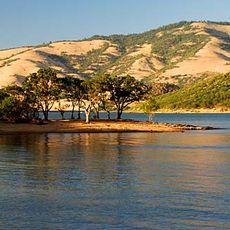
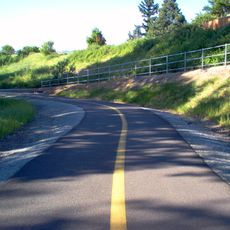
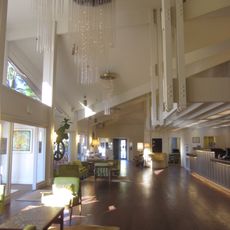
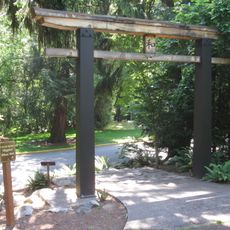
Lithia Park covers 93 acres (38 hectares) of forested canyonland around Ashland Creek, from the downtown plaza toward its headwaters near Mount Ashland. It has two large greens, a bandshell, two duck ponds, a playground, tennis courts, community buildings, an ice rink in winter, picnic areas, miles of trails, and a Japanese garden.
The land at the park entrance held Abel Helman and Eber Emery's flour mill, the first building in what became Ashland, built in 1852. In 1908 the city charter was amended to set aside city land along Ashland Creek as a park. A 1914 bond issue funded improvements designed by John McLaren of Golden Gate Park, and in 1916 voters returned control to the park commission. The park was listed on the National Register of Historic Places in 1982.
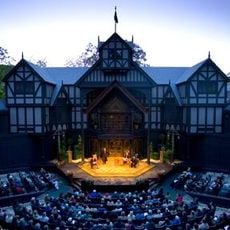
The park's name comes from lithium oxide, or lithia, found in spring water piped in after a 1907 spring was discovered at Emigrant Creek. A bandshell hosts public musical performances, and the park was named one of 10 Great Public Spaces in America by the American Planning Association in 2014.
The park has restrooms, drinking fountains, and numerous picnic and rest areas, with street parking available nearby. Visitors should wear comfortable walking shoes and can use various entry points to explore different sections of the grounds.
The park's name comes from lithium oxide found in the spring water. In 1907 a lithia spring was found at Emigrant Creek, and its water had the second-highest lithium concentration of any natural spring, after Saratoga Springs, New York. Journalist Bert Greer pushed for a mineral water resort, and a 1914 bond paid for piping the water into the park.
The community of curious travelers
AroundUs brings together thousands of curated places, local tips, and hidden gems, enriched daily by 93,036 contributors worldwide.