Willamette Mission State Park, State park in Marion County, United States.
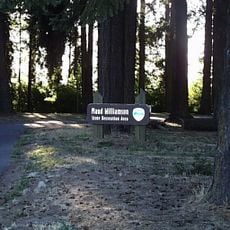
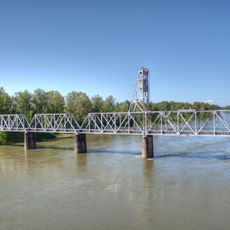
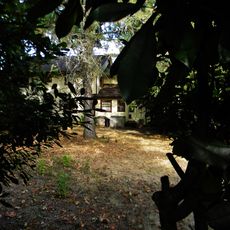
Willamette Mission State Park covers 1,680 acres (6.8 km2) on the east bank of the Willamette River, about four miles north of Keizer beside the Wheatland Ferry. It holds the Willamette Station Site, Methodist Mission in Oregon, listed on the National Register of Historic Places, where a ghost structure marks the mission's location. Eight miles of hiking trails follow the river.
Jason Lee established the Willamette Mission in 1834 to convert Native Americans to Christianity. The missionaries built a one-room house used as a school, chapel, hospital, and living quarters, later adding a barn. In September 1837 more missionaries arrived and built a blacksmith shop, granary, hospital, and a school-dining hall; the settlement became known as Mission Bottom. The mission moved to Chemeketa (now Salem) in 1840, and an 1861 flood damaged the site and changed the river's course.
The park's name comes from the Methodist mission founded here in 1834, whose settlement was called Mission Bottom. A "ghost structure" now outlines where the mission stood, and the site is listed on the National Register of Historic Places as the Willamette Station Site, Methodist Mission in Oregon.
The park offers about 8 miles of hiking trails through various habitats and has picnic areas and space for horseback riding. Visitors should wear sturdy footwear and be ready for changing ground conditions.
The park is home to what may be the largest black cottonwood in the United States, the Willamette Mission Cottonwood, which the Oregon Heritage Tree Committee designated an Oregon Heritage Tree. The tree stands as a living landmark of the park's floodplain forest.
The community of curious travelers
AroundUs brings together thousands of curated places, local tips, and hidden gems, enriched daily by 94,131 contributors worldwide.