Mount St. Helens National Volcanic Monument, National volcanic monument in Cowlitz County, United States
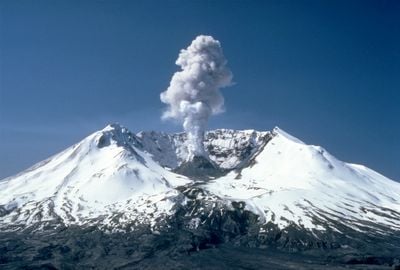
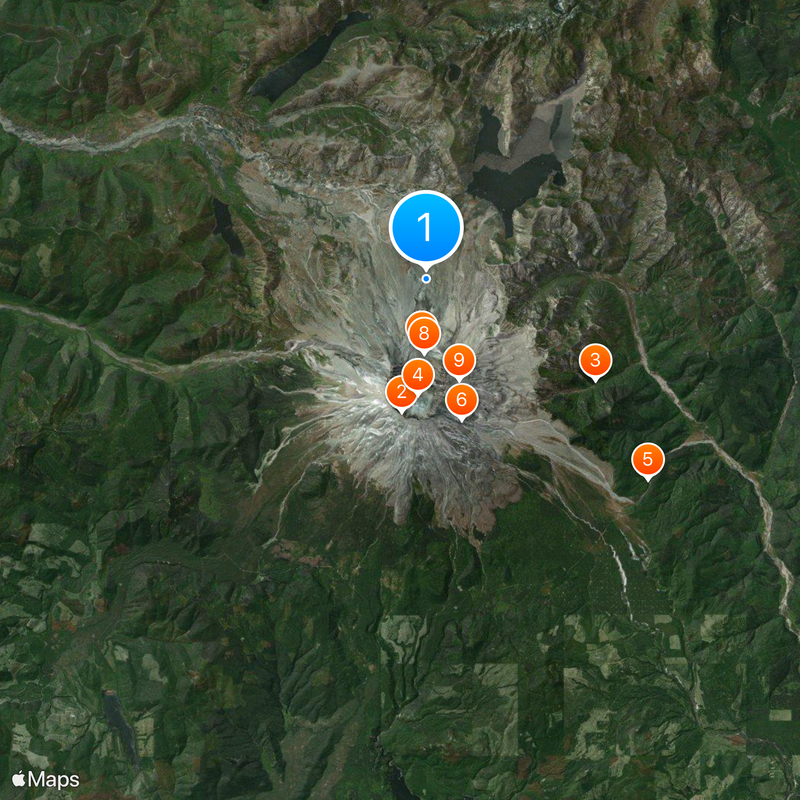
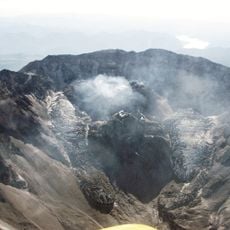
Mount St. Helens National Volcanic Monument covers 110,000 acres (445 km2) in Cowlitz, Lewis and Skamania counties within Gifford Pinchot National Forest. Its centre is a conical volcano whose summit holds a wide horseshoe-shaped crater opening to the left, with snow and ice on the flanks and dark grey rock exposed in ridges and gullies. From a dark grey dome inside the crater a thick column of white and light grey ash and steam rises vertically in rounded, billowing masses.
Mount St. Helens erupted on May 18, 1980, losing over 1,300 feet of its summit and leaving a horseshoe-shaped crater about one mile wide. Congress established the 110,000-acre national monument on August 27, 1982, the third managed by the U.S. Forest Service, within Gifford Pinchot National Forest. Inside it the environment is left to respond naturally to the disturbance. Dedication ceremonies followed on May 18, 1983.
The Cowlitz call the volcano Lawetlat'la, and the name is used in the tribe's connection to the mountain; the 2024 upgrade of the Silver Lake visitor center added exhibits on Cowlitz history and ties to the surrounding lands, and a foundation run by the Cowlitz Indian Tribe gave $900,000 toward the proposed Coldwater expansion. May is recognized by the state as Volcano Awareness Month, with events commemorating lives lost in the 1980 eruption.
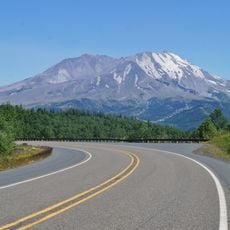
Climbing to the summit is permitted from the south side, a rule in place since 1986. Johnston Ridge Observatory sits at the end of State Route 504, four miles from the mountain, and a half-mile paved trail there looks onto the lava dome, crater and pumice plain. Check access before setting out: the 2023 South Coldwater Slide closed the highway, with reopening planned around 2026 and the observatory possibly in 2027.
A glacier formed immediately after the eruption and continues to grow at an unusually rapid rate, even as volcanic activity persists within the crater. This rare combination of glacier formation and ongoing volcanic processes makes this place particularly noteworthy for scientific observation.
The community of curious travelers
AroundUs brings together thousands of curated places, local tips, and hidden gems, enriched daily by 93,773 contributors worldwide.