Volunteer Park Conservatory, Victorian greenhouse in Volunteer Park, Seattle, US
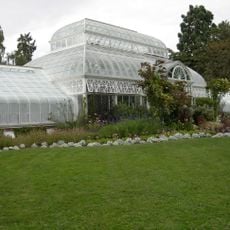
The Volunteer Park Conservatory is a glass and wood structure in Seattle containing five display houses with tropical plants, seasonal flowers, cacti, bromeliads, and ferns organized into separate climate zones. The layout allows visitors to move through different plant habitats, with each space maintaining conditions suited to specific botanical needs.
The conservatory was proposed in 1893, and Seattle bought its design and framework from the Hitchings Company of New York. The Victorian greenhouse, modeled on London's Crystal Palace, was among the earliest additions to City Park, renamed Volunteer Park in 1901. The park itself was landscaped from 1904 using plans by the Olmsted Brothers, with John Charles Olmsted as principal designer.
The park was renamed Volunteer Park in 1901 for volunteers of the Spanish–American War, and the conservatory took that name. Its orchid collection began in 1921 as a gift from Mrs. Anna H. Clise. Docents give tours on the plant collections and the building's history, and the seasonal house is replanted six times a year.
The greenhouse is relatively small and compactly organized, meaning a visit typically takes one to two hours. The different rooms are easily walkable and clearly labeled, allowing visitors to move between zones without difficulty.
The lunette window above the main entrance, called the peacock window, is the only original wood and glass piece left from 1912 after two renovations; it was restored in 2000. In 1981 Richard Spaulding added a hand-blown stained green glass canopy, "Homage in Green", to the entry vestibule, with further green glass pieces in 1982 and 1995.
The community of curious travelers
AroundUs brings together thousands of curated places, local tips, and hidden gems, enriched daily by 93,124 contributors worldwide.