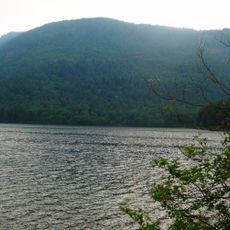
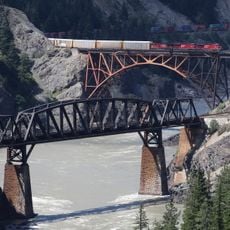
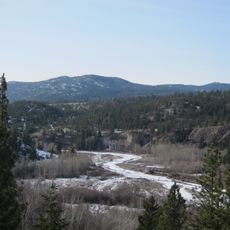
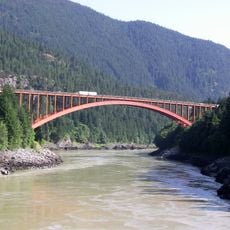
Fraser Canyon, Canyon in British Columbia, Canada
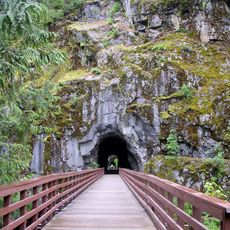
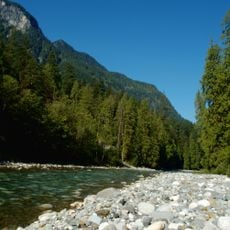
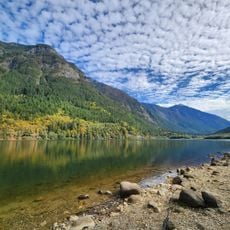
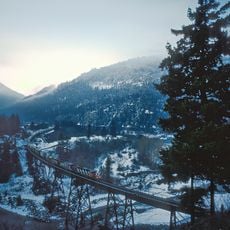
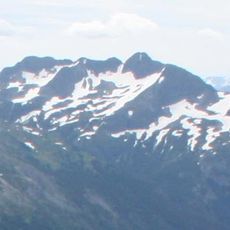
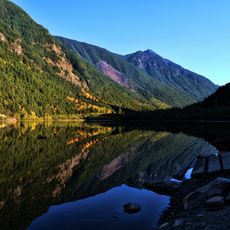
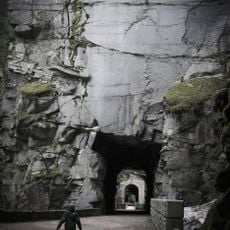
The Fraser Canyon is a 270-kilometre stretch of the Fraser River where it drops through narrow rock gorges in the Coast Mountains, from Yale north to the Chilcotin confluence. Its southern part carries the Canadian National and Canadian Pacific railways and the Trans-Canada Highway, cut into the rock faces. Between Pavilion and Lillooet the gorge reaches its greatest depth, with the river throttled through narrow channels below high cliffs.
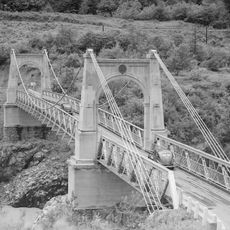
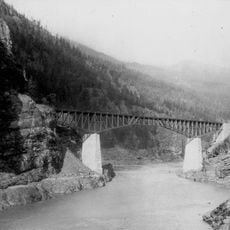
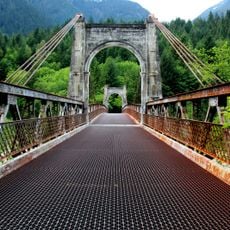
The Fraser Canyon Gold Rush of 1858–1860 brought some 10,500 miners to the canyon's banks and towns. The Fraser Canyon War and McGowan's War occurred in this period, and the Cariboo Wagon Road was later built through the canyon, followed by the Canadian Pacific Railway.
Just north of Lillooet, narrow rock ledges at the mouth of the Bridge River choke the Fraser and form a barrier to migrating fish. This spot has been the busiest aboriginal fishing site on the river from ancient times to the present, with gatherings of Interior First Nations people believed to have exceeded 10,000.
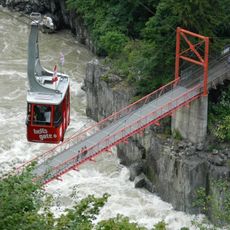
The canyon extends 270 km north of Yale to the Chilcotin confluence; the Trans-Canada Highway and both national railways are cut into its southern walls. North of Lytton, BC Highway 12 and then Highway 99 follow the river to Pavilion, beyond which only rough ranching roads continue. At Hells Gate near Boston Bar an aerial tramway, built in 1971, crosses the gorge.
The rockslide that created Hell's Gate's churning water came from blasting for the Canadian Northern Railway line in 1913. Fish ladders built along the riverbank now let migrating salmon bypass the obstruction. Near Boston Bar, the canyon walls above the rapids rise about 1,000 metres.
The community of curious travelers
AroundUs brings together thousands of curated places, local tips, and hidden gems, enriched daily by 93,108 contributors worldwide.