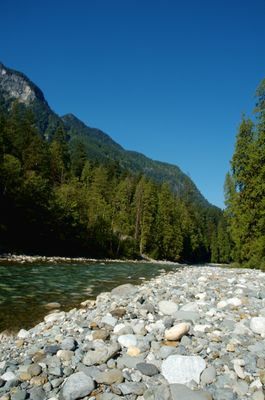
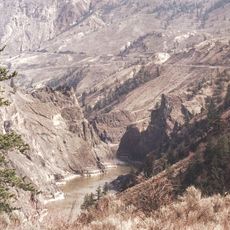
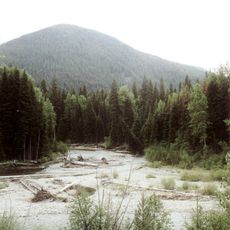
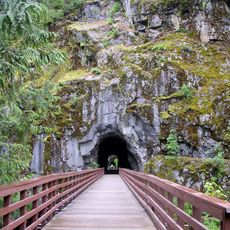
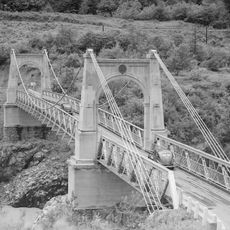
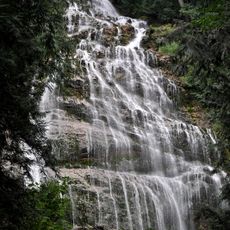
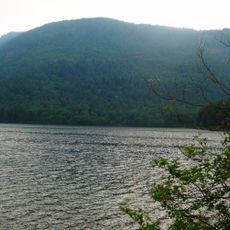
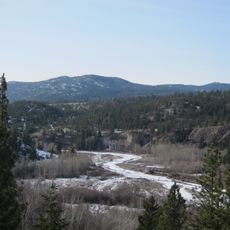
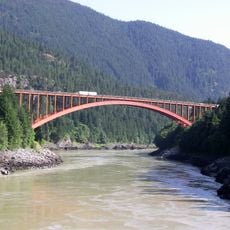
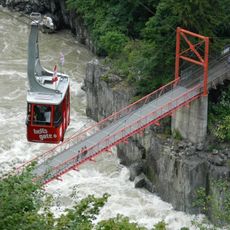
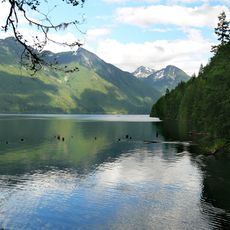
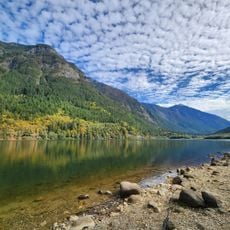
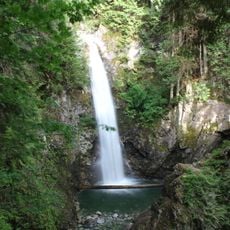
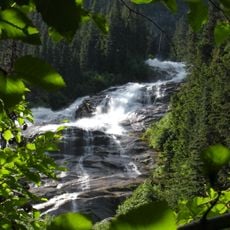
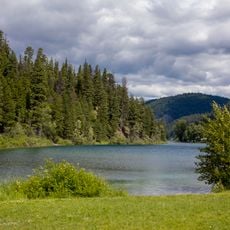
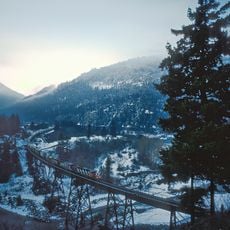
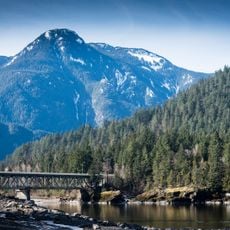
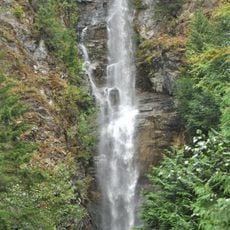
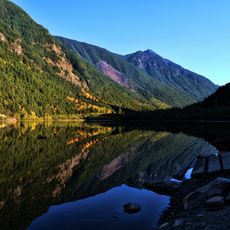
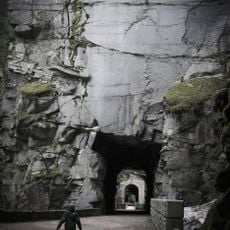
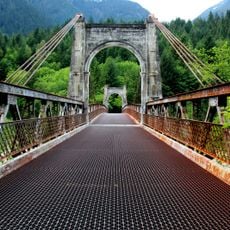
Coquihalla River, Mountain river in Cascade Mountains, British Columbia, Canada.
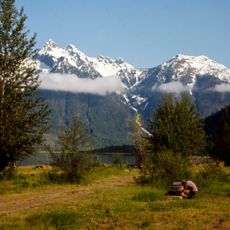
The Coquihalla River rises in the Coquihalla Lakes at about 1,100 m in the northern Cascade Mountains and runs some 55 km southwest to the Fraser River at Hope. It forms the northern boundary of the Skagit and Hozameen ranges and falls roughly 1,000 m over 33 miles, an incessant roar in its deep, narrow valley. Its main tributary, the Nicolum River, joins 7 km above the mouth in Coquihalla Canyon Provincial Park.
The name comes from Kw'ikw'iyá:la, a Halkomelem word meaning "stingy container" or "stingy place", referring to a deep pool called Skw'éxweq near the river's mouth. The Stó:lō speared suckerfish there, and oral history says s'ó:lmexw, two-foot-tall underwater people, grabbed the spears so the fish could not be caught.
The name comes from Kw'ikw'iyá:la, Halkomelem for "stingy container" or "stingy place", referring to a deep pool called Skw'éxweq near the river's mouth. The Stó:lō speared suckerfish there, and oral history says s'ó:lmexw, two-foot-tall black-haired underwater people, grabbed the spears so the fish could not be caught.
British Columbia Highway 5 follows the river from Hope up to the Coquihalla Pass, and a section of the 18,078-kilometre Trans Canada Trail runs alongside the river for long stretches. The Nicolum River joins from the east 7 km above the mouth, inside Coquihalla Canyon Provincial Park. May and June carry the highest flow, averaging 71.2 and 62.8 m³/s.
The name Kw'ikw'iyá:la, "stingy container", refers to a deep pool called Skw'éxweq near the river mouth, where the Stó:lō speared plentiful suckerfish. Their oral history says the s'ó:lmexw, black-haired, two-foot-tall underwater people, grabbed the spears so the fish could not be caught. Two other pools were said to have the same problem.
The community of curious travelers
AroundUs brings together thousands of curated places, local tips, and hidden gems, enriched daily by 94,484 contributors worldwide.