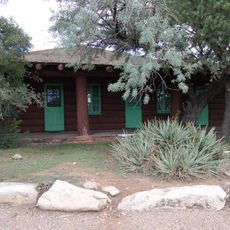
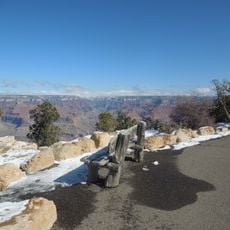
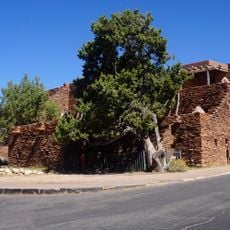
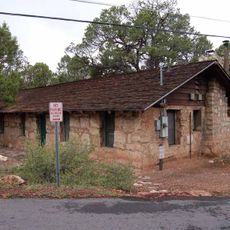
Grand Canyon Village Historic District, National Historic Landmark district at Grand Canyon Village, Arizona
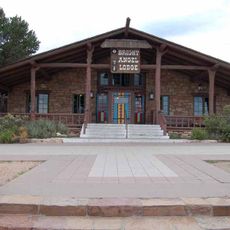
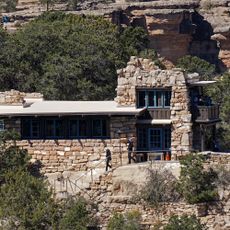
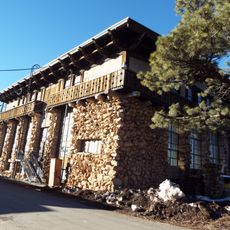
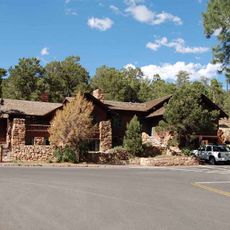
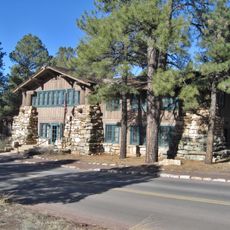
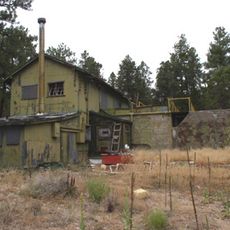
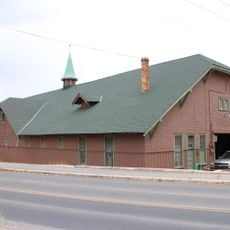
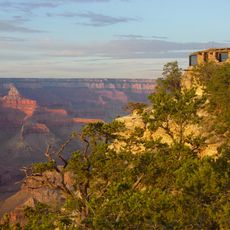
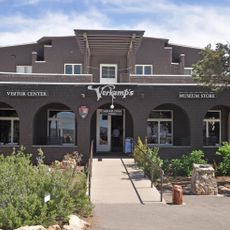
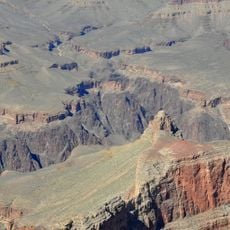
Grand Canyon Village Historic District is a group of historic buildings along the South Rim of the Grand Canyon in Arizona, built in the National Park Service rustic style using local stone and timber. The buildings sit close together along a short walkable stretch and cover a range of uses, from lodging and dining to shops and park offices.
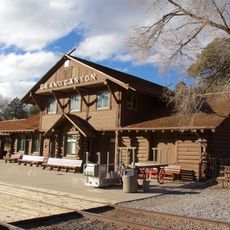
The Santa Fe Railway reached the South Rim in 1901, and the village grew around the terminus of the Grand Canyon Railway. The El Tovar Hotel opened in 1905, and a new train depot was built beside it in 1909. A 1924 master plan by NPS landscape architect Daniel Ray Hull laid out a village square below the El Tovar. The district was declared a National Historic Landmark on February 18, 1987.
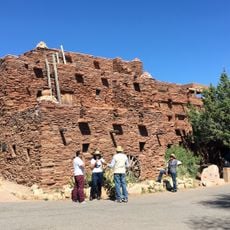
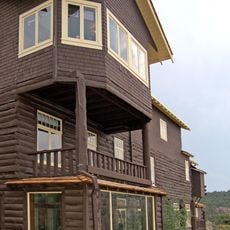
The El Tovar Hotel and Hopi House sit side by side and show two very different building styles within a short walk of each other. One recalls a European mountain lodge, while the other was modeled on Hopi architecture and originally served as a place to sell Hopi crafts.
The buildings are close together and easy to walk between, with paved paths that work for most mobility levels. Spring and fall tend to be more comfortable than the height of summer or winter, when temperatures on the South Rim can become extreme.
The district's 1924 master plan by NPS landscape architect Daniel Ray Hull placed a "village square" at the railroad and east road junction below El Tovar, with the first park administration building there. Hull set housing on two small hills split by a branch of Bright Angel drainage, and arranged Park Service homes with car access at the rear and fronts facing a shared central space, an arrangement predating its use at Radburn, New Jersey.
The community of curious travelers
AroundUs brings together thousands of curated places, local tips, and hidden gems, enriched daily by 93,320 contributors worldwide.