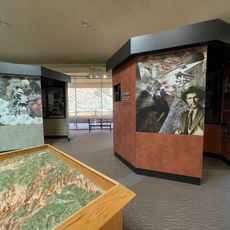
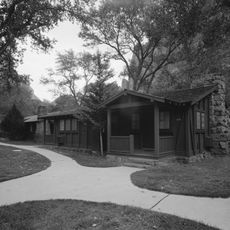
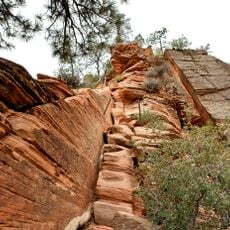
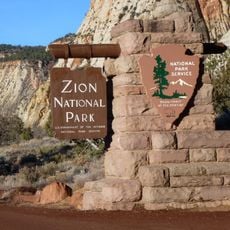
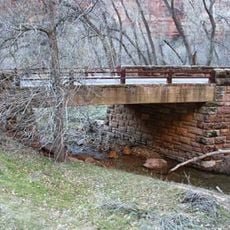
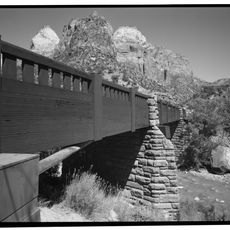
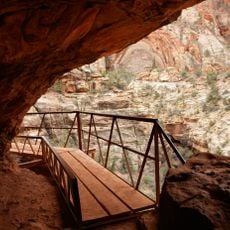
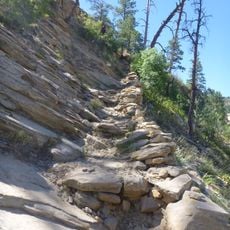
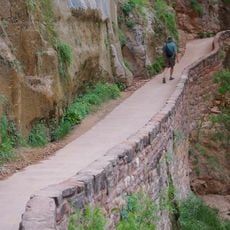
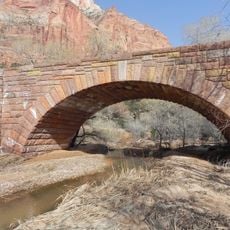
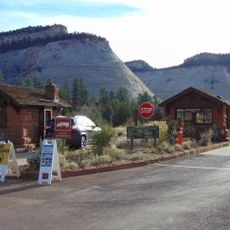
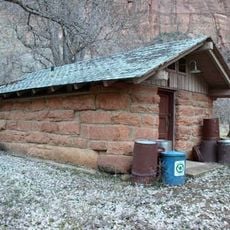
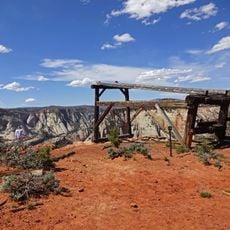
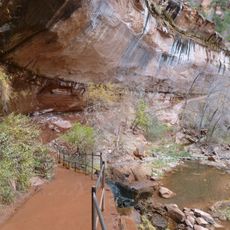
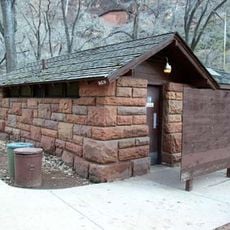
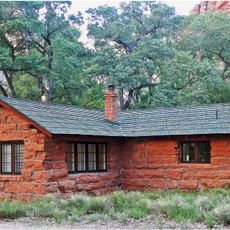
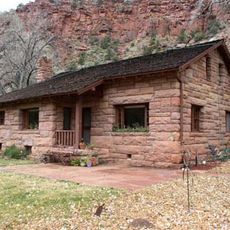
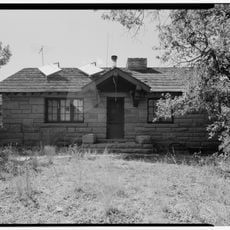
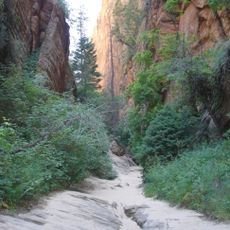
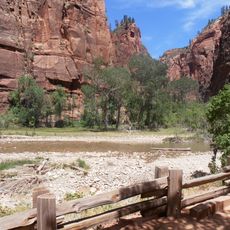
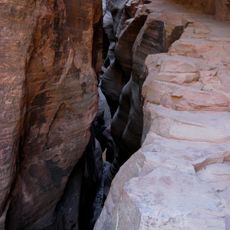
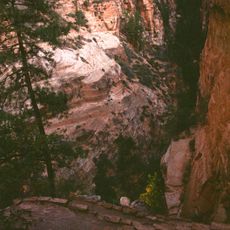
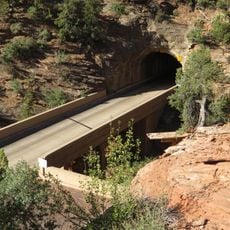
Historical buildings and structures of Zion National Park, Rustic architectural ensemble in Zion National Park, Utah, US.
The historical buildings and structures of Zion National Park showcase regional construction methods using native sandstone in lodges, bridges, and infrastructure elements. The ensemble spreads across different park areas and includes various buildings erected during separate periods.
Architect Gilbert Stanley Underwood designed many of these structures during the 1920s, while the Civilian Conservation Corps built additional buildings during the 1930s. These two construction periods shaped how the park looks today.
Zion's rustic style was milder than at other parks: milled lumber replaced rough logs, and timber and stonework were smaller, reflecting the settled farms and irrigation systems still present when the first visitor facilities were built. Remnants of Mormon settlement in Zion Canyon, begun in 1862, survive as two irrigation canals and a cable draw works.
The historic structures lie along the Floor of the Valley Road, which follows the North Fork of the Virgin River for nine miles through Zion Canyon; the earliest sections date to 1916. The Zion-Mount Carmel Highway, completed in 1930, links the park with Grand Canyon National Park through a 5,613-foot tunnel in Pine Creek Canyon. The East Entrance Checking Station stands at the highway's eastern end.
The Cable Creek Bridge, a single-span sandstone-faced concrete bridge on the Floor of the Valley Road, was built in 1932 with Civilian Conservation Corps labor and designed by the Western Office of Design and Construction. It was listed on the National Register of Historic Places on February 16, 1996, reference number 96000053.
The community of curious travelers
AroundUs brings together thousands of curated places, local tips, and hidden gems, enriched daily by 94,593 contributors worldwide.