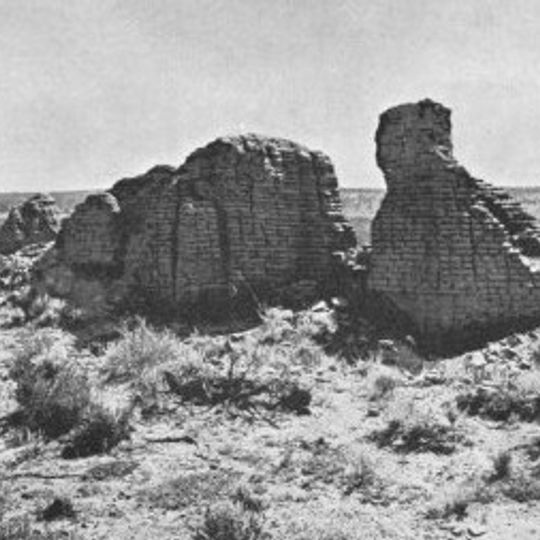
Hawikuh Ruins, Archaeological site in Zuni, New Mexico, United States
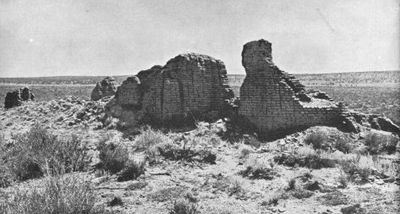
Hawikuh Ruins are the remains of a pueblo settlement built from six large structures connected by passageways and surrounding open plazas. Stone foundations and wall fragments show how the community was laid out and where hundreds of residents once moved through daily life.
The settlement grew and thrived for centuries before Spanish arrival in 1540, when conquistadors entered and claimed the pueblo as their first stronghold in the region. This encounter transformed the pueblo's trajectory from an independent community into one under colonial control.
The site shows how the Zuni built their homes using local sandstone and arranged living spaces around central gathering areas. The way rooms connect to one another reveals daily rhythms and how families organized their community life.
The site sits on the Zuni Indian Reservation and is reached by driving southwest from Zuni Pueblo through open land. Interpretive markers along the ruins help visitors understand what they are looking at and how the pueblo was arranged.
Early excavations between 1917 and 1923 uncovered thousands of everyday objects and tools that are now housed in museums, including the National Museum of the American Indian in Washington. These collections offer a rare window into how people actually lived and worked at the settlement.
The community of curious travelers
AroundUs brings together thousands of curated places, local tips, and hidden gems, enriched daily by 60,000 contributors worldwide.